Most breakdowns don’t happen without warning.
That’s the myth.
The reality is very different.
After twenty-plus years as a mechanic and thousands of roadside callouts, I can tell you most vehicles give plenty of clues before they quit. The trouble is, drivers don’t know what they’re looking at.
Last week I attended a customer in a supermarket car park.
“Battery just died out of nowhere,” he told me.
It hadn’t.
The battery terminals were covered in green corrosion. The engine had been cranking slower for weeks. The warning signs were there every single morning.
Nobody noticed.
The good news?
You don’t need a scan tool, a lift, or a workshop full of equipment to spot many common breakdowns.
You just need ten minutes and a quick walk around the vehicle.
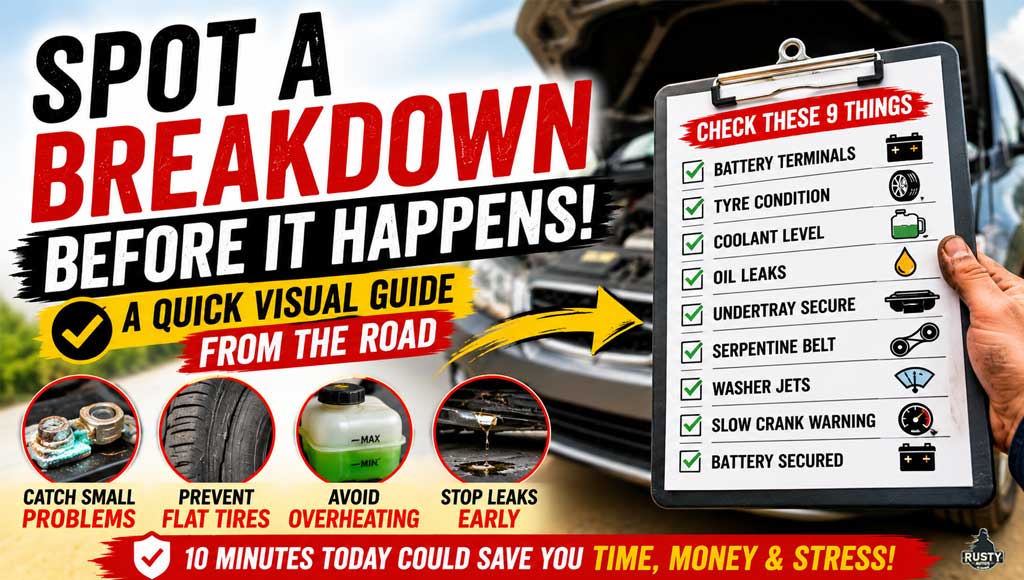
1. Battery Terminals Covered in Corrosion
What it means
Corrosion creates electrical resistance.
Resistance reduces the amount of power available to start the engine.
Eventually, the starter motor doesn’t get enough current and you’re left listening to nothing but a click.
What to look for
- White powdery deposits
- Green furry buildup
- Corrosion around battery clamps
- Loose battery terminals
Roadside reality
Battery problems are one of the most common callouts I attend.
Most don’t fail overnight. They usually give plenty of warning first.
If the battery is over five years old and showing corrosion, don’t ignore it.
2. Tires with Cracks, Bulges, or Damage
What it means
A tire can have plenty of tread and still be unsafe.
Cracking in the sidewall suggests the rubber is ageing.
Bulges suggest internal structural damage.
Either can leave you stranded.
What to look for
- Sidewall cracks
- Tread cracking
- Bulges or bubbles
- Exposed cords
- Uneven wear patterns
Roadside reality
A bulge in a sidewall is not something to monitor.
It’s something to replace.
3. Coolant Level Dropping
What it means
Cooling systems don’t consume coolant.
If the level is dropping, the coolant is going somewhere.
The question is where.
What to look for
- Low coolant reservoir
- Stains around hoses
- Deposits around the radiator
- Damp areas near the water pump
Roadside reality
I’ve seen a tiny coolant leak become a major overheating event within days.
Coolant is cheap.
Engines aren’t.
If the coolant keeps disappearing with no visible leak, have the engine inspected for an internal coolant leak.
4. Oil Leaks Under the Vehicle
What it means
Most leaks start small.
Very few stay small.
What to look for
- Fresh oil spots on the driveway
- Wet engine components
- Oily undertrays
- Damp seals or gaskets
Roadside reality
Drivers often ignore oil leaks because the vehicle still drives normally.
Then one day the oil warning light comes on.
By then you’re already losing the argument.
5. Loose or Hanging Undertrays
What it means
Modern undertrays protect wiring, belts, sensors, and engine components from water and debris.
When they come loose, they rarely improve with time.
What to look for
- Missing clips
- Loose fasteners
- Sagging plastic panels
- Scraping noises underneath
Roadside reality
A loose undertray often becomes road debris at highway speed.
I’ve seen plenty left behind on the hard shoulder.
6. Cracked or Worn Serpentine Belt
What it means
That single belt often drives:
- Alternator
- Water pump
- Power steering pump
- Air conditioning compressor
If it fails, your day changes quickly.
What to look for
- Cracks across the ribs
- Frayed edges
- Missing chunks
- Shiny glazed surfaces
Roadside reality
Belts almost always look bad before they fail.
Take advantage of the warning.
7. Weak Washer Jets
What it means
This won’t usually cause a breakdown.
But it can absolutely cause a bad day.
What to look for
- Weak spray pattern
- Jets missing the windshield
- Blocked nozzles
- Empty washer bottle
Roadside reality
You don’t appreciate washer jets until a truck sprays half the road onto your windshield.
Then they suddenly become very important.
8. A Battery That Cranks Slightly Slower Than Normal
This is probably the most ignored warning sign I see.
The engine still starts.
It just sounds a little slower.
A little more laboured.
A little less enthusiastic.
Drivers ignore it because the car still works.
Then one cold morning it doesn’t.
The battery was warning them the whole time.
They just didn’t recognise the message.
9. A Battery That Isn’t Properly Secured
What it means
Modern vehicles are hard on batteries.
A loose battery vibrates, damages internal plates, and can stress electrical connections.
What to look for
- Missing hold-down clamp
- Battery movement
- Broken battery tray
- Loose terminals
Roadside reality
I’ve seen vehicles arrive on tow trucks because the battery shifted and damaged a terminal connection.
A five-minute inspection could have prevented it.
The Five-Minute Rule
Every month, take five minutes and check:
✓ Battery
✓ Tires
✓ Coolant
✓ Oil level
✓ Belts
✓ Washer fluid
That’s it.
No special tools.
No mechanical expertise.
Just a quick visual inspection.
Final Word
Most breakdowns aren’t sudden.
They’re slow-motion failures.
The battery cranks a little slower.
The coolant drops a little lower.
The belt cracks a little deeper.
The tire develops a little bulge.
The signs are usually there long before the recovery truck arrives.
The trick is spotting them before they spot you.
Because spending five minutes in your driveway beats spending three hours waiting on the hard shoulder.
YOUR CAR JUST SAID “UH-OH.”
Warning light? Won’t start? Weird noise?
Something smells expensive?
DON’T PANIC. KNOW WHAT TO DO NEXT.
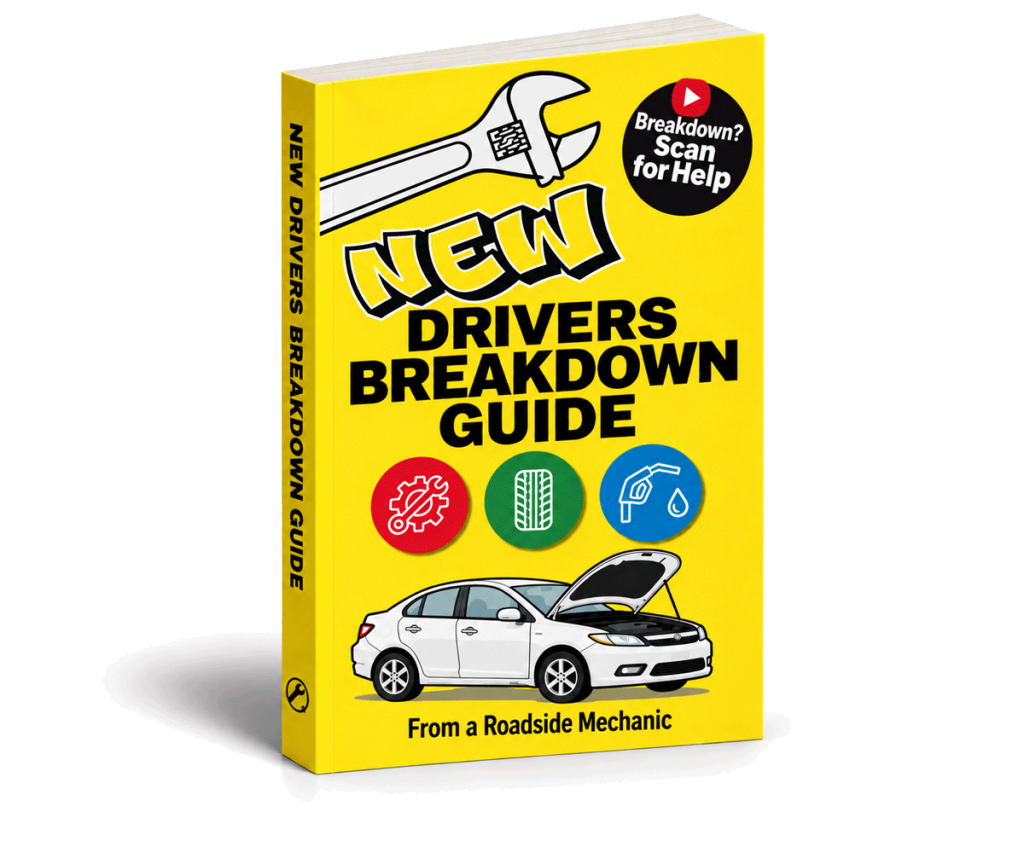
The New Driver’s Breakdown Guide gives you the car know-how nobody taught you.
No jargon. No fluff. Just the useful shit.
Keep it in the glovebox.
- About the Author
- Latest Posts


Meet Northcap, a seasoned mechanic and roadside assistance expert with over 20 years of hands-on experience. At Rustyautos.com, Northcap shares exclusive insights into what really breaks down in cars, offering practical tips and real-world advice to keep drivers informed and their cars on the road.