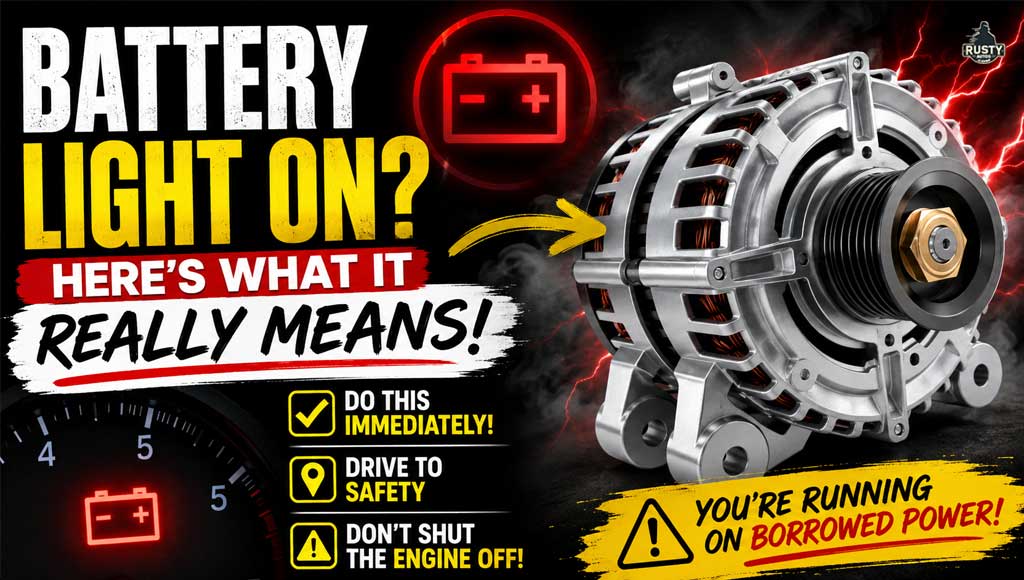
Do This Immediately (10-Second Actions)
✓ Keep the engine running
✓ Turn off unnecessary electrics (A/C, heater blower, radio, heated seats)
✓ Drive to a safe location
✓ Don’t switch the engine off unless you absolutely have to
You are now driving on borrowed electricity.
What It Really Means
Picture this.
You’re driving along when the little battery symbol suddenly lights up on the dash.
Most drivers immediately think:
“Great. The battery is dead.”
But here’s the twist.
The battery warning light usually means the battery isn’t the problem at all.
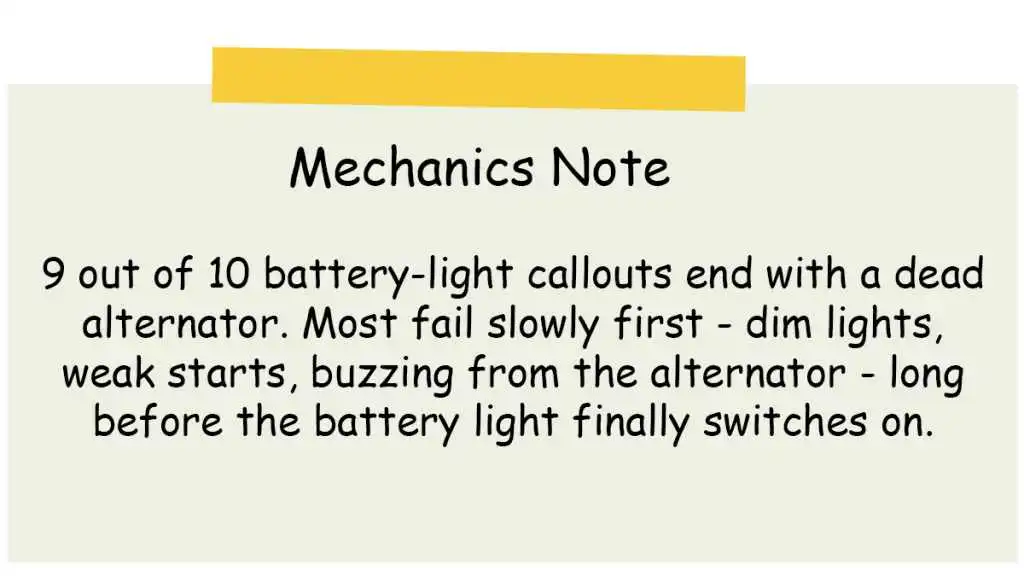
From my experience as a roadside technician, the battery light is far more likely to be warning you about a charging system failure.
In simple terms:
The engine is running.
The alternator isn’t charging.
The battery is now doing all the work.
And eventually, the battery runs out.
When it does, the engine stops.
No restart.
No warning.
Just silence.
Most Likely Causes


1. Most Likely (70%)
Alternator Failure
- Worn brushes
- Failed voltage regulator
- Internal alternator fault
- Failed alternator bearings
2. Common (20%)

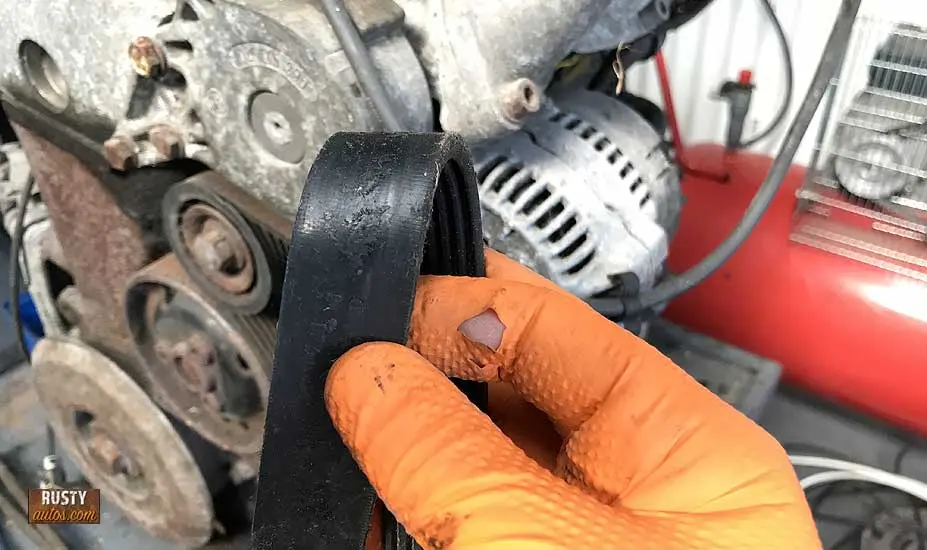
Belt Issue
- Worn serpentine belt
- Slipping belt
- Broken belt
- Loose alternator connection
- Corroded battery terminals
- Corroded ground cable


3. Possible (8%)
Battery or Circuit Fault
- Failed battery cell
- Blown alternator fuse
- High-resistance battery connection
4. Rare But Expensive (2%)


Control Module or Wiring Fault
- ECU charging control issue
- Damaged engine harness
- Communication fault between modules
Why It Happens
Think of the alternator as your car’s onboard power station.
While the engine is running, the alternator powers everything:
- Fuel pump
- Ignition system
- Engine computer
- Cooling fans
- Lights
- Dash displays
- Entertainment system
It also keeps the battery charged.
When the alternator stops producing power, the battery takes over.
The problem?
A car battery was designed to start the engine.
It wasn’t designed to run the entire vehicle.
The moment the alternator quits, the countdown begins.
What You Can Check Right Now
These checks take less than two minutes.
1. Check The Belt
Open the hood.
Can you see the serpentine belt?
If it’s missing, shredded, or hanging loose, stop driving immediately.

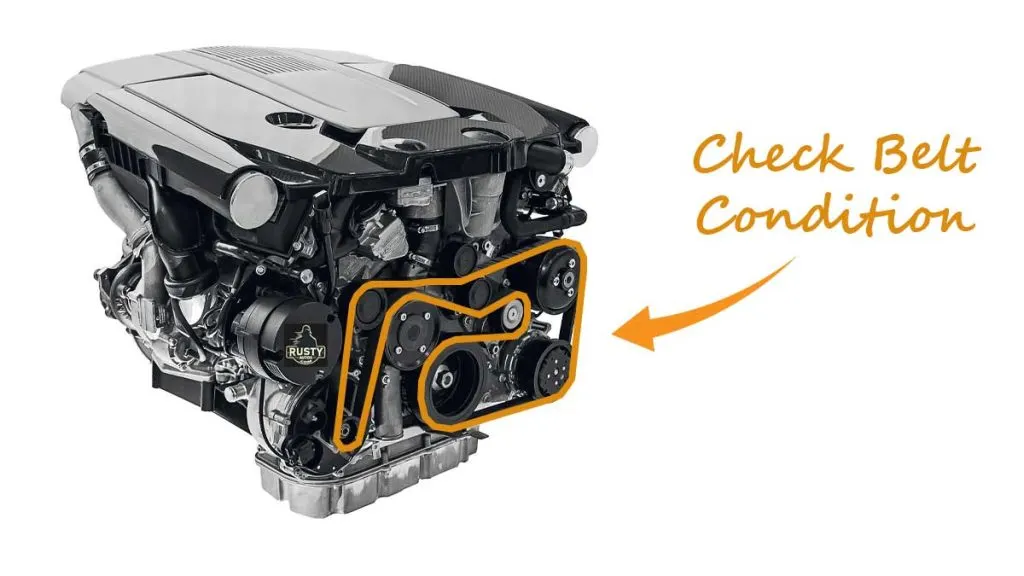
Many vehicles use the same belt to drive:
- Alternator
- Water pump
- Power steering pump
A broken belt can quickly turn into an overheating problem.
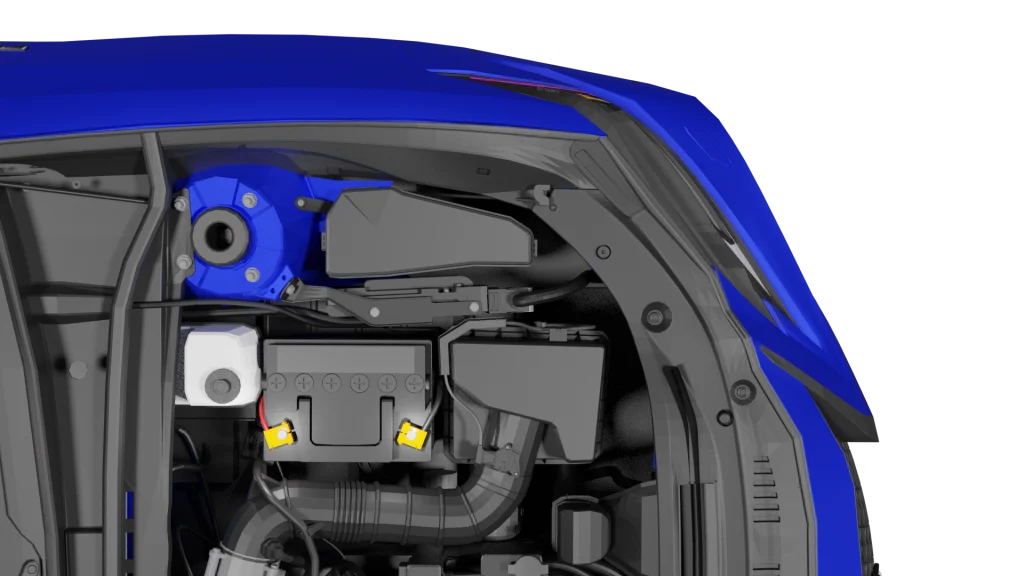
2. Check The Battery Terminals
Look for:
- Loose terminals
- White corrosion
- Green corrosion
- Damaged cables
If a terminal moves when you wiggle it, tighten it.

3. Listen And Smell
A burnt electrical smell often points toward an alternator failure.
A squealing belt may indicate the alternator isn’t being driven properly.
Neither should be ignored.
4. Reduce Electrical Load
Turn off:
- Air conditioning
- Heated seats
- Rear window heater
- Radio
- Phone chargers
Every electrical item switched off gives you more time.
5. Keep The Engine Running
This is the mistake I see most often.
Drivers stop for fuel, coffee, or to make a phone call.
Then the car won’t restart.
If the engine is still running, keep it running until you’re somewhere safe.
Northcap Roadside Tip
I’ve attended countless battery-light breakdowns where the vehicle was still perfectly driveable when the warning first appeared.
The driver ignored it.
Twenty minutes later the dashboard looked like a Christmas tree.
Five minutes after that, the engine stalled.
The battery light is one warning light you should never gamble with.
How Long Will The Car Keep Running?
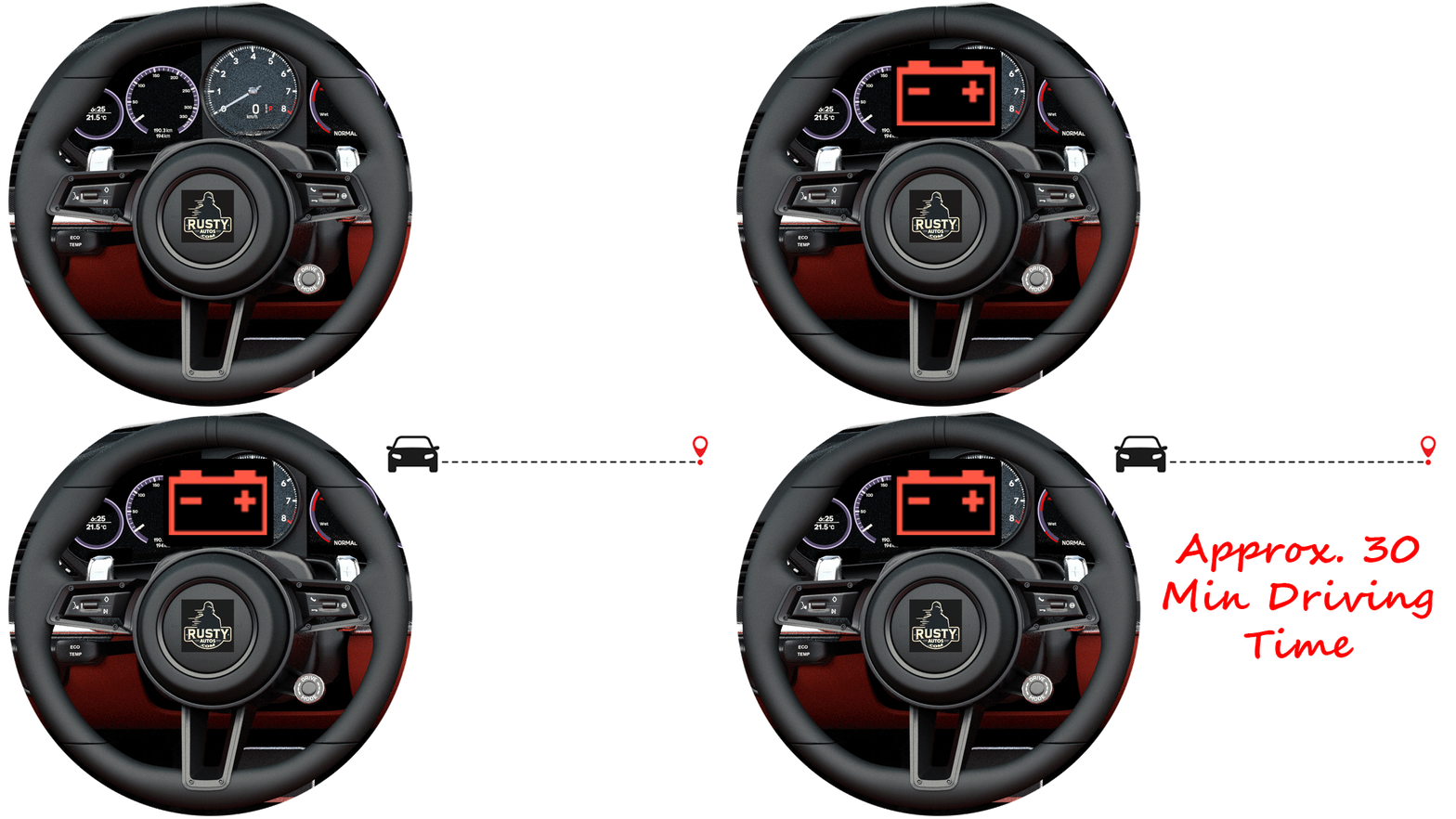
There is no reliable countdown.
I’ve seen vehicles travel over 50 miles after the warning appeared.
I’ve also seen them die within five minutes.
It depends on:
- Battery condition
- Electrical demand
- Vehicle design
- What component actually failed
Assume every minute counts.
If the dash starts flickering, warning lights multiply, or steering suddenly becomes heavier, find a safe place to stop immediately.
Shutdown may be only moments away.
When To Call Roadside Assistance
Call for help if:
- The serpentine belt has broken
- The battery light appears alongside overheating
- You smell burning
- Smoke is visible from the alternator area
- The engine stalls
- Steering suddenly becomes heavy
Waiting rarely improves the situation.
What The Alternator Actually Does
The alternator converts engine power into electrical power.
As the engine turns, the alternator generates electricity that powers the vehicle and recharges the battery.
Without it, the battery becomes the car’s only power source.
And batteries eventually run out.
That’s why a battery warning light is usually an alternator warning light in disguise.

Tool Spotlight
A few tools can confirm a charging problem in minutes:
OBD2 Scanner
- Check charging voltage in live data
Digital Multimeter
- Battery off: around 12.6V
- Engine running: typically 13.8V–14.7V
Portable Jump Pack
- A lifesaver if the battery finally gives up
Battery Terminal Cleaner
- Removes corrosion and improves charging performance
Garage Lingo Translator
Voltage Drop
System voltage has fallen below normal charging levels.
Regulator Fault
The alternator can’t properly control output voltage.
Glazed Belt
A polished belt surface causing slippage.
Ground Fault
Corrosion or poor connections reducing charging performance.
Bottom Line
A battery warning light doesn’t usually mean the battery is bad.
It means the charging system has stopped doing its job.
The battery is now carrying the entire vehicle on its back.
And eventually, it will run out of strength.
When that little red battery symbol appears, don’t panic.
But don’t ignore it either.
You’re driving on borrowed electricity.
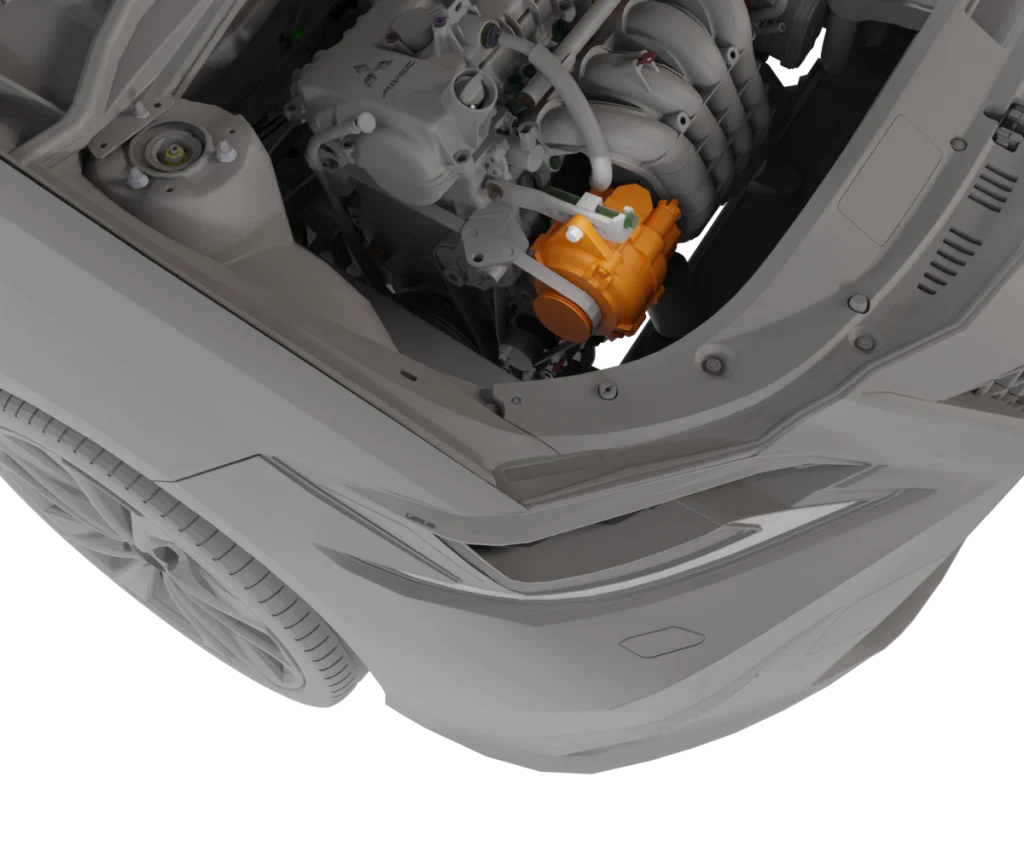
Alternator Location

YOUR CAR JUST SAID “UH-OH.”
Warning light? Won’t start? Weird noise?
Something smells expensive?
DON’T PANIC. KNOW WHAT TO DO NEXT.
The New Driver’s Breakdown Guide gives you the car know-how nobody taught you.
- About the Author
- Latest Posts


Meet Northcap, a seasoned mechanic and roadside assistance expert with over 20 years of hands-on experience. At Rustyautos.com, Northcap shares exclusive insights into what really breaks down in cars, offering practical tips and real-world advice to keep drivers informed and their cars on the road.