It was one of those calls that looked routine.
“Flat battery. Member can’t access vehicle.”
The location? A long-term airport car park. The time? Late at night.
Those two details usually tell you everything you need to know. Someone has just come off a flight, they’re exhausted, and they don’t want an explanation. They just want to go home.
When I pulled up, that’s exactly what I found.
An elderly couple stood beside their Volkswagen, looking absolutely spent. Suitcases piled nearby. Shoulders slumped. You could almost see the miles they’d travelled.
They explained that the key fob had been acting up before they left.
In fact, while the car was in for a service, they’d even asked the workshop to replace the battery.
“No need,” they’d been told. “It’s working fine.”
Now, after a long day of airports and flights, the car wouldn’t unlock.
The Battery Wasn’t Flat
The owner had already tried using the emergency blade key hidden inside the fob.
“It feels like it’s going to break,” he said.
That’s a common worry.
Those locks often haven’t been used since the car left the factory. Years of sitting untouched make them surprisingly stiff.
A little firm pressure later…
Click.
The door opened.
Immediately the alarm erupted.
Perfectly normal.
I popped the bonnet first.
The 12-volt battery was healthy.
That ruled out the most obvious culprit.
The real problem was the key fob.
Its battery had finally given up.
Normally I’d fit a fresh battery on the spot, but this happened to be one of the rare nights I didn’t have the correct replacement with me.
No problem.
Modern Volkswagens have a backup starting procedure built in for exactly this situation.
The Hidden Hotspot
Every push-button start car has a location where the immobilizer can still read a dead key fob.
Manufacturers call it different things.
We mechanics usually call it the hotspot.
The trick is…
Every manufacturer hides it somewhere different.
Sometimes it’s on the steering column.
Sometimes you press the start button using the key itself because the antenna sits directly behind the button.
Many German cars hide it inside the centre armrest.
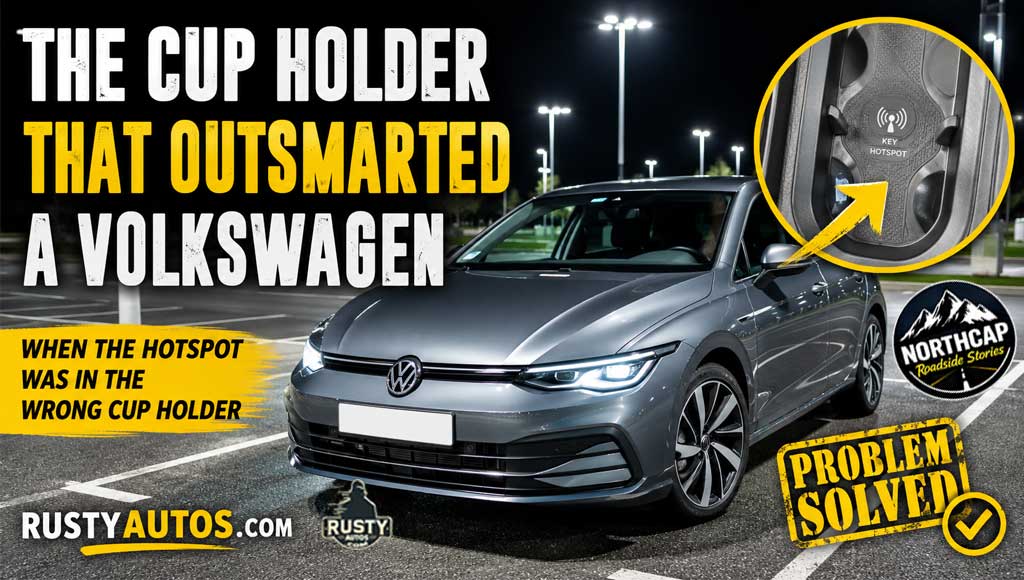
On this Volkswagen, the hotspot was marked inside one of the cup holders.
Simple enough.
We placed the dead key exactly where the symbol showed.
Nothing.
No dashboard lights.
No recognition.
Meanwhile the alarm was still screaming across the airport car park.
Airport security wandered over.
“Everything alright?”
“Yes,” I laughed. “The car just hasn’t realised that yet.”
Something Didn’t Feel Right
Whenever something obvious doesn’t work…
I stop believing the obvious.
The hotspot symbol was moulded into a removable rubber cup-holder insert.
There were two cup holders.
Front.
Rear.
The symbol pointed to the rear one.
But I kept looking at it.
Then it hit me.
“What if someone cleaned the car…”
“…and put this rubber insert back the wrong way around?”
It sounded ridiculous.
But it was worth a try.
I lifted the dead key.
Moved it into the front cup holder instead.
Instantly…
Click.
The mirrors unfolded.
The alarm stopped.
The dashboard came alive.
One push of the start button…
The engine fired immediately.
Mystery solved.
The Simplest Mistake
At some point, someone had almost certainly removed the rubber cup-holder mat during cleaning.
When it went back in, it had been rotated.
The printed hotspot symbol now pointed to the wrong cup holder.
The RFID antenna never moved.
Only the label did.
It was one of those wonderfully simple faults that can waste an hour if you trust the picture instead of the evidence.
Getting Them Home
By then, the owners had no interest in the mystery.
They just wanted their own bed.
I showed them how to keep the dead key sitting in the correct cup holder so they could restart the car if they needed to stop for fuel.
I sprayed a little lubricant into the driver’s door lock.
Tomorrow, they could lock the car manually with the blade key, visit their local Volkswagen dealer, fit a new key battery, and life would return to normal.
No recovery truck.
No expensive repair.
Just a tiny battery…
…and a rubber cup-holder insert that had been put back upside down.
They thanked me, climbed into the VW, and quietly disappeared into the night.
Sometimes the hardest part of roadside assistance isn’t fixing the car.
It’s figuring out which tiny detail everyone else overlooked.
Takeaway
If your Volkswagen (or many other modern cars) won’t recognize a key with a dead fob battery:
- Unlock the door with the emergency blade key.
- Don’t panic if the alarm sounds.
- Use the vehicle’s emergency key recognition hotspot to start the engine.
- If the hotspot doesn’t seem to work, check whether any removable trim, cup-holder inserts, or rubber mats have been refitted incorrectly.
- Replace the key fob battery as soon as possible to avoid future headaches.
Sometimes the difference between a stranded driver and a happy one is nothing more than turning a rubber insert around.
YOUR CAR JUST SAID “UH-OH.”
Warning light? Won’t start? Weird noise?
Something smells expensive?
DON’T PANIC. KNOW WHAT TO DO NEXT.
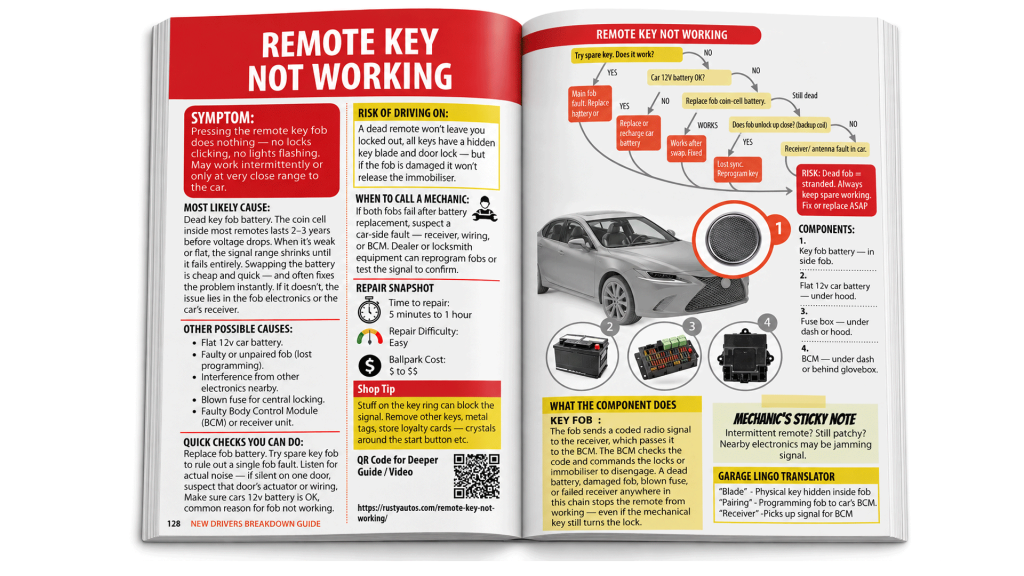
The New Driver’s Breakdown Guide gives you the car know-how nobody taught you.
- About the Author
- Latest Posts


Meet Northcap, a seasoned mechanic and roadside assistance expert with over 20 years of hands-on experience. At Rustyautos.com, Northcap shares exclusive insights into what really breaks down in cars, offering practical tips and real-world advice to keep drivers informed and their cars on the road.