The call looked simple enough.
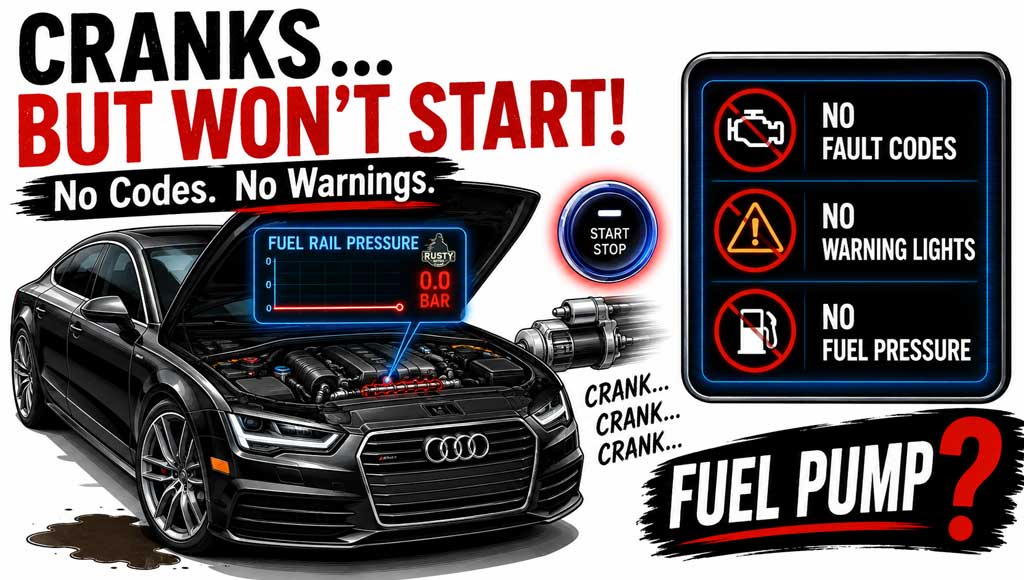
Audi A7. No start. At home address.
When I pulled up, the first thing I noticed wasn’t the car.
It was the oil stain on the driveway.
The A7 itself looked every bit the executive express—black paint, sleek lines, sitting there looking expensive.
But the driveway was telling a different story.
When the member came out, I pointed at the oil patch.
“Got an oil leak?”
“Yeah,” he said. “About a litre a month.”
Not ideal, but not enough on its own to stop the engine from starting.
Before diving into diagnostics, I like checking the basics.
The vitals.
Oil level? Slightly low but still within range.
Coolant? Perfect.
Battery voltage? Healthy.
I removed the plastic engine cover and had a quick look around.
No loose connectors.
No obvious damage.
No signs of anything disconnected.
Everything looked exactly as it should.
So we cranked it.
Crank.
Crank.
Crank.
Crank.
Not even a hint of firing.
To me, it sounded like an engine that wasn’t getting fuel.
Before touching the scan tool, I asked the member what happened before it failed.
That’s often where the real clues are.
“It felt a bit rocky,” he said.
“Rocky?”
“Yeah, kind of lumpy. Rough.”
“Loss of power?”
“No.”
“Warning lights?”
“No.”
Interesting.
A rough-running engine that suddenly becomes a no-start is usually trying to tell you something.
The trick is figuring out what.
I connected the scanner expecting a fault code.
Nothing.
No stored codes.
No pending codes.
Absolutely clean.
That’s not unusual, by the way.
Modern cars are clever.
They’re not magic.
Sometimes parts fail without leaving a digital breadcrumb.
Next step was checking the essentials.
Did we have engine speed while cranking?
Yes.
The crankshaft sensor was reporting correctly.
Good.
That ruled out one common culprit.
Then I checked fuel rail pressure.
Zero.
Nothing.
Flatline.
The engine control module was commanding fuel pressure.
The system wanted pressure.
The rail wasn’t getting any.
That’s a big clue.
At that point, the evidence was stacking up in one direction.
A failed fuel delivery system.
Most likely the fuel pump.
Could further testing have identified the exact failed component?
Absolutely.
But roadside assistance isn’t always about proving a case beyond all doubt.
Sometimes it’s about gathering enough evidence to make the correct next decision.
And the correct next decision here wasn’t a roadside repair.
It was a tow truck.
I explained what I’d found.
No fault codes.
Good battery.
Good crank signal.
No fuel pressure.
Likely fuel pump failure.
The member was relieved to finally have a direction.
Better to know what’s wrong than keep guessing.
Fortunately, he didn’t need the car the following day, so there was no panic.
I arranged a flatbed and left him with a clear diagnosis for the repair shop.
When an engine cranks normally but won’t start, don’t immediately assume it’s electrical.
Fuel pumps often fail gradually before they fail completely.
The rough running he noticed beforehand was probably the warning shot.
The complete no-start was simply the final chapter.
Sometimes cars whisper before they scream.
YOUR CAR JUST SAID “UH-OH.”
Warning light? Won’t start? Weird noise?
Something smells expensive?
DON’T PANIC. KNOW WHAT TO DO NEXT.
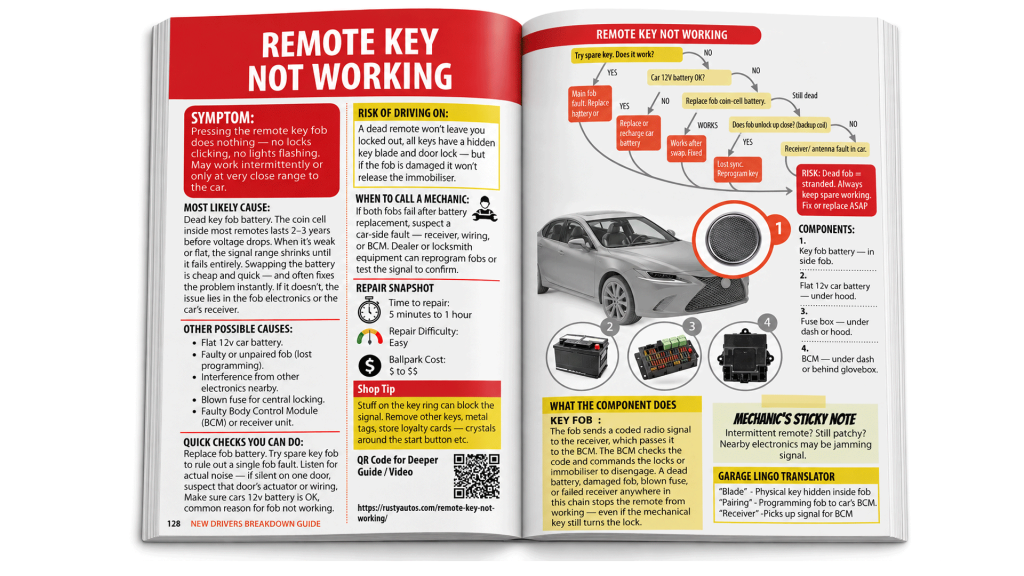
The New Driver’s Breakdown Guide gives you the car know-how nobody taught you.
- About the Author
- Latest Posts


Meet Northcap, a seasoned mechanic and roadside assistance expert with over 20 years of hands-on experience. At Rustyautos.com, Northcap shares exclusive insights into what really breaks down in cars, offering practical tips and real-world advice to keep drivers informed and their cars on the road.