See any of these colors in a puddle under your car? That’s coolant, and it’s the only thing standing between your engine and a meltdown.
Why It Happens
Engines run hot — really hot. Coolant keeps temps under control by carrying heat to the radiator. When hoses, radiators, or water pumps fail, that neon liquid ends up on your driveway. Ignore it and you’ll cook a head gasket, warp the engine, or seize it solid.
Most Common Culprits
- Split radiator hose – soft, swollen, or cracked.
- Leaking radiator – stone damage or corroded seams.
- Water pump leak – drips near the front of the engine.
- Bad heater core – leaks inside, sweet smell in the cabin.
- Reservoir or cap – cracked plastic or weak seal.
What You Can Check
- Look at the color — green, yellow, orange (sometimes pink/blue). It’s coolant, not oil.
- Dab it with tissue — coolant feels watery, not oily.
- Smell it — sweet syrup scent = antifreeze.
- Check your reservoir — low or empty? There’s your leak.
What a Mechanic Will Do
- Pressure test the cooling system to force leaks out.
- Inspect radiator, hoses, pump, and heater core.
- Test cap and reservoir for proper sealing.
- Check for head gasket leaks if coolant loss is unexplained.
Rough Damage to Your Wallet
- Radiator hose: $80–$180.
- Radiator: $400–$900.
- Water pump: $400–$800.
- Heater core: $700–$1,500.
- Head gasket repair: $1,500–$3,000+.
When to Park It
Small drip? Top up and monitor — but don’t ignore. Big puddle or overheating gauge climbing? Park it. Coolant loss = overheated engine = massive repair bill.
YOUR CAR JUST SAID “UH-OH.”
Warning light? Won’t start? Weird noise?
Something smells expensive?
DON’T PANIC. KNOW WHAT TO DO NEXT.
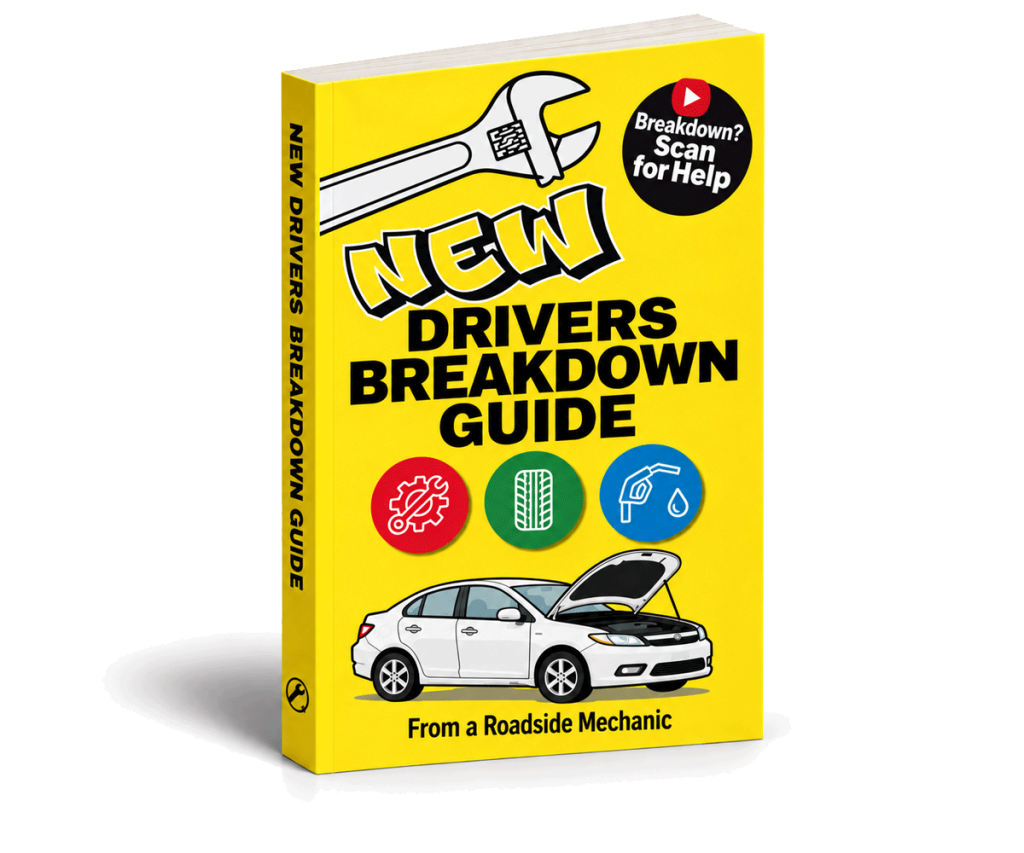
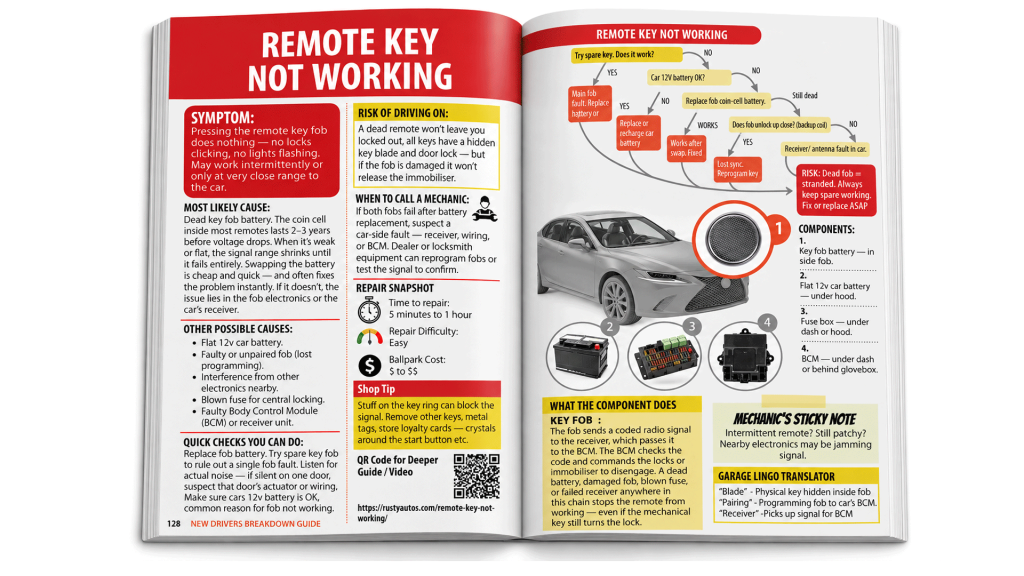
The New Driver’s Breakdown Guide gives you the car know-how nobody taught you.
- About the Author
- Latest Posts

Meet Northcap, a seasoned mechanic and roadside assistance expert with over 20 years of hands-on experience. At Rustyautos.com, Northcap shares exclusive insights into what really breaks down in cars, offering practical tips and real-world advice to keep drivers informed and their cars on the road.