
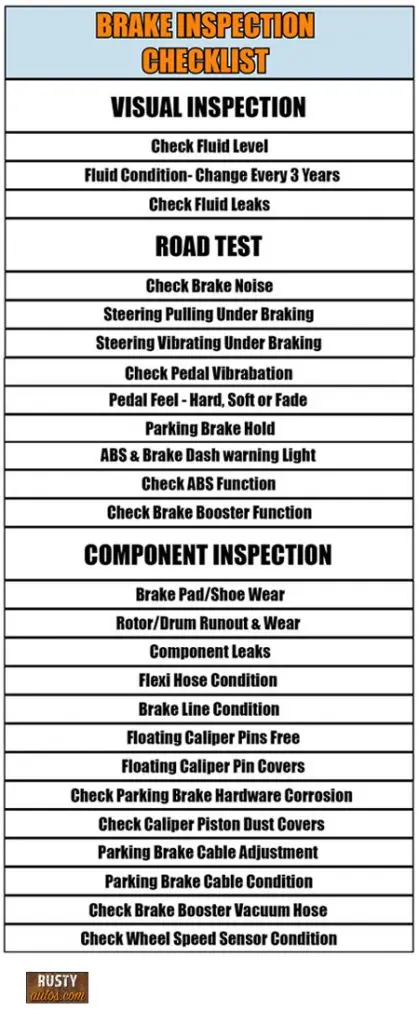
Proper brake maintenance begins with regular inspection. It’s better to find problems before they find you.
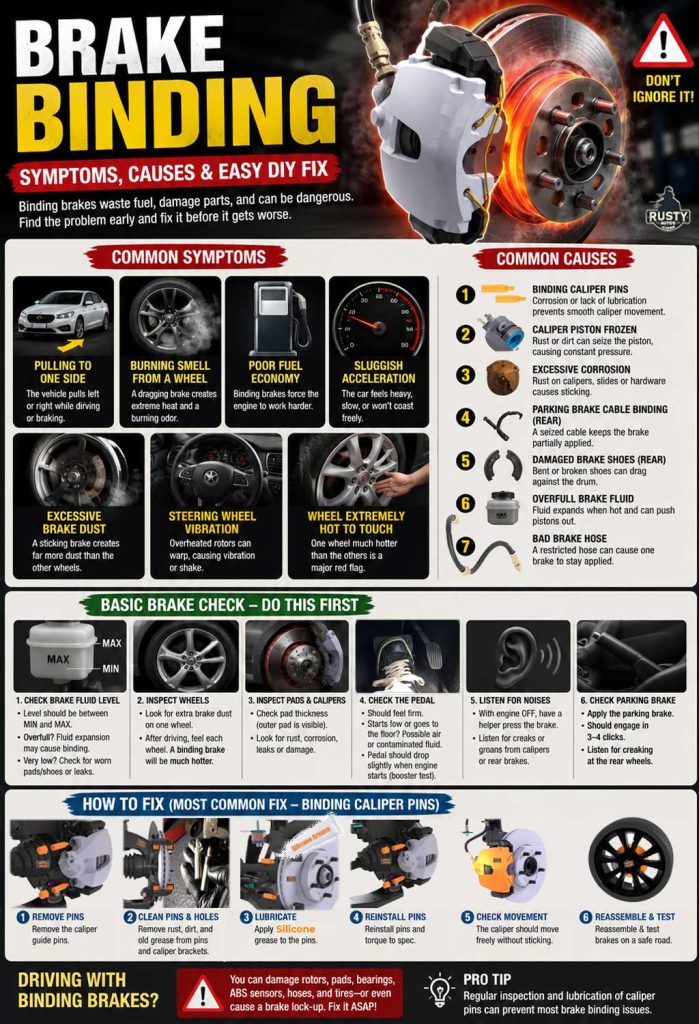
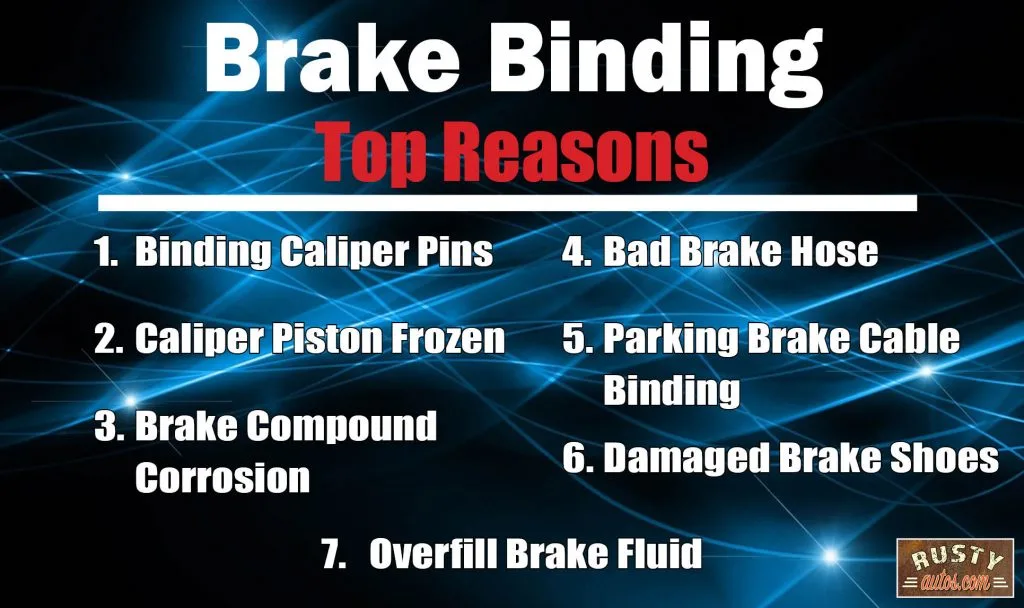
So what causes the brakes to bind? The most common reasons brakes bind include:
- Binding caliper pins
- Caliper piston frozen
- Excessive brake component corrosion
- Parking brake cable binding (rear brakes)
- Damaged brake shoes (rear brakes)
- Overfull brake fluid
- Bad brake hose
Symptoms Of Binding Brakes
Brake pads usually give warning signs before they become dangerous.
Here are the most common symptoms:
Vehicle Pulling To One Side
If one brake is sticking harder than the others, the car may pull left or right while driving or braking.
YOUR CAR JUST SAID “UH-OH.”
Warning light? Won’t start? Weird noise?
Something smells expensive?
DON’T PANIC. KNOW WHAT TO DO NEXT.
The New Driver’s Breakdown Guide gives you the car know-how nobody taught you.
Burning Smell From A Wheel
A dragging brake creates huge heat.
After driving, you may notice a hot, metallic smell or even a burning odour coming from one wheel.
Poor Fuel Economy
Binding brakes force the engine to work harder, which increases fuel consumption.
Sluggish Acceleration
The car may feel heavy, slow, or reluctant to coast freely.
Excessive Brake Dust
A sticking brake constantly drags on the rotor, creating much more brake dust than the other wheels.
Steering Wheel Vibration
Overheated rotors can warp from excessive heat buildup, causing brake vibration or steering shake.
Wheel Extremely Hot To Touch
One wheel being noticeably hotter than the others is one of the biggest clues.
Be careful, though — seriously overheated brakes can become dangerously hot.
Brake binding is common, and it’s usually related to corrosion, but as you can see from the above list, it can bind for a ton of other reasons, too.
Brake binding is usually a simple repair, and there’s every chance you can DIY fix it right now. We’ll deal with each possibility in order of how common it is, make sense? But first, let’s do a basic brake check.
Warning: some cars are fitted with dynamic braking systems; working on them without disabling them first can be dangerous. Check if your car is fitted with a brake assist system.

Can You Drive With Binding Brakes?
Technically, yes — but you really shouldn’t ignore it.
A sticking brake generates enormous heat.
That heat can damage:
- Brake pads
- Rotors
- Wheel bearings
- ABS sensors
- Brake hoses
- Tires
And in severe cases, the brake can actually lock up while driving.
I’ve seen binding brakes get hot enough to discolour wheels and smoke heavily on roadside callouts.
If the brake is only lightly dragging, you may be able to drive cautiously to a repair shop.
But if you notice:
- Smoke
- Strong burning smell
- Vehicle pulling badly
- Severe heat from one wheel
- Grinding noises
Stop driving and get it repaired properly.
Basic Brake Check

These tests won’t take long or require any tools, just our senses. They’ll likely give us some clues about exactly what’s going on.
Check your dashboard for the ABS light; it should come on with the ignition switch and go out when the engine is running. If the ABS light remains on, you’ll need to scan the controller for fault codes.
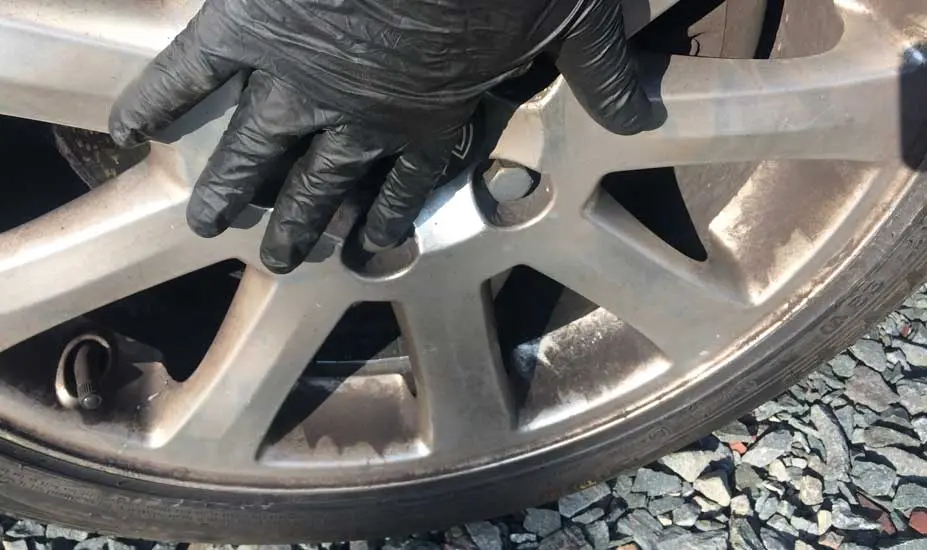
The first inspection is a visual of the wheels. Very often, the wheel that’s binding will have a lot of extra brake dust on the wheel rim. After driving, place your hand on each wheel rim; a wheel that’s binding will be noticeably hotter than the rest.

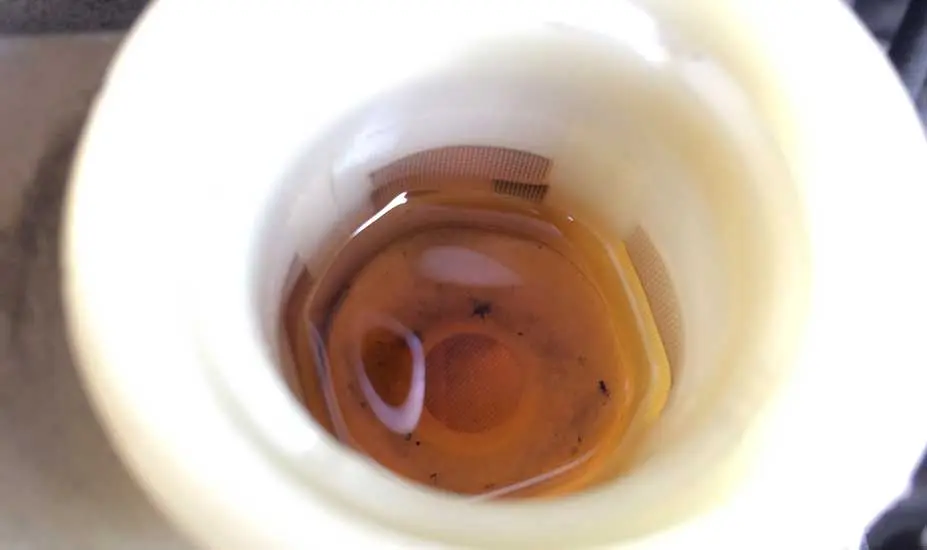
Pop the hood and check the brake fluid reservoir level. Yikes! Pretty grim-looking fluid here. A reading anywhere between the high and low mark is OK. Sometimes the reservoir can be difficult to read. I shine an LED light on the side of the reservoir, which helps.

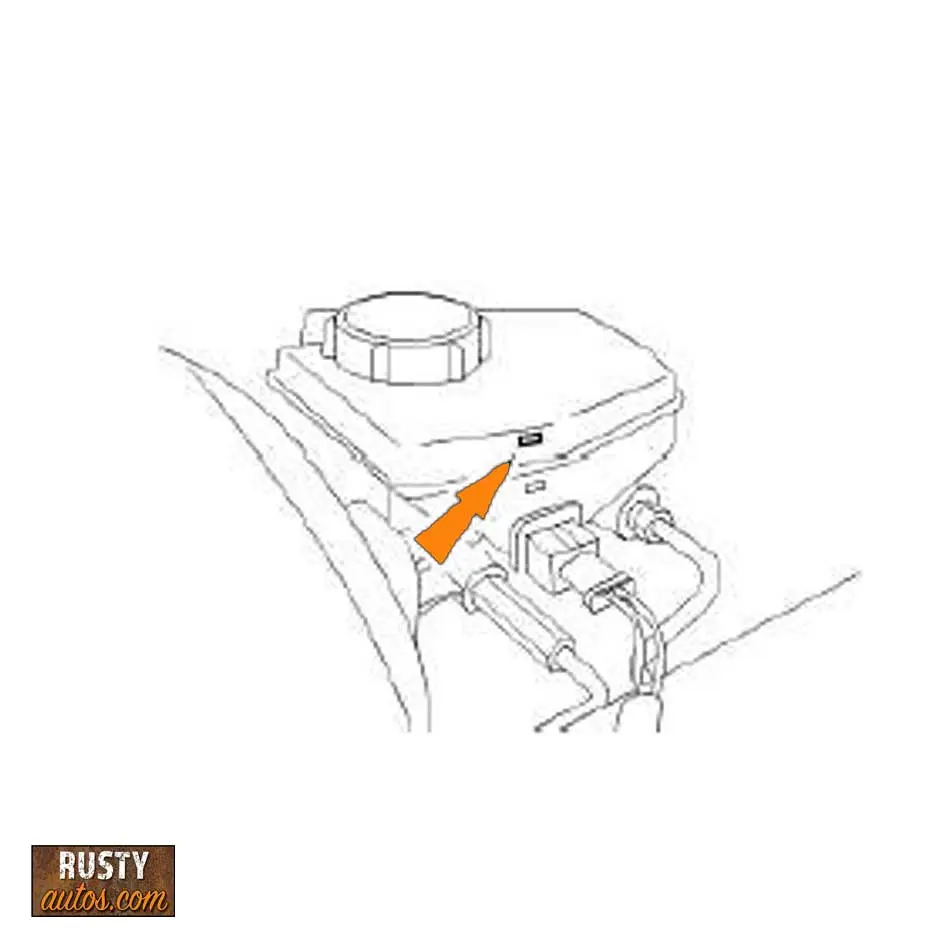
If the brake fluid level is overfull, you may have found your problem. Brake fluid expands as it heats and will push the caliper pistons out.
If the fluid is very low, it’s a sign that the brake pads or shoes are worn, or you have a fluid leak. A leak is less likely, as your brake pedal would feel noticeably soft.
Most cars and trucks today have wide-spoked wheels, which is great for inspecting brake pads and calipers. It’s not foolproof, as the inboard brake pad will be hidden, and many vehicles are prone to excessive inboard pad wear.


So if the outer pad is low, you can bet the inner is very close to steel on steel. While you’re inspecting the pads, check out the general condition of the rotors and brake calipers, some rust is normal, but heavy corrosion is a sign you need a brake overhaul.
How does the brake pedal feel, soft, hard, or just like normal? If it’s going to the floor, it suggests air in the system or contaminated brake fluid. Now start the vehicle; if the brake booster is OK, the pedal should drop slightly.
Shut the vehicle off and have a helper press the brake pedal. Can you hear any creaking noise from the brake calipers? Walk around all four wheels. Creaking calipers is a sign of a seized caliper or frozen caliper pins.
Finally, have the helper apply the parking brake; any creaking from the rear wheels will need further investigation. The parking brake usually pulls out about 3 to 4 clicks on; less than that, and it’s too tight.
You may find the brake resources page useful; it’s a fluff-free guide to DIY brake repairs.
Brake Warning

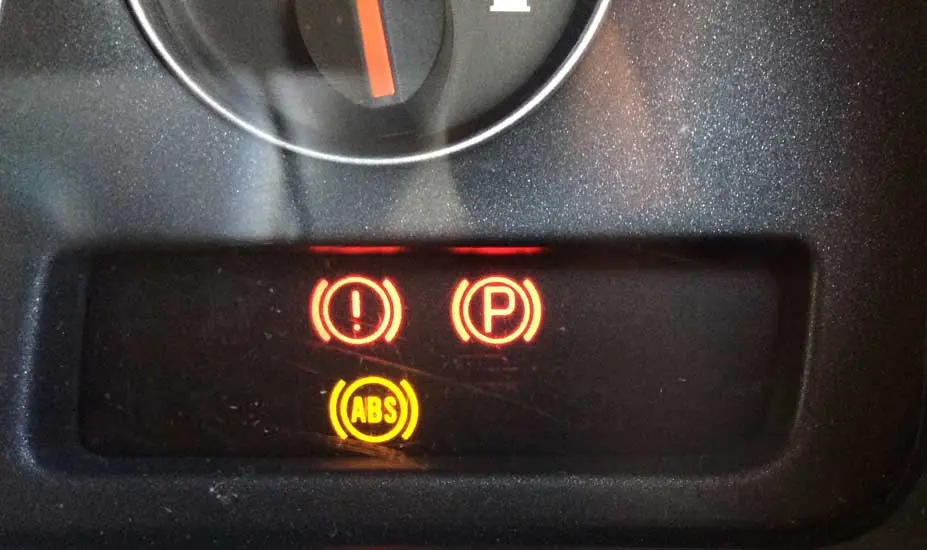
Before working on your car’s braking system, be sure it’s safe to do so. Some modern cars will be equipped with auto braking, meaning they have a pre-charge. It’s a store of braking energy used for emergency stops. This system needs to be depressurised before opening brake lines or removing calipers.
Integral ABS systems likewise hold a charge; you’ll recognise this type of system as the ABS pump, accumulator, and master cylinder are all in one. Some modern cars will have an electronic parking brake, this system will need to be placed in service mode before attempting a repair.
Some cars will run drum brakes on the rear, but most will have rotors and calipers all around. Rear caliper pistons will likely be screw-type, which means you can’t treat them like the front; they need to be screwed and pressed simultaneously. A special brake caliper tool makes life a lot easier.
Binding Floating Caliper Pins

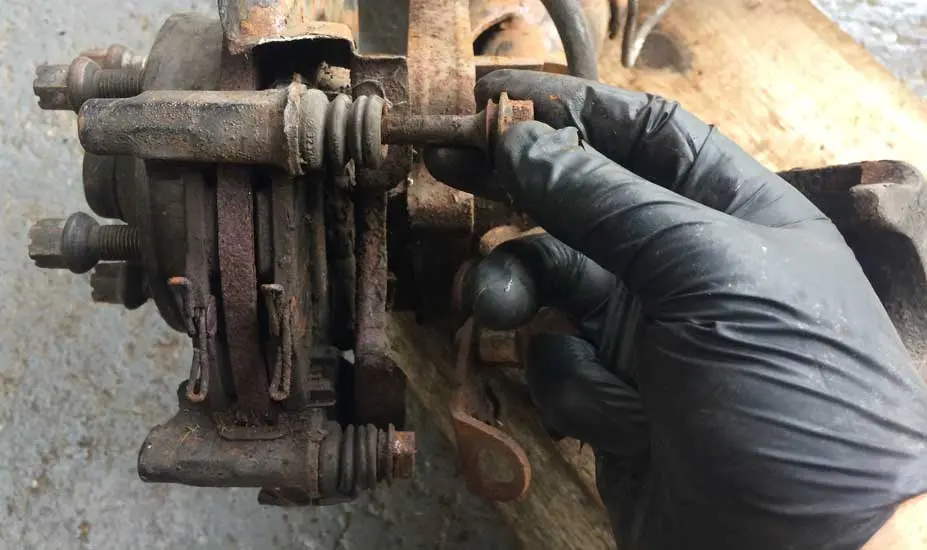
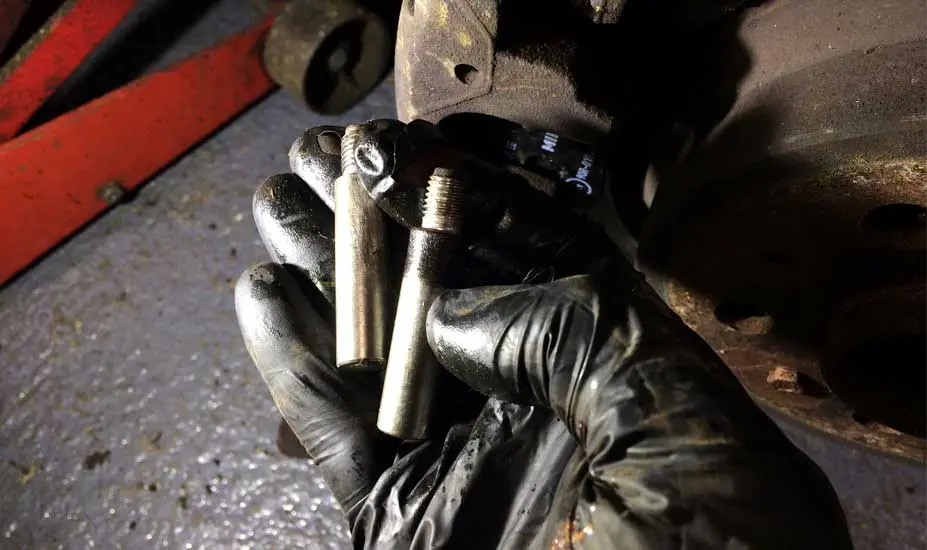
Floating calipers are the most common type of brake hardware setup. The caliper is free to move over and back on smooth lubricated pins as the brake pedal is applied. Trouble starts when one or both of the pins get dry, the caliper then moves across the pins unevenly, which can cause the brake caliper to stick on.
So how do I test it?
Easy, using a flat screwdriver, prise the piston back into the caliper about an inch. Now you have some room to work with, use your hands to pull and push the caliper across the pins. If you can’t move them or they’re tight, they need cleaning.

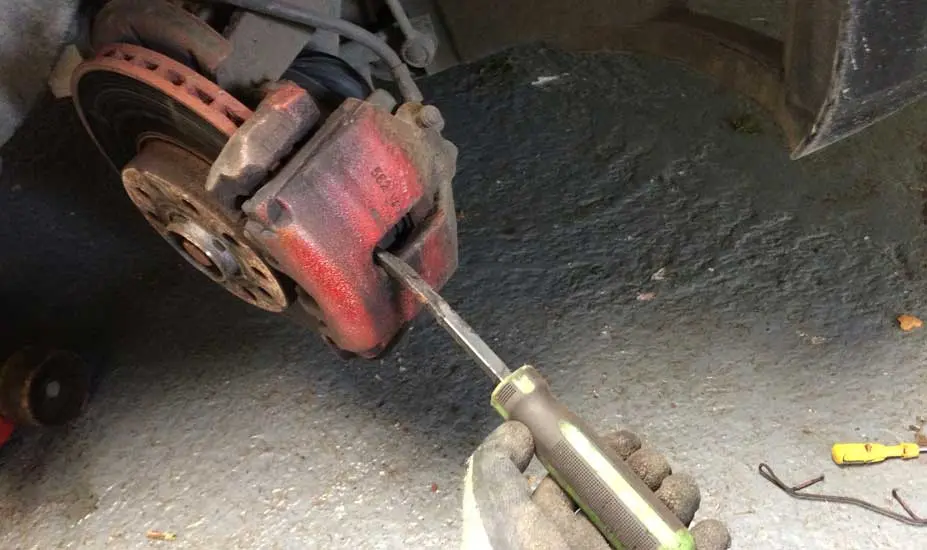
If on the other hand, you can’t get the piston to move at all, suspect a frozen caliper piston, more on that below.
It’s usually a simple problem to solve: remove the pins, clean them with fine sandpaper, lubricate them with silicone grease, reassemble, and you’re good. We use Silicone grease because the pins’ rubber seals don’t mix with petroleum-based grease; it can cause the rubber seals to swell.
When weather seals are damaged or worn, moisture and dirt can get in, often leading to corrosion. In plenty of cases, I’ve had to go ahead and change the caliper, pins, pads, and carrier.
Caliper Piston Frozen

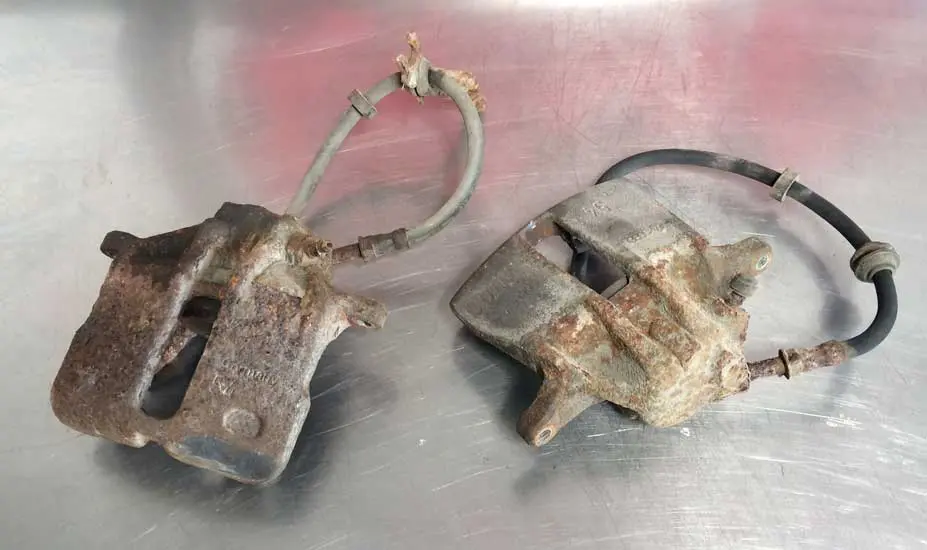
This is the next most common reason for binding brakes, it’s pretty easy to test, and you won’t need special tools.
Testing the caliper
So you tried to move the piston with the flat screwdriver, and it just won’t move. It’s likely the piston is the problem, but to be sure, we’ll need to open the bleed nipple.
Now, you need to know if we open the bleed nipple, you’ll have to bleed the brakes afterwards. The car won’t be usable until we bleed the brakes. This isn’t a big job, but you’ll need a hosepipe, a bottle, and the correct brake fluid type.


Open the bleed nipple and try moving the piston back as before. If it won’t budge and only a trickle of fluid runs from the nipple, you can be sure the piston is frozen in the caliper. The only fix here is to replace the caliper.
A frozen caliper is caused by rust on the piston, and the rust is caused by moisture in the brake fluid. (More on brake fluid below.) It’s common practice to replace brake components in pairs; replacing just one caliper can cause a brake imbalance.

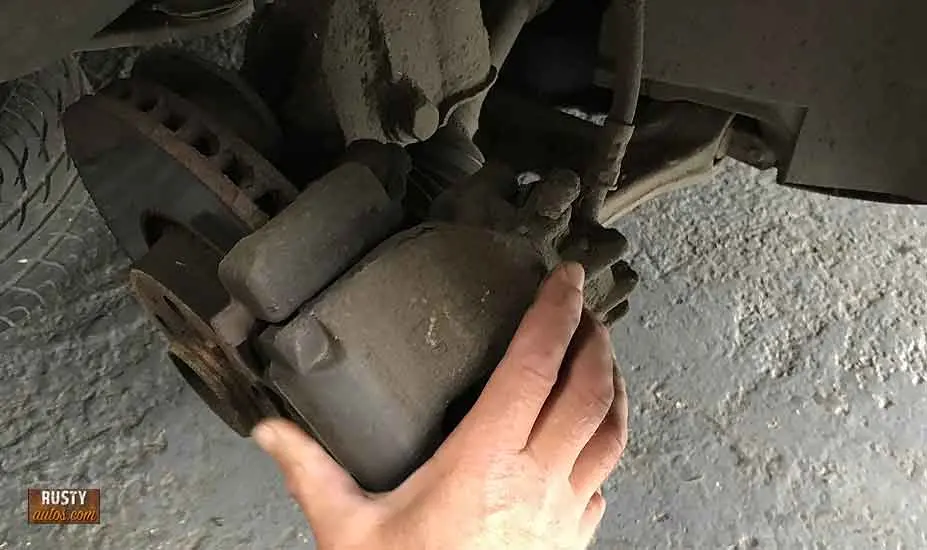
If on the other hand, the piston does move back, and fluid squirts freely from the bleed nipple. Then it’s more likely the brake hose has broken down internally, causing it to act as a one-way valve. The solution is to replace all brake hoses.
Excessive Brake Component Rust

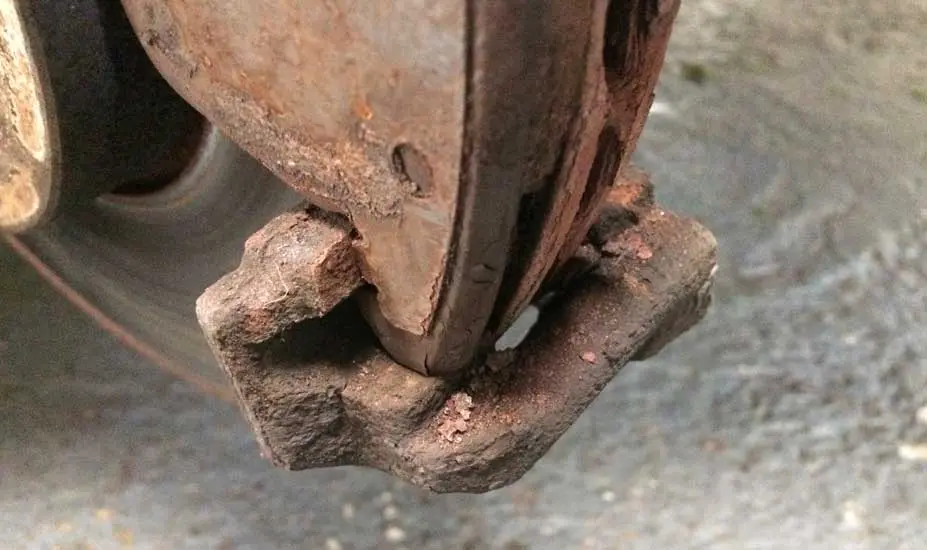
Corrosion is common, there’s no escaping it, that’s why regular brake inspections will help you prevent major brake problems.
When rust builds upon the carrier and pads, it causes them to bind. Basically, the pads are wedged into the rotor, and they can’t move back. As the pad is making contact with the rotor all the time, heat builds up, expanding the metal, and the problem snowballs.
If the problem is ignored, it can cause the rotor, wheel bearing, ABS sensor, and ball joints to fail.
Repairing brake carrier corrosion is an easy fix; you’ll need a wire brush, sandpaper, Copper, Moly, or Graphite dry grease, and a new set of brake pads.

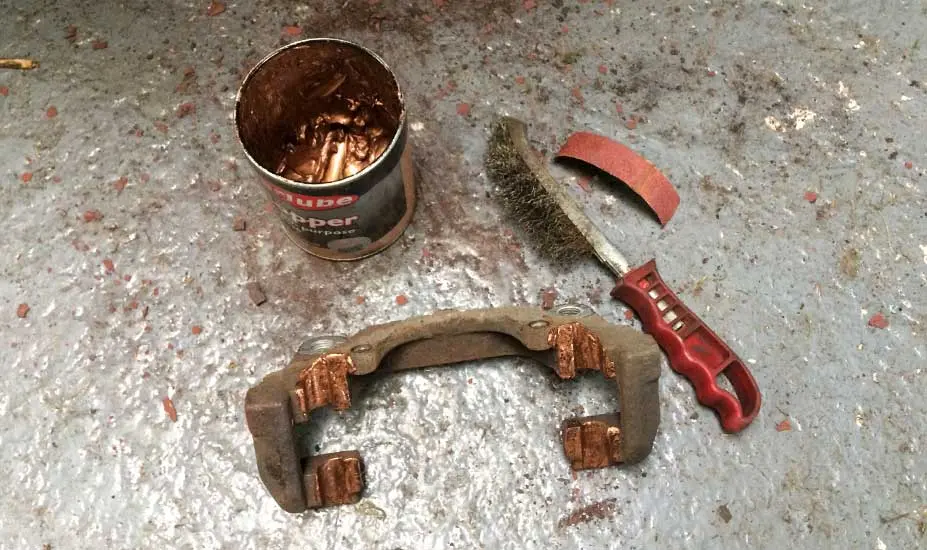
Rotor corrosion can cause the brakes to stick, and sticking brakes causes heat, which, as you know, compounds the problem. Heavily corroded rotors happen more commonly to cars that don’t drive very far or very often, or brakes that are only lightly applied. Under normal driving conditions, braking cleans the rotors and prevents pitting and corrosion.
A quick fix for this condition sometimes works – try braking more vigorously, it helps clean the rotors. If this fails, replace the rotors and pads. If you need brake system parts, check out the Amazon link below.
Amazon Vehicle Brake System PartsWhy Binding Brakes Get Worse Quickly
Binding brakes tend to snowball fast.
Here’s why.
Once the brake starts dragging, friction creates heat.
That heat expands metal components like:
- Brake pads
- Rotors
- Caliper pistons
- Slide pins
As the parts expand, the brake binds even harder, which creates even more heat.
Picture it like a vicious circle.
In severe cases, brake temperatures can become extreme enough to:
- Warp rotors
- Boil brake fluid
- Damage wheel bearings
- Destroy ABS sensors
- Crack brake pads
That’s why even a “slight” sticking brake should be fixed sooner rather than later.
Parking Brake Binding

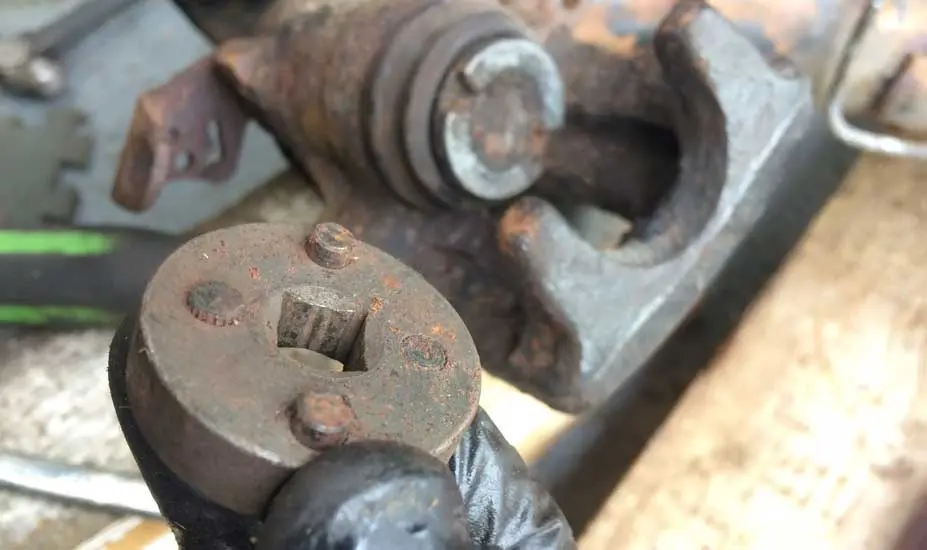
All cars run the parking brake to just the rear wheels, and as you know, some vehicles have calipers at the rear, and others will have drum brakes. The parking brake on most cars is still operated by pulling a lever that pulls a cable that applies the rear brakes.
The park brake cables often corrode internally, which can cause them to partially stick in the on position. The fix here is to replace the cables.
A park brake cable that’s been adjusted too tightly will cause the rear brakes to bind. This usually only happens when the brakes warm up. The fix is to back off the park brake adjuster, usually found at the hand brake lever.
Calipers’ rear brakes commonly have a cable-operated lever. The lever on the caliper will often stick either in the on or off position. This happens a lot with car owners who don’t use their parking brakes very often.
A possible fix here is to clean the caliper lever with a wire brush and use WD40 to try and free it. This can be attempted with the caliper in place. If that fails, replace both calipers. Other cars will run drum brakes, more on that below.
Damaged Rear Brake Shoes
Less expensive cars are fitted with drum brakes; they’re pretty dependable but have many moving parts. Clips, springs, and shoe linings can come loose and get caught in the drum, causing the hub to bind or lock. A leaking wheel cylinder will cause binding, too.
The fix here is a complete rear brake job.


Replacing front pads on a car is straightforward; replacing brake shoes is more challenging. Certainly, having some specialised tools will make this job easier.

Brake Fluid, What You Need To Know


Brake fluid must be the fluid most commonly ignored; coolant, oil, and even window washer fluid get checked regularly. But like all car fluids, if it’s ignored, it will cause damage. The first thing to know about most brake fluid – it absorbs moisture from the atmosphere (Hygroscopic). This causes two problems for the brake system.
1 – It causes the brakes to feel spongy, this happens when the fluid heats and the moisture in the fluid turns to steam.
2 – The moisture in the fluid causes corrosion in the brake lines, calipers, wheel cylinders, master cylinder, and possibly the ABS modulator. All expensive kit.
Fluid types
Fluid types are important; they are graded and available in DOT 3, 4, 5, or 5.1. Dot stands for Department of Transport.
Brake fluid is either Glycol or Silicone-based, and they can’t be mixed. The Glycol-based fluids Dot 3, 4, and 5.1 are compatible but shouldn’t be mixed; it won’t hurt any components if you do.
What’s the difference between Dot 3, 4, and 5.1? Basically, the higher the temperature they can withstand before boiling, the better.
Don’t mix DOT 5
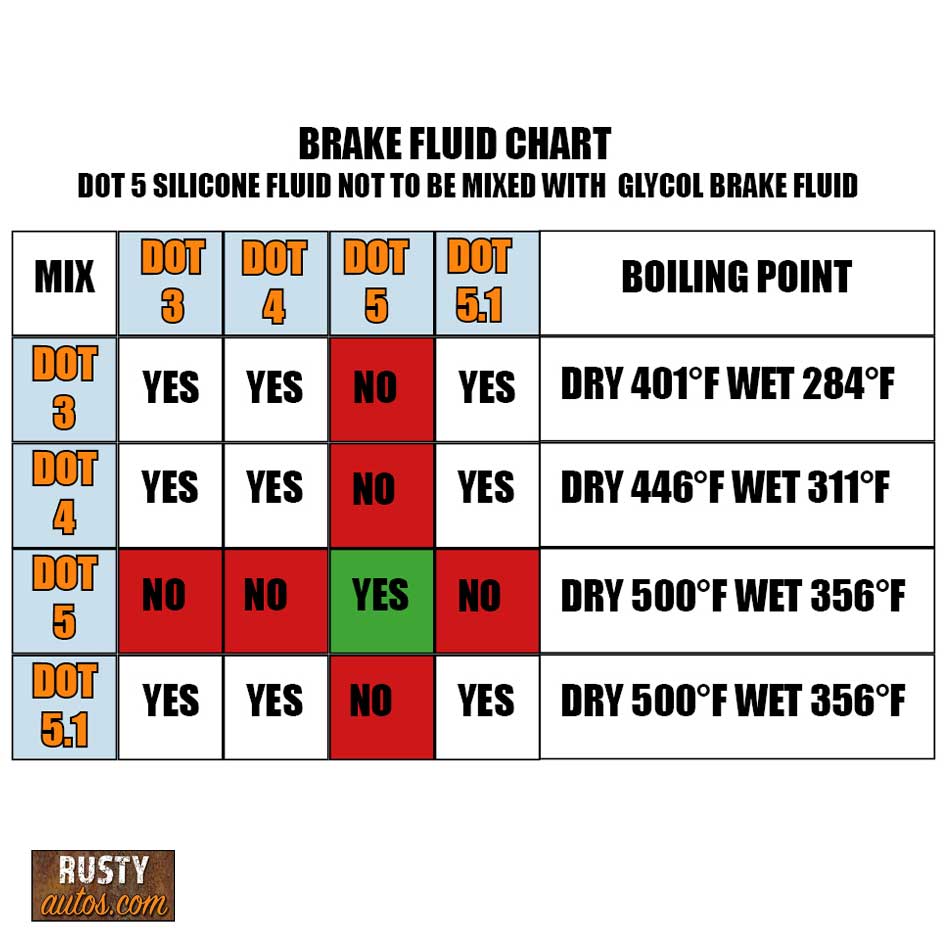
Silicone-based Dot 5 must not be mixed with any of the others; doing so will cause the fluids to react with each other and run a real risk of damaging the whole braking system.
Dot 5 is used in all military vehicles and, since it doesn’t absorb moisture, doesn’t need to be changed at regular intervals. It’s excellent in colder climates as the low moisture content prevents freezing fluids, and it’s paintwork-friendly.
The Glycol fluids Dot 3, 4, and 5.1 will need to be changed every three years. The type of fluid you can take will be marked clearly on the reservoir cap.
Paintwork damage risk
Before removing the reservoir cap, I always clean it, it’s also important to note Glycol based fluids will strip paint so careful splashing this stuff around.

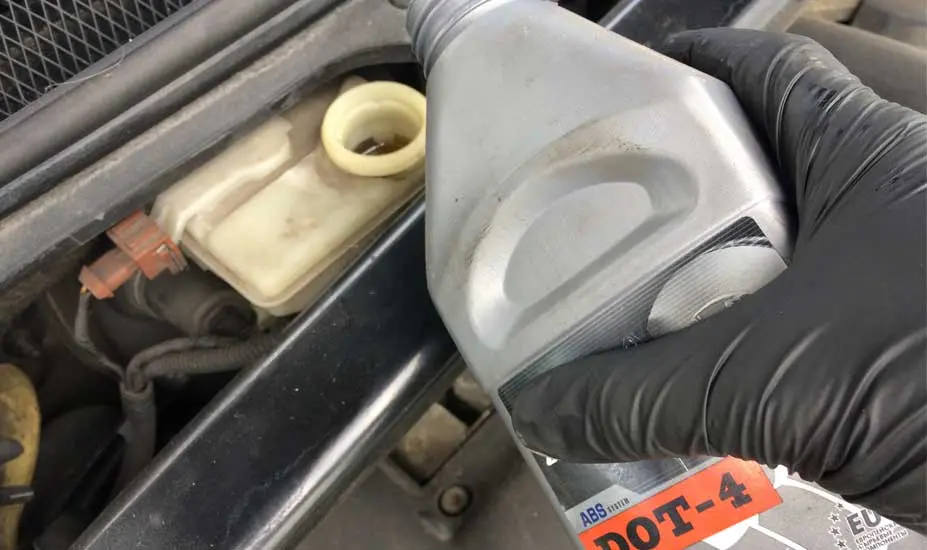
As you know, overfilling the brake fluid reservoir can cause the brakes to drag. A simple fix is to remove the excess fluid, anywhere between min and max is OK.
Bad Brake Hose


This sounds like a one-in-a-million type of failure, but it’s a lot more common than that. The brake hose from the caliper to the steel or copper brake lines breaks down inside. Small rubber strips, partially detached, act as a one-way valve.
The fluid can get to the caliper, but can’t get back, you’ll experience it as a dragging brake. How do you test it? As with the frozen piston above, after you identify the dragging wheel, go ahead push in the caliper piston, if it will only move when you open the bleed nipple, it’s a faulty brake hose.
The fix is simple: replace the brake line.
Tools And Supplies Needed


FAQs
Can low brake fluid cause brakes to bind?
Yes, but usually only if the reservoir has been overfilled. As brake fluid heats and expands, it can prevent the calipers from releasing properly.
Why does one wheel get hotter than the others?
Usually because that brake is sticking or dragging. Common causes include seized caliper pins, a frozen piston, or a collapsed brake hose.
Can a bad brake booster cause brake binding?
It’s uncommon, but possible. Problems with brake booster adjustment or master cylinder pushrod clearance can sometimes prevent brakes from releasing fully.
Why do my brakes bind only after driving for a while?
Heat expansion often makes the problem worse. Brake hoses, calipers, or parking brake cables may begin sticking once components warm up.
Can brake binding damage the transmission?
Yes. Constant brake drag places extra load on the engine and transmission, especially during city driving.
How much does it cost to fix binding brakes?
Minor issues like cleaning and lubricating caliper pins may cost very little. Replacing calipers, hoses, pads, and rotors can range from a few hundred dollars to well over $1,000, depending on the vehicle.
Can you drive with seized brakes?
No, driving with seized brakes is dangerous. The dragging wheel could lock up at highway speeds, causing injury and further damage to the brake system.
Can bad brakes affect acceleration?
Yes, if the brakes are sticking on, the car’s acceleration will feel sluggish. Dragging brakes are dangerous and bad for the engine and transmission.
- About the Author
- Latest Posts


John Cunningham is an Automotive Technician and writer on Rustyautos.com. He’s been a mechanic for over twenty-five years and has worked for GM, Volvo, Volkswagen, Land Rover, and Jaguar dealerships.
John uses his know-how and experience to write articles that help fellow gearheads with all aspects of vehicle ownership, including maintenance, repair, and troubleshooting.