The call came through the tablet mid-afternoon.

White BMW 2 Series. Total loss of engine power. Pulled off the highway. Mother with two children onboard.
Those jobs always get your attention.
When I arrived, the driver was standing beside the car, looking understandably anxious. Being stranded on the side of a busy highway is bad enough. Doing it with two kids in the back makes it a whole different experience.
I introduced myself and asked the question I always ask first.
“What happened?”
She explained that the BMW had recently been into BMW for an EGR cooler recall.
The car had driven perfectly for around 20 miles afterwards.
Then everything changed.
“It suddenly lost power,” she said.
“No warning lights?” I asked.
“No.”
That got my attention.
Modern BMWs love warning lights.
Usually, when something goes wrong, the dashboard lights up like a Christmas tree.
This one didn’t.
Then she mentioned something else.
“The air vent by the windshield kept blowing air.”
I asked her to explain.
“When I pressed the accelerator, air would blow out of the vent. When I lifted off the accelerator, it stopped.”
Now that was interesting.
Not because it made immediate sense.
Because it didn’t.
Then she added one final detail.
“It smelled oily.”
No smoke.
No steam.
Just an oily smell.
That was the moment the picture started coming together.
Most drivers describe a boost leak as a whooshing noise.
A hissing noise.
A rushing air sound.
But not everyone describes problems the same way.
What she was feeling through the vent and smelling inside the cabin sounded suspiciously like pressurized intake air escaping somewhere under the hood.
My first thought was an intercooler hose.
Maybe a clamp was left loose after the EGR cooler work.
I’ve seen it before.
The hood went up.
Oil level good.
Coolant level good.
No obvious damage.
BMW’s engines don’t exactly leave you much room to work with. Everything is packed in tight.
I started inspecting the turbo and intercooler pipework.
All looked good.
Then I spotted it.
A tiny flash of green.
The boost pressure sensor sits close to the shiny new EGR cooler.
And there, sticking out like a sore thumb, was the sensor’s green O-ring seal.
The sensor wasn’t fully seated.
It had been installed, but not pushed completely home.
Under boost pressure, it had partially popped out, creating a massive boost leak.
Problem found.
To be fair to the technician, this wasn’t negligence.
This sort of thing happens.
Modern engines are cramped and awkward, and sometimes a seal or connector just doesn’t click into place the way it should.
I refitted the sensor correctly, secured everything, and started the engine.
Instantly better.
Full power restored.
No strange vent behaviour.
No oily smell.
No loss of performance.
The BMW was back to normal.
The interesting part of this job wasn’t the repair.
The repair took minutes.
The interesting part was the diagnosis.
If I had ignored the vent story because it sounded odd, I might have headed down the wrong path.
Instead, I asked more questions.
I asked her to explain the air at the windshield vent again, then she added the oily smell detail.
Because the customer’s description isn’t always technically correct.
But buried somewhere inside that description is usually the clue you need.
One driver says:
“It sounds like a helicopter.”
Another says:
“It feels like the car is holding its breath.”
Another says:
“The heater starts blowing funny.”
They’re all describing the same fault.
Just in different ways.
From my experience as a roadside tech, listening is often the fastest diagnostic tool you own.
Not the scan tool.
Not the multimeter.
Not the pressure gauge.
Listening.
Especially on the side of a noisy highway where distractions are everywhere.
Once everything checked out, I followed the BMW for a few miles to make sure the repair held.
No issues.
No warning lights.
No loss of power.
Just one relieved mother and two kids heading on their way.
As for why there was no engine warning light?
Honestly, sometimes that’s just the way it goes.
Cars don’t always read the textbook.
And neither do drivers.
That’s why roadside diagnostics is as much about listening to people as it is about listening to engines.
— Northcap
YOUR CAR JUST SAID “UH-OH.”
Warning light? Won’t start? Weird noise?
Something smells expensive?
DON’T PANIC. KNOW WHAT TO DO NEXT.
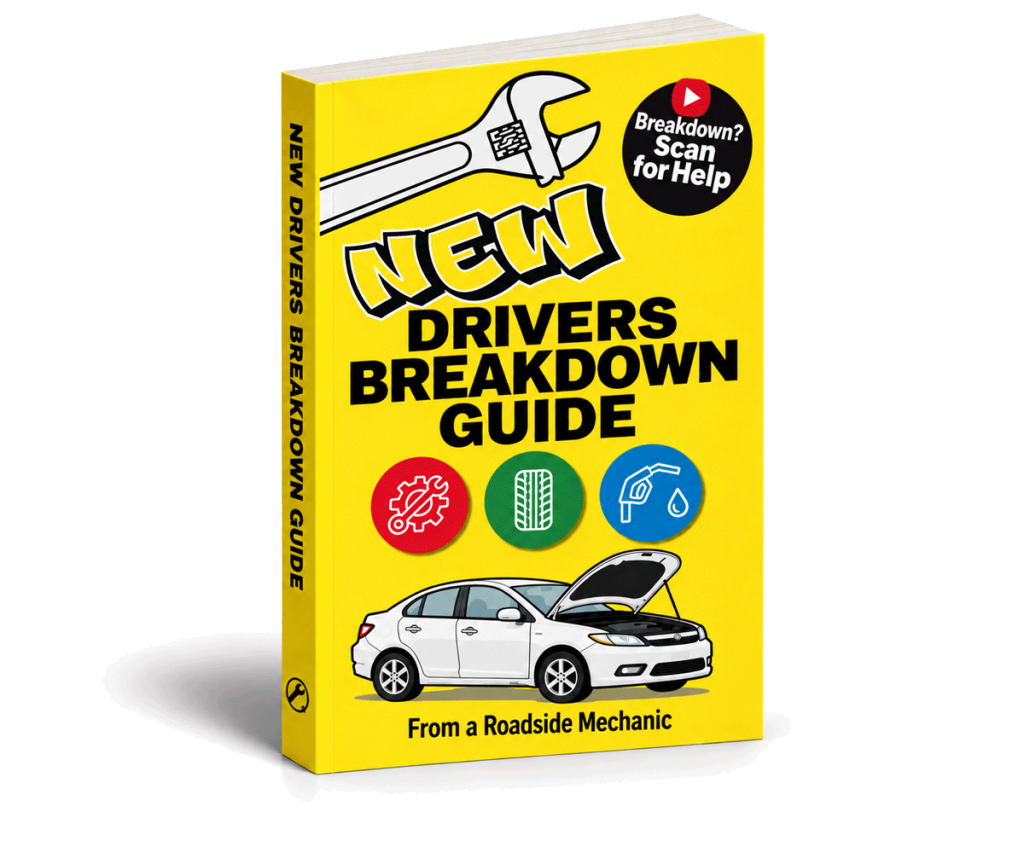
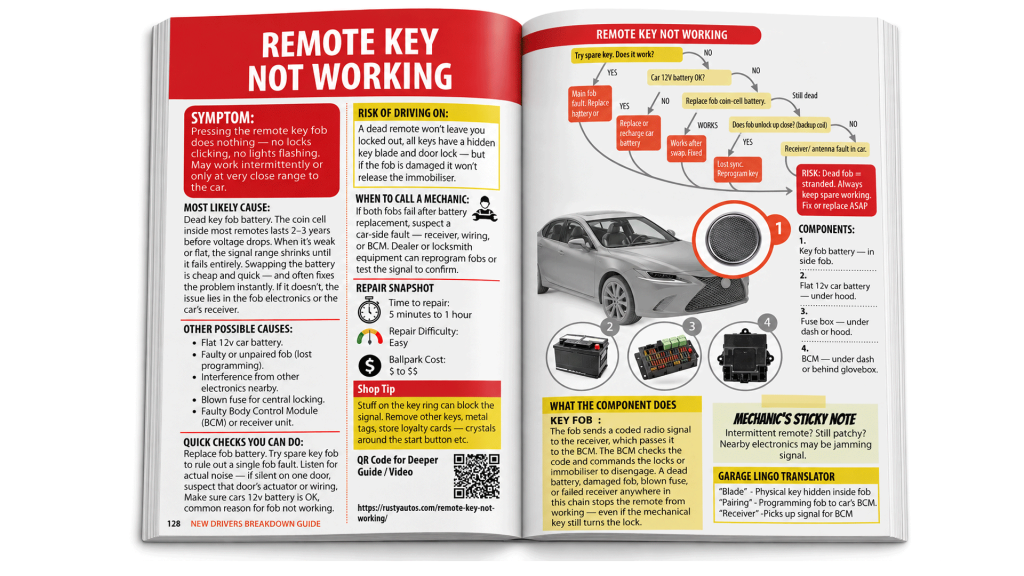
The New Driver’s Breakdown Guide gives you the car know-how nobody taught you.
- About the Author
- Latest Posts


Meet Northcap, a seasoned mechanic and roadside assistance expert with over 20 years of hands-on experience. At Rustyautos.com, Northcap shares exclusive insights into what really breaks down in cars, offering practical tips and real-world advice to keep drivers informed and their cars on the road.