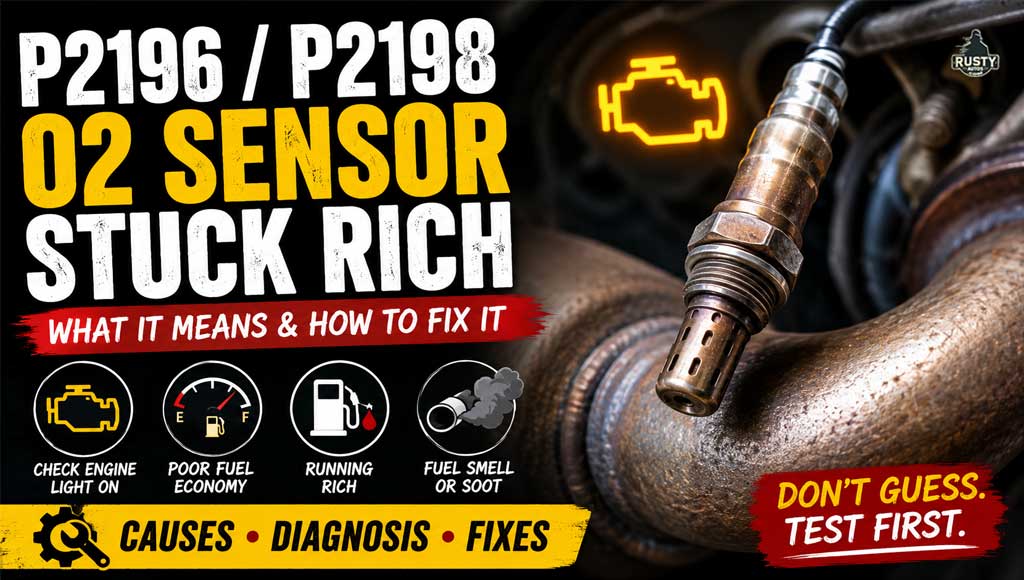
Engine light comes on…
Fuel economy drops.
Car smells a bit rich.
Scan it.
P2196 or P2198.
O2 sensor stuck rich.
This one is common. And it doesn’t always mean the sensor is bad.
What the code means
Your oxygen sensor is reporting a rich condition.
Rich means too much fuel, not enough air.
The ECU expects the O2 sensor signal to switch between rich and lean as it constantly adjusts fueling.
But with these codes, the signal is stuck on rich.
- P2196 usually refers to Bank 1 Sensor 1
- P2198 usually refers to Bank 2 Sensor 1
These are upstream sensors. The important ones for fuel control.
If they get stuck, the ECU can’t properly adjust the air fuel mixture.
Important: A P2196 or P2198 code doesn’t automatically mean the engine is running rich. It simply means the ECU is seeing a rich signal from the oxygen sensor. The sensor may be faulty, or it may be accurately reporting a genuine rich condition elsewhere in the engine. That’s why testing always comes before replacing parts.
What you will notice
Sometimes subtle. Sometimes obvious.
- Check engine light on
- Poor fuel economy
- Fuel smell from exhaust
- Rough idle
- Black soot on tailpipe
- Hesitation or sluggish response
- Possible hard starting
In some cases, it drives almost normal. That’s what catches people out.
What causes it
Faulty O2 sensor
This is the obvious one.
If the sensor fails or becomes contaminated:
- It can report a constant rich signal
- The ECU trusts that signal
- Fueling gets thrown off
But don’t jump straight to replacing it.
Seen plenty of good sensors blamed for other faults.
Common contaminants include engine oil, coolant from an internal leak, silicone from certain sealants, and carbon deposits from prolonged rich running. Once contaminated, the sensor may no longer respond accurately.
Leaking fuel injector
A dripping injector will overfuel one or more cylinders.
That pushes the mixture rich.
The O2 sensor sees it and reports rich all the time.
Clues include:
- Rough idle
- Fuel smell
- Possible misfire
- One cylinder running dirty
High fuel pressure
Too much fuel pressure means more fuel delivered than expected.
Common causes:
- Faulty fuel pressure regulator
- Blocked return line
- Incorrect fuel pump operation
This can affect all cylinders, not just one.
Mass air flow sensor issue
A dirty or faulty mass air flow (MAF) sensor can send incorrect airflow information to the ECU. That leads to inaccurate fuel calculations and, on some vehicles, may result in a rich-running condition. Cleaning the sensor with a dedicated MAF cleaner is often worth trying before replacing it.
Engine coolant temperature sensor fault
If the ECU thinks the engine is cold:
- It adds extra fuel
- Like a choke on older engines
If the sensor is stuck reading cold, the engine runs rich all the time.
Exhaust leaks near the sensor
Sounds odd, but it happens.
An exhaust leak can mess with sensor readings.
Though more often linked to lean codes, it can cause unstable readings that confuse the ECU.
Wiring or connector issues
Damaged wiring can:
- Hold the signal high
- Interfere with sensor operation
- Cause false readings
Always worth checking before replacing parts.
What to check first
Start simple.
- Scan for additional codes
- Look at live O2 sensor data
- Check fuel trims
- Inspect for fuel smell or black smoke
- Check MAF readings
- Inspect wiring at the sensor
Healthy short-term and long-term fuel trims are typically within about ±10%. Large negative fuel trims usually indicate the ECU is removing fuel because it believes the engine is running rich.
Before clearing the codes, save the freeze-frame data if your scan tool allows it. It records the engine conditions when the fault was detected and can provide valuable diagnostic clues.
If the O2 signal is flatlined rich and doesn’t respond when you rev the engine, that’s a big clue.
Quick test tip
Force the engine lean for a moment.
You can do this by:
- Briefly introduce a vacuum leak by removing, say, a brake booster hose
If the sensor is working, the reading should swing lean.
If it stays rich, the sensor or wiring is likely at fault.
Can you keep driving
Usually, yes, short-term.
But not ideal.
Running rich can:
- Damage the catalytic converter
- Increase fuel consumption
- Cause carbon build-up
- Lead to further engine issues
Severe over-fueling can eventually overheat and melt the catalytic converter, turning a relatively inexpensive repair into a very spendy one.
Typical fixes
Depends on the cause.
Common repairs include:
- Replacing the O2 sensor
- Cleaning or replacing the MAF sensor
- Fixing leaking injectors
- Replacing fuel pressure regulator
- Repairing wiring issues
- Replacing faulty coolant temperature sensor
If replacement is needed, an OEM-quality sensor from manufacturers such as Denso, NTK (NGK), or Bosch is usually a better choice than the cheapest aftermarket option. I’ve seen poor-quality sensors trigger repeat fault codes straight out of the box.
P2196 and P2198 often get blamed on a faulty oxygen sensor, but that’s only part of the story. In many cases, the sensor is simply reporting another problem, such as a leaking injector, excessive fuel pressure, or incorrect airflow data. Spending a few extra minutes checking live data can save you from replacing perfectly good parts.
I’ve seen these codes on a wide range of vehicles, including Chevrolet, Ford, Toyota, Honda, Nissan, Hyundai, Kia, Volkswagen, BMW, and many others. The diagnostic process is largely the same regardless of the badge on the grille.
YOUR CAR JUST SAID “UH-OH.”
Warning light? Won’t start? Weird noise?
Something smells expensive?
DON’T PANIC. KNOW WHAT TO DO NEXT.
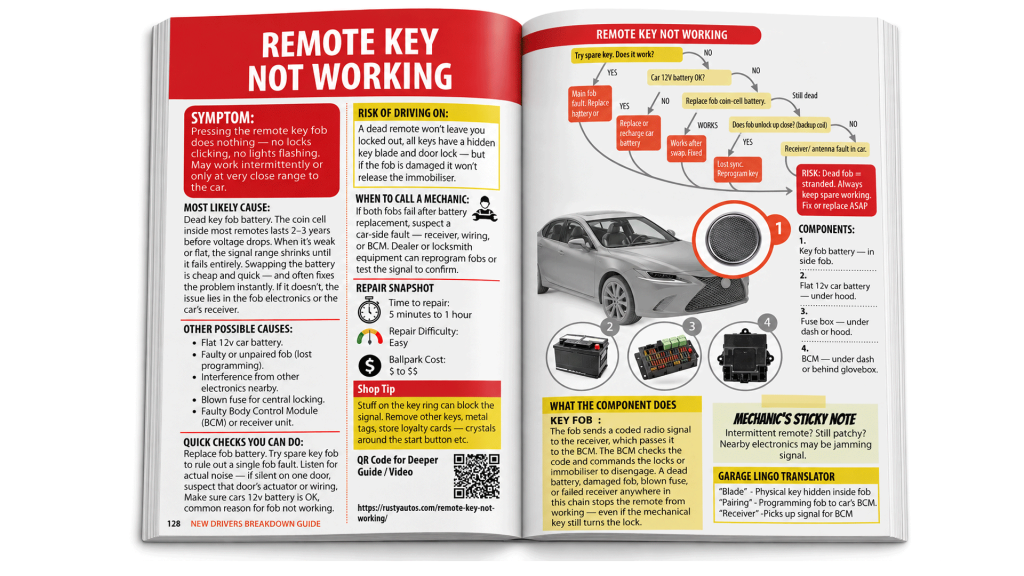
The New Driver’s Breakdown Guide gives you the car know-how nobody taught you.
- About the Author
- Latest Posts


Meet Northcap, a seasoned mechanic and roadside assistance expert with over 20 years of hands-on experience. At Rustyautos.com, Northcap shares exclusive insights into what really breaks down in cars, offering practical tips and real-world advice to keep drivers informed and their cars on the road.