The Light That Makes Everyone Panic
That glowing yellow engine symbol on your dash — the Check Engine Light (CEL) — is your car’s way of saying, “Something’s not right.”
Sometimes it’s just a loose gas cap. Other times, it’s your catalytic converter crying for mercy. Either way, the car’s brain has detected a fault and stored a code.
Solid vs Flashing — The Difference Matters
- Solid Light: Something’s off. It’s safe to drive for now, but you should check it soon.
- Flashing Light: The engine’s misfiring — unburned fuel is hitting the catalytic converter, which can melt it in minutes.
When it flashes, park it immediately or risk turning a $50 fix into a $1,500 disaster.
Why It Happens
The CEL watches every major system — fuel, air, ignition, emissions, and sensors.
When anything drifts outside its normal range, the computer logs a diagnostic trouble code (DTC) and lights the warning.
That’s where the OBD-II port comes in. It’s your car’s snitch socket — and the key to finding out what’s really wrong.
Quick DIY Checks
- Tighten the gas cap – The number one cause of a CEL.
- Check fluids – Low oil or coolant can trigger knock-on sensor faults.
- Look for loose hoses or connectors – Air leaks throw off fuel mix readings.
- If flashing, shut it down and tow it — don’t gamble on it clearing itself.
- Plug in a cheap OBD-II scanner – This is where the real answers live.
OBD-II Crash Course + Fault Code Decoder
Every car since 1996 has a built-in tattletale port called OBD-II.
It lives under the dash, usually near your right knee. Plug in a scanner, and your car will spill its secrets — one code at a time.
How to Read Codes
- How to Read Codes
- Ignition ON (engine off)
- Plug in the scanner (it powers itself)
- Select “Read Codes”
- Note what starts with:
- P = Powertrain (engine/transmission)
- B = Body (locks, airbags, windows)
- C = Chassis (ABS, steering, suspension)
- U = Network (communication faults)
- Then match your codes using the decoder or search them online.
- Example: P0300 = random misfire. P0171 = engine running lean.
Then match your codes using the decoder or search them online.
Example: P0300 = random misfire. P0171 = engine running lean.
Common Causes Behind the Light
- Loose or faulty gas cap
- Failing O₂ sensor
- Engine misfire (spark plug, coil, or injector)
- Catalytic converter efficiency down
- Vacuum leak from cracked or disconnected hoses
What a Mechanic Will Do
- Scan and interpret stored fault codes
- Run live data from sensors
- Test ignition and fuel components
- Perform smoke test for vacuum leaks
Typical Repair Costs
| Fault | Typical Cost |
|---|---|
| Gas cap | $20–$50 |
| O₂ sensor | $150–$300 |
| Ignition coil & plugs | $250–$500 |
| Catalytic converter | $900–$2,000+ |
YOUR CAR JUST SAID “UH-OH.”
Warning light? Won’t start? Weird noise?
Something smells expensive?
DON’T PANIC. KNOW WHAT TO DO NEXT.
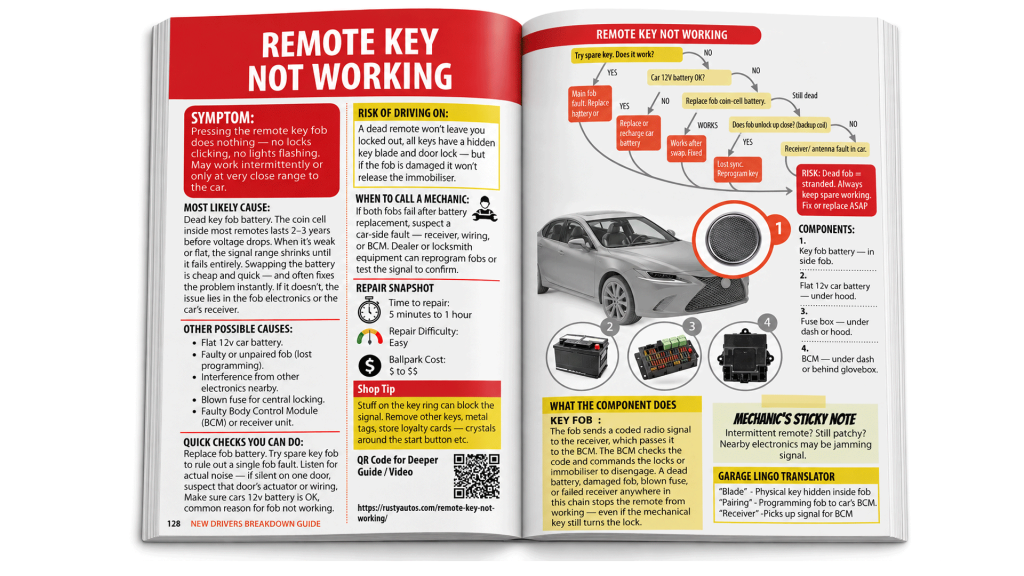
The New Driver’s Breakdown Guide gives you the car know-how nobody taught you.
- About the Author
- Latest Posts


Meet Northcap, a seasoned mechanic and roadside assistance expert with over 20 years of hands-on experience. At Rustyautos.com, Northcap shares exclusive insights into what really breaks down in cars, offering practical tips and real-world advice to keep drivers informed and their cars on the road.