
A flat battery is always irritating, but then your day gets even worse when you find yourself locked out of your car, what a pain in the jacksie. Don’t panic, there’s a simple solution, and here it comes…
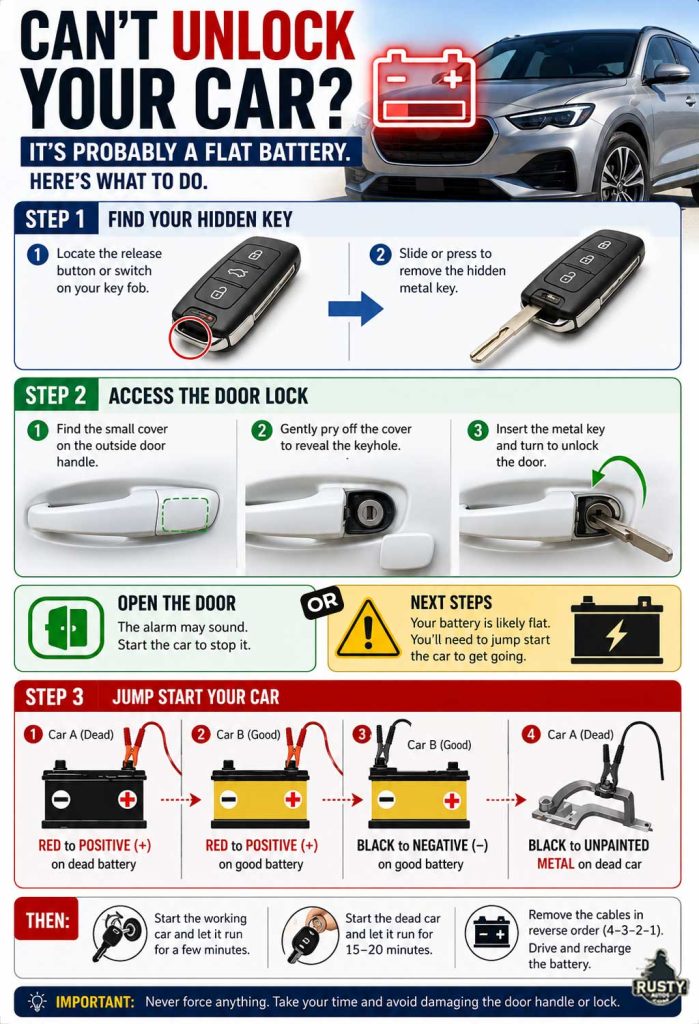
Follow these 3 steps to unlock your car when the battery is dead.
- Remove the hidden key (Key-less entry)
- Remove the hidden door handle lock cover
- Place key in the lock and unlock manually
In this post, you’ll learn how to access your car without tools, how to boost-start your car, and how to test the battery. I’ll also show you how to access your car if you’ve misplaced the hidden key.
Key System Overview
During the ’00s, bladeless key systems were common with some manufacturers. The ignition switch was a fully electronic unit that didn’t require a metal key to operate. Instead, the fob was placed into a look-alike ignition switch, and a transponder receiver read the fob code, allowing the ignition to turn and the engine to start.
Most regular family cars today use a key fob with a traditional metal key that folds into the fob, and a mechanical ignition switch.
Higher-end, latest-gen vehicles use a smart key and employ what they call keyless entry technology.
All these systems require a fully charged battery in both the key fob and the car to operate successfully. As you know, when the 12V battery is flat, nothing works.
Dead Key Fob Or Dead Car Battery?
These two problems often get confused.
If the key fob battery is dead:
- The unlock buttons won’t work
- The vehicle battery may still be perfectly fine
- The hidden key will still unlock the door
- The car may still start once the fob is held near the start button/hot-spot
If the car battery itself is dead:
- The whole vehicle may appear completely lifeless
- Interior lights may be dim or dead
- The alarm system may act strangely
- Central locking won’t operate
On roadside calls, I see weak key fob batteries mistaken for dead car batteries all the time.
Gaining Access To Your Car
To access your car, we’ll need to do three things: 1 locate the metal key, 2 locate the door lock, and 3 operate the door lock.
If your key is a flip-out regular key, great! You are ahead of the game; you can jump ahead to step 2.
Step 1: Locating your key
For those without a flip-out key, locate the hidden key in your fob. All key fobs will contain a hidden key. Usually, a discrete slide button or cutaway reveals the flat metal blade key. Google your model car, and you’ll quickly discover how to access the key.
Step 2: Locating your door key lock
Locating the door lock isn’t too difficult either. The door lock is hidden behind the door handle cover. Removing the cover or an access cover will allow access to the lock. Some pull-out door handles reveal the lock when the handle is held out.
The door handle cover may or may not have a discreetly embossed lock symbol. It’s not uncommon for the door lock to be fitted, sometimes only to the driver’s or passenger’s front door.
Most manufacturers machine a point on the key blade so that the user can use it as a tool to gently pry up the plastic door cover. If in doubt, Google your model for access point and technique.
Step 3: Operating the door lock
You know how this works, but be prepared if your key fob battery is flat, your car alarm will sound when the door is opened. Placing the key/fob in the ignition will turn the alarm off.
Also worth noting, it’s very likely the door lock is very stiff as it’s probably never been used. A shot of WD40 will do wonders, but do be careful not to damage the key, especially if it’s needed for an ignition switch.
Frozen Door Locks Can Mimic A Dead Battery Problem
In colder climates, door locks can physically freeze.
That creates symptoms that feel exactly like a dead battery because:
- The key won’t turn
- The lock feels jammed
- The door won’t unlock manually
Never force the key aggressively.
A little lock de-icer or gentle heat on the key usually works far better than brute force.
I’ve seen plenty of keys snapped off in frozen locks during winter.
Be Careful With Frameless Windows
Some modern vehicles use frameless door glass.
Normally, the window drops slightly when the door opens to clear the weather seal.
With a dead battery, that window movement may not happen.
Forcing the door open aggressively can sometimes damage:
- Window seals
- Trim
- Glass alignment
Open the door carefully if your vehicle uses frameless windows.
Some Modern EVs Use Electronic Door Releases
Some newer EVs and luxury vehicles rely heavily on electronic door latches and pop-out handles.
When the battery dies, accessing the vehicle can become more complicated than traditional cars.
Many still include hidden emergency access methods, but they’re often well hidden.
Common emergency access locations include:
- Under trim covers
- Behind tow hook covers
- Inside hidden fob compartments
This is why checking the owner’s manual before an emergency happens is actually worth doing.
Push-Button Start Cars Have A Backup Start Location
Keyless entry push-button start vehicles can still detect a dead key fob if it’s placed directly against a backup receiver.
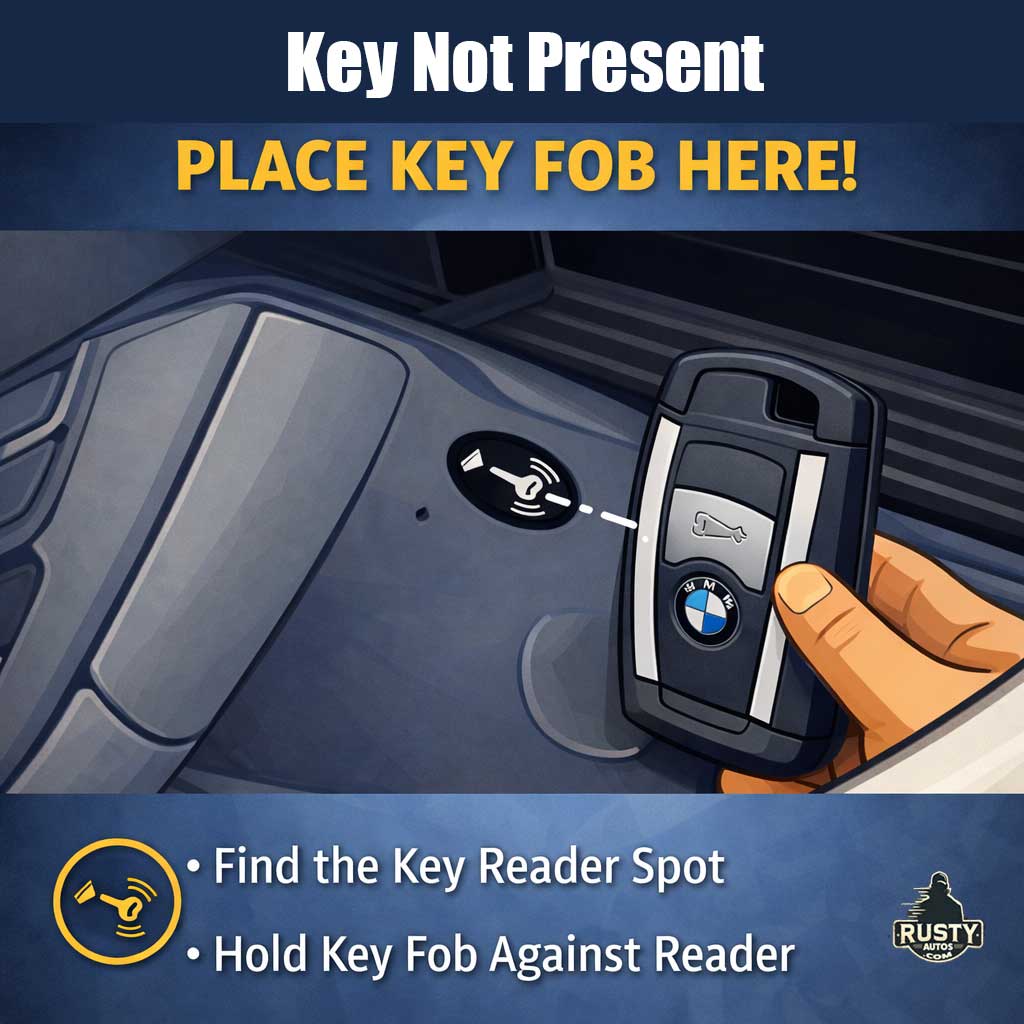
Common locations include:
- Beside the start button
- Side of the steering column
- Inside the center console
- In a cup holder
- Inside the centre armrest
If the key fob battery is weak, holding the fob directly against the backup location allows the vehicle to start normally.
Check your owner’s manual for the exact location.
Accessing The Car Without The Hidden Key
If you have misplaced the hidden key blade and still have the fob, and the fob light works when you hit the key, access is still possible, but it will take a lot more work.
This process involves getting power into your car’s system, which is difficult because everything is locked, including the hood and trunk. It is possible to open the hood by popping the catch, but it’s difficult. Instead, follow the process below, but you’ll need tools and time.
Tools you’ll need:
- Jack
- Axle stands
- Torx/screwdriver/small socket set
- Charged donor battery
- Jump leads
- Helper
You can check out all these tools on the Mechanics tools page.
Technique as follows:
- Jack the front of the car and support with axle stands
- Remove splash guards
- Locate the starter motor
- Fit ground cable to charged donor battery and to car chassis or engine casing
- Fit battery positive cable to metal shank of long screwdriver – (A power probe makes this whole process a ton easier; check it out here on the Auto electrical tools page)
- Place the screwdriver/power probe on the starter power feed (cap may need to be removed)
- Holding the screwdriver on the starter feed, have a helper connect the positive jumper to the donor battery positive feed (careful not to ground the screwdriver on the chassis or engine)
- Now have the helper press the unlock key fob button while holding the power to the starter
- The vehicle should now unlock
How To Boost Start Your Car
Boost starting is the fastest way to get your car up and running, but if the battery is faulty, it may not stay running.
Incorrect Jump Starting Can Damage Modern Electronics
Modern vehicles are packed with sensitive electronics.
Incorrect jump-starting can damage:
- Control modules
- Alternators
- Battery monitoring systems
- Audio systems
Always connect jump leads carefully and in the correct order.
Never allow the positive clamp to touch body metal while connected.
And avoid disconnecting the battery while the engine is running — that old-school trick can seriously damage modern charging systems.
To boost start, attach the cables in order 1, 2, 3, and 4. Start the vehicle and remove cables 4, 3, 2, and 1. The final cable at 4 is attached to the ground (GRD). A ground is any clean, non-painted metal on the chassis or engine.
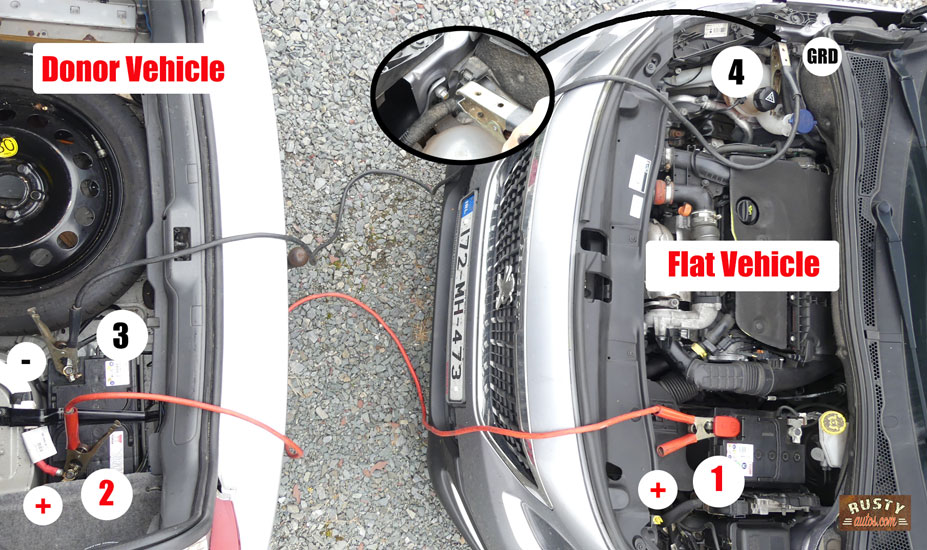
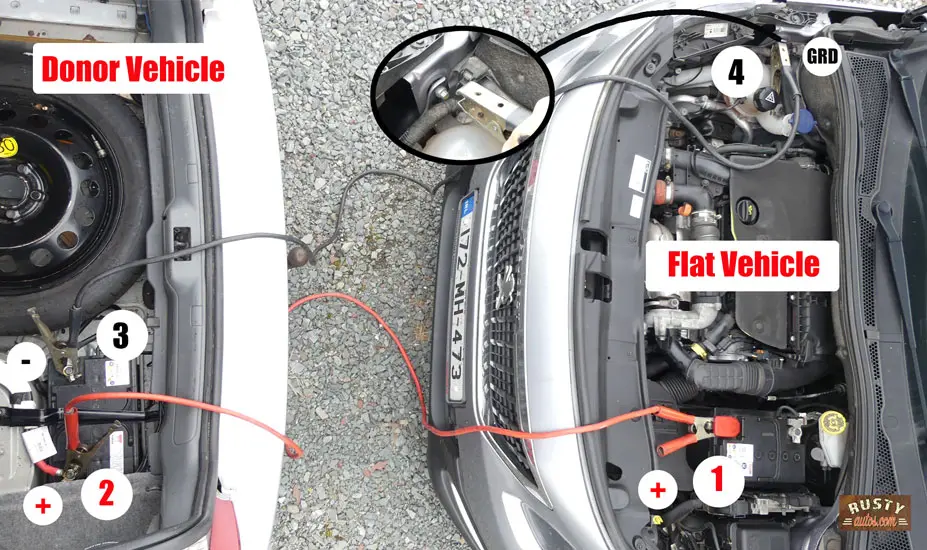
See battery testing below. Your car may have a battery parasitic drain and if so this problem will persist, a battery maintainer will help keep the battery topped up but only masks the problem.
If your battery keeps running flat, you may have one of 3 common problems.
- Faulty battery
- Faulty alternator
- Parasitic drain
1 Battery testing
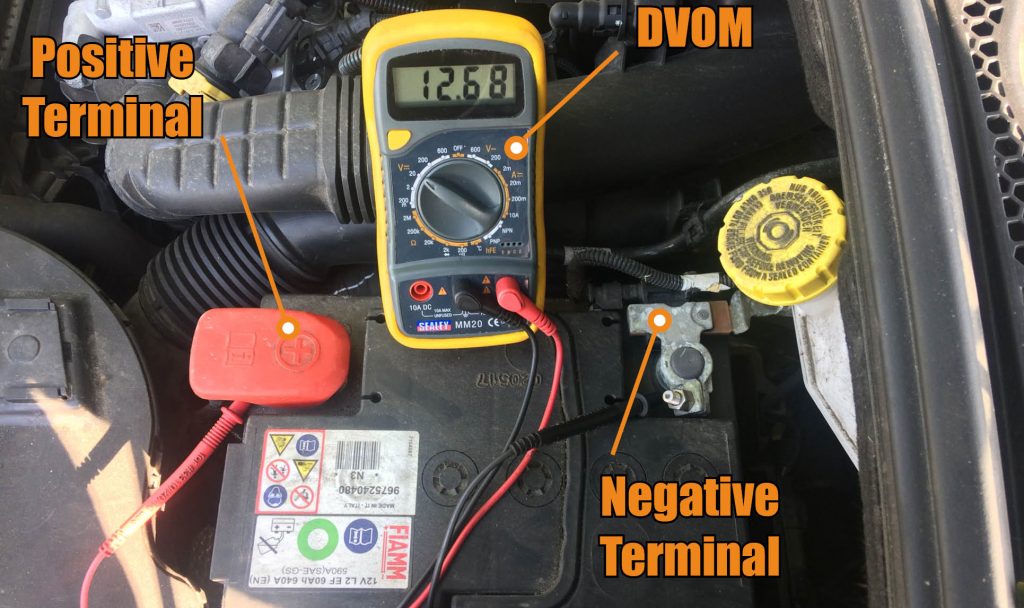

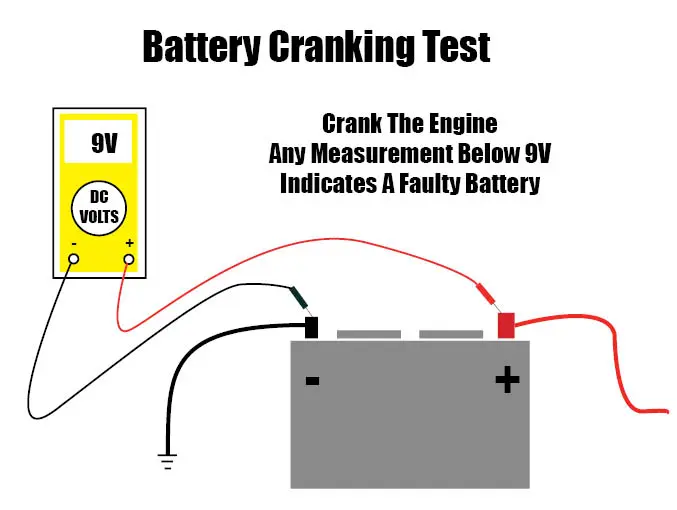
To test the battery first run a volt check and then run a crank test. You’ll need a voltmeter to run these tests.
Check out the test kit, charger, and all the tools I use, including wiring diagrams and workshop manuals, here on the Auto electrical repair tools page. Attach a DVOM or voltmeter and simply read the state of charge. Load testing, however, is a better test of the battery’s ability to supply steady voltage, see crank test below. (Note: battery must be charged above 12.5 volts)
- 12.7 – 13.2 volts is 100% charged
- 12.4 volts is 75% charged
- 12.2 volts is 50% charged
- 12.0 volts is 25% charged
- 0 – 11.9 volts is Discharged (Flat)

If you need to charge the battery before testing it, the little NOCO boost/charger pack is about the best I’ve seen, and I’ve been a mechanic for over 25 years.
It’s small enough to fit in a glove box and powerful enough to start a diesel engine, seriously! Anyway, you can check it out here on the Auto electrical tools page. Check out new batteries on the Amazon link below.
Amazon Car Batteries2 Alternator testing
If you suspect an alternator fault, check out this post it covers testing your alternator – “How long to charge battery driving?”
3 Parasitic battery drain
A parasitic drain is a current that drains your battery when your vehicle is idle. It is often caused by a faulty component, such as a radio or an alarm. After-market accessories are a common source of parasitic drain.

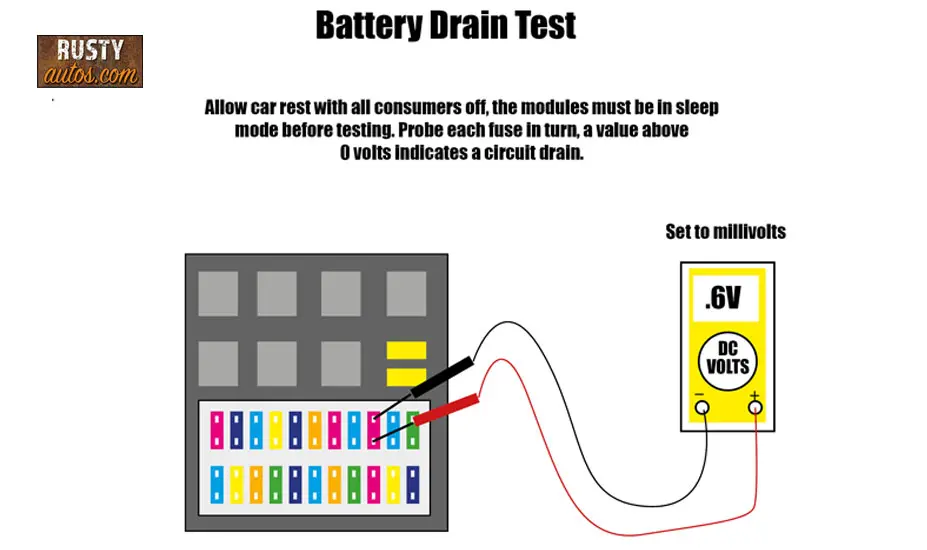
Follow the test above to check for a drain. It is important not to open doors, etc., during the test, as this will wake up computer modules and cause incorrect diagnoses. An electrical short is another common cause, and you can read about that right here: “Car fuse keeps blowing”.
FAQs
How do I unlock my car when the battery is dead?
Most modern vehicles still include a hidden mechanical key inside the key fob.
You’ll usually need to:
- Remove the hidden key blade
- Locate the concealed door lock
- Unlock the door manually
The lock is often hidden behind a small plastic cover near the door handle.
Why won’t my key fob unlock the car?
Usually one of two reasons:
- The key fob battery is dead
- The car battery itself is dead
If the vehicle battery is completely flat, the central locking system won’t operate even if the key fob battery is good.
How do I know if it’s the key fob battery or the car battery?
If the key fob battery is dead:
- The buttons stop working
- The hidden key still unlocks the door
- The vehicle may still start using the backup fob location
If the car battery is dead:
- The whole car may appear lifeless
- Interior lights may be dim or dead
- Central locking won’t respond
- Dash may remain dark
Where is the hidden key inside the key fob?
Most key fobs contain a small hidden metal key blade.
Usually there’s:
- A slide switch
- Small release button
- Hidden latch
Manufacturers hide them well, but they’re almost always there.
A quick Google search for your vehicle model usually shows the exact release method.
Where is the hidden door lock?
Many modern cars hide the lock behind a plastic cover near the driver’s door handle.
Some vehicles only have a lock cylinder on the driver’s door.
Others reveal the lock when the handle is pulled outward.
Why is my door lock so stiff?
Because it’s probably never used.
Most drivers rely entirely on remote locking, so the mechanical lock can sit unused for years.
A little WD40 or lock lubricant usually frees it up quickly.
Just don’t force the key aggressively.
Why is my car alarm going off after unlocking manually?
That’s completely normal on many vehicles.
The alarm system sees the door opening without electronic unlocking and assumes the car is being broken into.
Placing the key fob in the ignition or pressing the start button normally stops the alarm.
Can I start a push-button car with a dead key fob battery?
Usually yes.
Most push-button start vehicles include a backup transponder receiver.
Holding the key fob directly against:
- The start button
- Steering column
- Center console
- Cup holder area
…often allows the car to start even with a weak fob battery.
What if I lost the hidden key blade?
Things get more difficult, but it’s still possible to access the vehicle.
In some cases, temporary external power can be applied to the vehicle’s electrical system through the starter motor feed to restore central locking.
However, this is more advanced and usually requires:
- Jacking the vehicle safely
- Accessing the starter motor
- Using jumper leads carefully
At that point, roadside assistance may honestly be the safer option.
Can I damage my car jump-starting it incorrectly?
Absolutely.
Modern vehicles are packed with sensitive electronics.
Incorrect jump-starting can damage:
- Control modules
- Alternators
- Battery monitoring systems
- Audio systems
Always connect jumper cables carefully and in the correct order.
Why won’t my key turn in the lock?
Usually one of three things:
- The lock is stiff from lack of use
- The lock is frozen
- The steering lock is binding
Try gently wiggling the steering wheel while turning the key.
Avoid forcing the key aggressively because snapping it creates a much bigger problem.
Can cold weather freeze the door lock?
Definitely.
Frozen locks are extremely common during winter.
The lock may feel completely seized even though the battery is fine.
Lock de-icer or gentle heat usually works far better than brute force.
I’ve seen plenty of keys snapped in frozen locks.
Why won’t my hood open if the battery is dead?
Many vehicles use an interior hood release cable.
If you can’t access the cabin, you obviously can’t reach the hood release.
That’s why gaining entry through the mechanical door lock is normally the first step.
Can a dead battery cause strange electrical behavior?
Absolutely.
Low voltage can create all sorts of weird symptoms, including:
- Flickering lights
- Random warning lights
- Alarm problems
- Clicking noises
- EPB faults
- Communication errors
Modern cars absolutely hate low voltage.
Why does my battery keep going flat?
Most repeat dead battery problems come down to one of three things:
- Faulty battery
- Faulty alternator
- Parasitic battery drain
Aftermarket accessories are a very common source of battery drains.
Can I unlock an EV with a dead battery?
Usually, yes, but many EVs use hidden emergency access methods.
Some use:
- Hidden key slots
- Manual release cables
- Hidden electronic access points
Unfortunately, many are very well concealed.
Checking the owner’s manual before an emergency happens is honestly worth doing on modern EVs.
What to do if the door lock won’t turn?
If your car door lock won’t turn, remove the key and check for damage or debris. Using WD40, spray into the door lock and onto the blade of the key.
Work the key in and out of the lock and side to side without applying force. Turn the key left and right alternately without using excessive force until the lock opens.
YOUR CAR JUST SAID “UH-OH.”
Warning light? Won’t start? Weird noise?
Something smells expensive?
DON’T PANIC. KNOW WHAT TO DO NEXT.
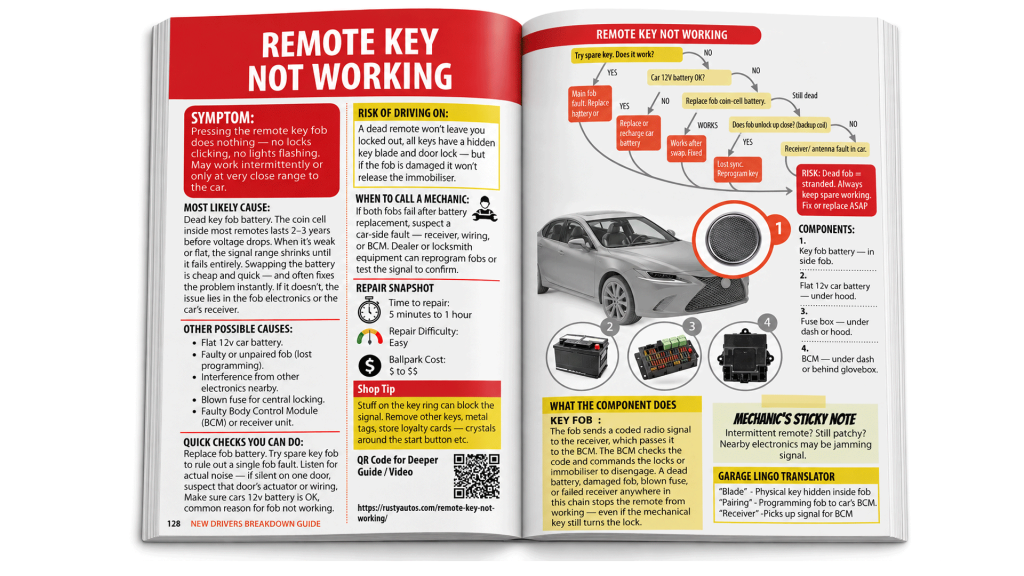
The New Driver’s Breakdown Guide gives you the car know-how nobody taught you.
- About the Author
- Latest Posts


John Cunningham is an Automotive Technician and writer on Rustyautos.com. He’s been a mechanic for over twenty-five years and has worked for GM, Volvo, Volkswagen, Land Rover, and Jaguar dealerships.
John uses his know-how and experience to write articles that help fellow gearheads with all aspects of vehicle ownership, including maintenance, repair, and troubleshooting.