Here’s the process from the roadside. Even if you don’t grab a wrench yourself, this is what’s happening in the bay (or on the shoulder) when a pro chases a no-start.
Step 1 – Quick Visual Check
- Oil & Coolant: Before touching anything, I check levels. A car that’s cooked or bone-dry is already waving a red flag.
- Under-Hood Scan: Loose wires, cracked hoses, obvious leaks — sometimes the problem stares back at you.
Step 2 – Immobiliser & Cranking Speed
- Immobiliser Light: If the dash shows the security light staying on, you’ve already got your culprit. The car’s brain is saying “nope.”
- Try a spare key. If that doesn’t help, then time for professional help. Immobiliser issues typically need a computer with key coding capability.
Crank Speed: I listen.
- Normal crank = battery and starter fine.
- Sluggish crank = weak battery or lazy starter.
🔍 Jump to checking battery and jumpstarting.
- Crank too fast = timing belt/chain may have snapped — the pistons are spinning free, and that’s bad news.
🔍 Jump to timing belt diagnosis.
Step 3 – Scan for Fault Codes
- With a code reader, I pull stored faults. Crank sensor errors, misfires, or immobiliser lockouts often show themselves right here.
- No scanner? No problem — move to the “carb cleaner trick.”
Step 4 – Carb Cleaner Trick
- A squirt into the intake box.
- Fires briefly, then dies → fuel problem (pump, relay, injectors).
- Doesn’t fire at all → spark problem (crank sensor, coil, wiring).
🔍 Jump to fuel system checks.
Step 5 – Spark Check
I use a spark tester to check the spark.
- No spark at all → suspect crank sensor or coil.
- Individual coils → crank sensor is the likely fault (all coils won’t die at once).
- Single coil pack → check input wiring. If power and signal are present but no spark, the coil pack itself is toast.
🔍 Jump to ignition system checks.
🕑 Time & Cost Ballpark
- Visual/immobiliser check: Minutes, free.
- Carb cleaner test: 5 minutes, under €10.
- Spark check: 20–30 minutes, no special cost.
- Fuel pump replacement: 1–3 hrs, €300–€700.
- Crank sensor replacement: 1 hr, €150–€400.
- Coil pack replacement: 1–2 hrs, €250–€600.
- Timing belt failure: 4–6 hrs, €800–€1,500+.
👉 You don’t need to do the wrenching yourself, but knowing these numbers helps when the garage phones you with the bill.
Fuel System Checks
Fuel System Diagnosis (Crank, No Start)
So the carb cleaner made her cough, then quit. That’s fuel system territory.
How the Fuel System Works (Quick & Dirty)
- Pump in the Tank: Electric pump pushes gas forward under pressure.
- Fuel Filter: Screens out junk so injectors don’t clog.
- Rail & Injectors: The rail is just the pipe; injectors are the sprayers.
- Pressure Regulator: Maintains steady fuel pressure and returns the excess to the tank. (Some newer returnless systems don’t use a separate regulator.)
- Fuel Pump module: Some high-end cars will have a dedicated computer to manage the fuel pump.
If any one of those pieces taps out, the whole show stops. However, the pump is the usual culprit. It lives in the tank, runs hot, and if you’re always driving on fumes, it cooks itself. Low fuel can even trip a failsafe to stop the pump from burning up.
What a Mechanic Checks First
1 Fuel in the Tank: Silly, but I’ve seen it a hundred times. Low fuel = pump won’t prime.
2 Pump Noise: Two-second hum at key-on means it’s trying. Silence = trouble.
3 Fuel Pump Relay & Fuse: Quick swap or check with a meter. Takes minutes.
4 Tap Test: Whack the bottom of the tank. If the pump kicks on, it’s on borrowed time.
5 Fuel at the Rail: Check at Schrader valve or open fuel line → spray = supply. Bone dry → pump, relay, or wiring.
6 Pressure Test: In the shop, I hook up a gauge. Spec varies, but zero is always bad.
Likely Faults and What They Mean for You
- Empty/Low Tank: Free fix. Fill it.
- Blown Fuse or Bad Relay: Cheap and quick — €20–€40, 10 minutes.
- Clogged Fuel Filter: 30–60 minutes, €60–€150.
- Fuel Pump Failure: 1–3 hours, €300–€700 (more if tank must be dropped).
Northcap’s Streetwise Note
Don’t be fooled by the hum. A pump can buzz away and still move zero fuel. If you find a blown pump fuse, odds are the pump itself is on the way out. And while a clogged filter can choke the system, plenty of modern cars don’t even have a separate filter anymore — the pump assembly does the filtering.
Extra Checks (If It’s Not the Pump)
- Wiring to Pump: Corroded connectors at the tank are common.
- Immobiliser Tie-In: Some security systems cut the pump.
👉 Videos below show:
Fuel pump replacement.
Ignition System Diagnosis (Crank, No Start)
If carb cleaner didn’t wake it up, you’re likely staring at an ignition problem. No spark = no fire. Here’s the rundown.
How the Ignition System Works
- Crank Sensor: Tells the ECU exactly when the engine is turning, so it knows when to fire spark.
- Ignition Coil(s): Take 12 volts and crank it up to thousands, enough to jump the plug gap.
- Spark Plugs: Deliver the spark inside the cylinder at the right moment.
Two main setups:
- Coil Pack (one unit): Feeds all cylinders. If it dies, spark’s gone everywhere.
- Individual Coils (one per plug): Each cylinder has its own coil. Not all fail at once — so if the whole engine’s dead, suspect the crank sensor instead.
What a Mechanic Checks First
1 I Scan for Fault Codes: Crank sensor or coil failures leave a digital trail.
Common Ignition-Related Fault Codes
Crankshaft Position Sensor (CKP):
- P0335 – Crankshaft Position Sensor “A” Circuit Malfunction → The ECU isn’t getting a reliable signal from the crank sensor. Without it, spark timing is blind.
- P0336 – Range/Performance → Sensor’s sending data, but it doesn’t make sense (often intermittent failure).
Camshaft Position Sensor (CMP): (sometimes shows up in crank/no start)
- P0340 – Camshaft Position Sensor Circuit Malfunction → Similar story, ECU loses track of valve timing. Some cars will still run rough; others won’t fire at all.
Ignition Coil / Primary Circuit:
- P0350 – Ignition Coil Primary/Secondary Circuit Malfunction → General coil circuit fault.
- P0351–P0354 – Coil “A–D” Circuit Malfunction → Points to a specific coil (on multi-coil systems).
Misfire Codes (can flag ignition issues):
- P0300 – Random/Multiple Cylinder Misfire → ECU sees erratic spark or fuel burn across the board.
- P0301–P0306 (or higher) – Cylinder-specific misfires → Cylinder 1, 2, etc. Remember, one cylinder out won’t cause a no-start.
Other Codes You Might See:
- P0606 – ECM/PCM Processor Fault → Sometimes thrown if ignition signals are missing, though this one’s rarer and can be misdiagnosed.
2 Check for Spark: We use an inline spark tester as per the video above.
3 If Coil Pack Fitted: Test inputs — if power and trigger signal are there but no spark out, the pack’s toast.
4 If Individual Coils Fitted: Unlikely they all failed together. A dead crank sensor is usually the guilty party.
5 Wiring & Connectors: Loose or corroded plugs at the coil or crank sensor can mimic failure.
Likely Faults and What They Mean for You
- Ignition Coil Pack Failure: 1 hr, €250–€600.
- Crank Sensor Failure: 1 hr, €150–€400.
- Wiring/Connector Fault: Variable — sometimes a quick clean, sometimes a harness repair.
Northcap’s Streetwise Note
If the coil pack’s dead, you’ll lose spark everywhere. But if the car runs individual coils and all cylinders are dark? That’s the crank sensor waving the white flag. Quick hack: watch the RPM needle while cranking. A healthy crank sensor makes it twitch. No pulse? Suspect a CKP sensor.
👉 Videos below show:
Coil pack replacement.
Crank sensor replacement.
Sluggish crank = weak battery or lazy starter
What a Mechanic Checks First
- Lights dim when you crank? Battery’s sagging.
- Headlights stay bright but the motor still crawls? Starter’s worn out or bad ground straps.
- Still slow even on a boost? Then I’m chasing the basics: corroded terminals, loose clamps, or a bad ground strap and possibly a bad starter.
What It Means for You
Failed battery = quick fix, $200+. Tired starter = $300+. Bad connections/Ground straps = free if you clean them yourself, €50–€150 at a shop.
Northcap’s Streetwise Note
Pop the hood and wiggle the terminals. Green fuzz or loose clamps will kill cranking amps.
👉 I’ve got you covered with three quick videos:
- How to Test a Battery
- How to Boost-Start Safely
Check Ground Straps: If ground straps are weak or broken, then voltage can’t flow.
Bottom line: Dimming lights = battery. Bright lights + lazy spin = starter. Random slow cranks = chase your grounds and connections first.
Cranking Too Fast = Bad News
What a Mechanic Checks First
A healthy motor fights back — “whum-whum-whum.” Too fast and smooth? No compression. I’ll pull the oil cap and watch the cam while cranking. No movement = snapped timing belt or chain. A compression test showing zero across the board seals it.
What It Means for You
Best case: stripped teeth or jumped chain — still bad. Worst case: bent valves in an interference engine. You’re looking at a top-end rebuild, and it isn’t cheap (€800–€1,500+).
Northcap’s Streetwise Note
When an engine spins faster than normal on the starter, it’s rarely good. A healthy motor has compression fighting back, giving you that steady “whum-whum-whum” rhythm. If it suddenly sounds like a hairdryer — smooth, fast, almost effortless — that’s a red flag.
Sound of broken T/Belt.

Visit our DIY Car Maintenance page and level up your car care skills — or keep the quick-reference version below in your glovebox.
Look inside on Amazon.com
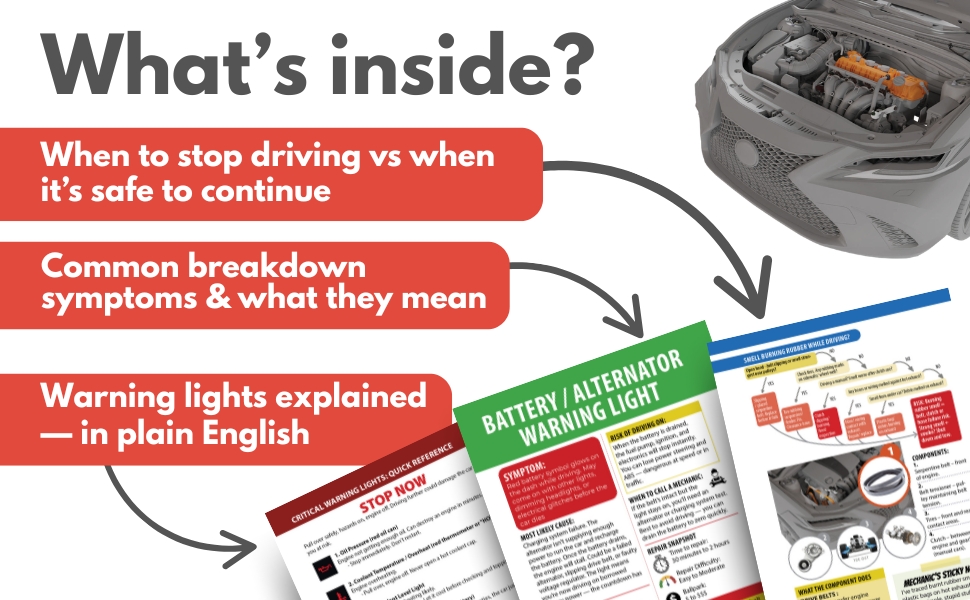
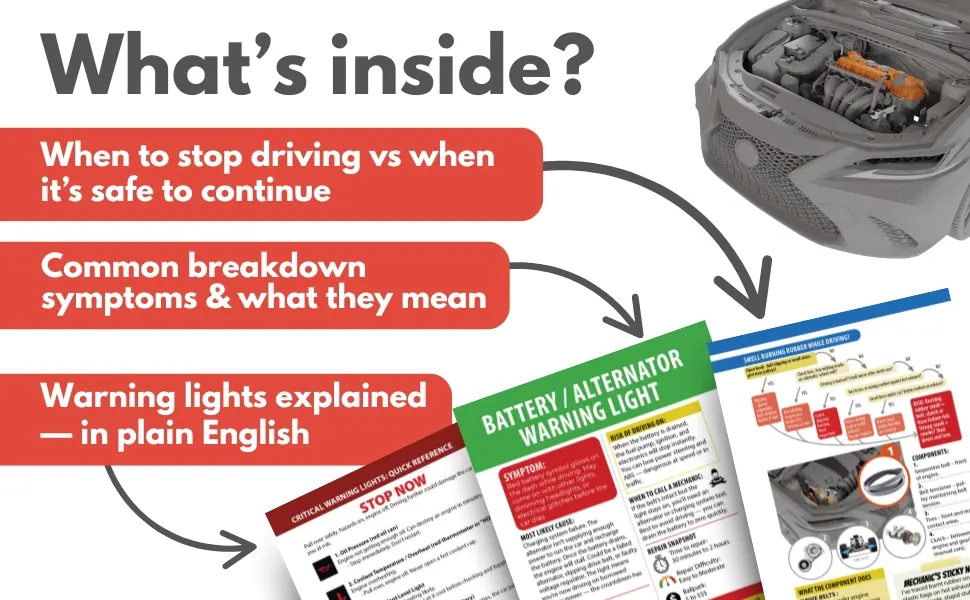
Look inside on Amazon.com
- About the Author
- Latest Posts


Meet Northcap, a seasoned mechanic and roadside assistance expert with over 20 years of hands-on experience. At Rustyautos.com, Northcap shares exclusive insights into what really breaks down in cars, offering practical tips and real-world advice to keep drivers informed and their cars on the road.