Late call last night. Hyundai.
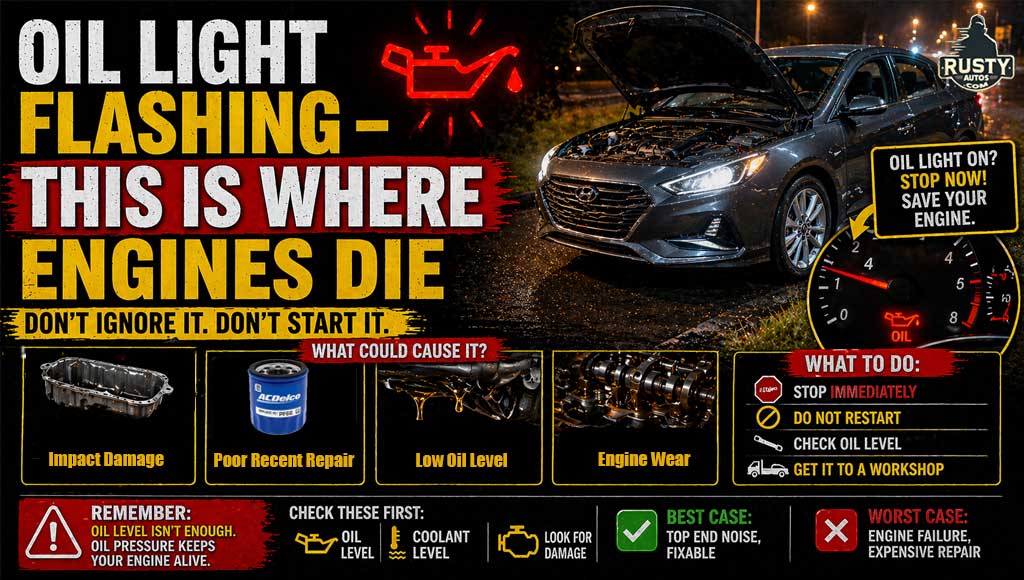
Job reads, oil warning light.
That’s one I take seriously.
I roll up. He’s pulled in at the side of the road. Stranded, but calm enough.
First move. Always.
Check the oil level.
It’s fine.
Now we’ve got a problem.
What I spotted straight away
Quick walk around.
Undertray is smashed up. Not just worn, properly hit.
Then I see it.
Fresh oil pan. Stands out a mile against the rest of the engine.
So I ask the question.
Any recent work done?
The backstory
He says yes.
About a month ago, his wife drove over a concrete bollard.
Took out the undertray. Damaged the bottom of the engine.
They replaced the oil pan and did a full service at the same time.
Sounds tidy. On paper.
What happened before it stopped
I get him to walk me through it.
Driving along fine.
Then the oil light starts flashing.
That’s your warning shot.
He slowed down. Turned off the radio. Listened.
He heard noise from the engine.
Pulled in straight away.
That decision may have saved him a full engine.
Roadside checks
I go through the basics.
- Oil level good
- Oil condition looks fine
- Coolant level good
- No overheating reported
So now we’ve got an oil warning light, with good oil level, and engine noise.
That’s not a sensor you ignore.
Why I wouldn’t start it
He asked me to try start it.
I said no.
Straight up.
Because this isn’t about oil level. This is about oil pressure.
Big difference.
You can have a full sump and still have no pressure.
And if there’s no pressure, there’s no lubrication.
Start that engine again, you could finish it.
Oil light on. Engine off.
What I think happened
That impact with the bollard didn’t just crack the pan.
There’s a good chance the engine lost a lot or all of its oil.
Starve the bearings, cams, and lifters. That’s where the damage starts.
The damage may not show straight away.
It can run fine for weeks.
Then one day, oil pressure drops, noise starts, light comes on.
That’s what this feels like.
A failed oil pump is also possible, but given the history, it sits further down the list for now.
Best case versus worst case
Best case.
- Worn or collapsed lifters from poor lubrication
- Top-end noise, fixable without tearing the whole engine down
Worst case.
- Crankshaft bearing damage
- Camshaft wear
- Bottom end failure starting
That’s engine rebuild or replacement.
That’s where it gets spendy.
What I’d do next in the workshop
This is not a roadside job.
First rule.
Do not start it.
I’d get it into a workshop and strip it back enough to see what’s going on.
Start with the basics.
- Remove the engine covers.
- Scan it for codes.
- Check the oil pressure switch and wiring.
Then slow it right down.
I’d turn the engine over by hand first.
Feel for anything tight, anything rough, anything not right.
If it turns clean, oil level is good, and the oil looks healthy, then I’d take the next step.
Carefully.
Start it, just to locate the noise.
Nothing more.
No driving it.
The outcome
He wasn’t thrilled.
No one is when you say don’t even try start it.
But he got it.
Better a tow than a dead engine.
I loaded it up. Short run to his garage.
His wife came to collect him.
Bit of irony there, given how it started.
Roadside takeaway
If your oil light comes on, treat it seriously.
Not tomorrow. Not later.
Right then.
- Pull over
- Shut it down
- Do not restart it
Oil level and oil pressure are not the same thing.
One is visible.
The other is what keeps your engine alive.
Ignore that light, and you’re gambling with the whole engine.
YOUR CAR JUST SAID “UH-OH.”
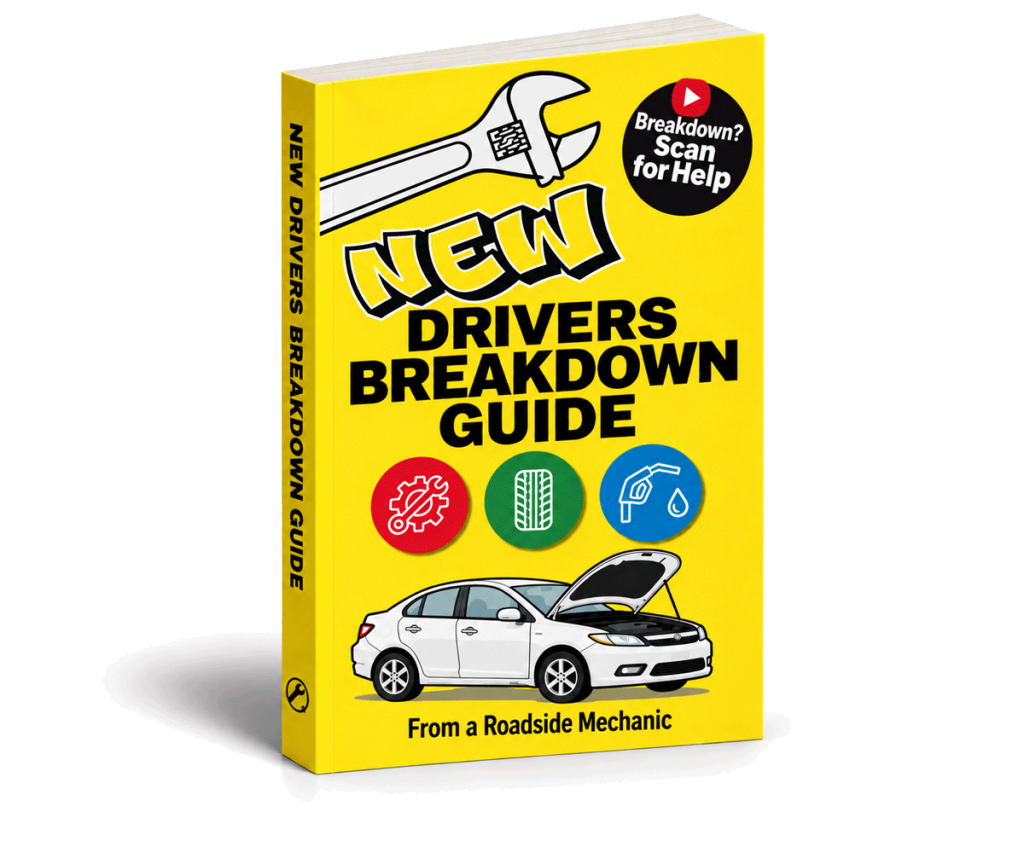
Warning light? Won’t start? Weird noise?
Something smells expensive?
DON’T PANIC. KNOW WHAT TO DO NEXT.
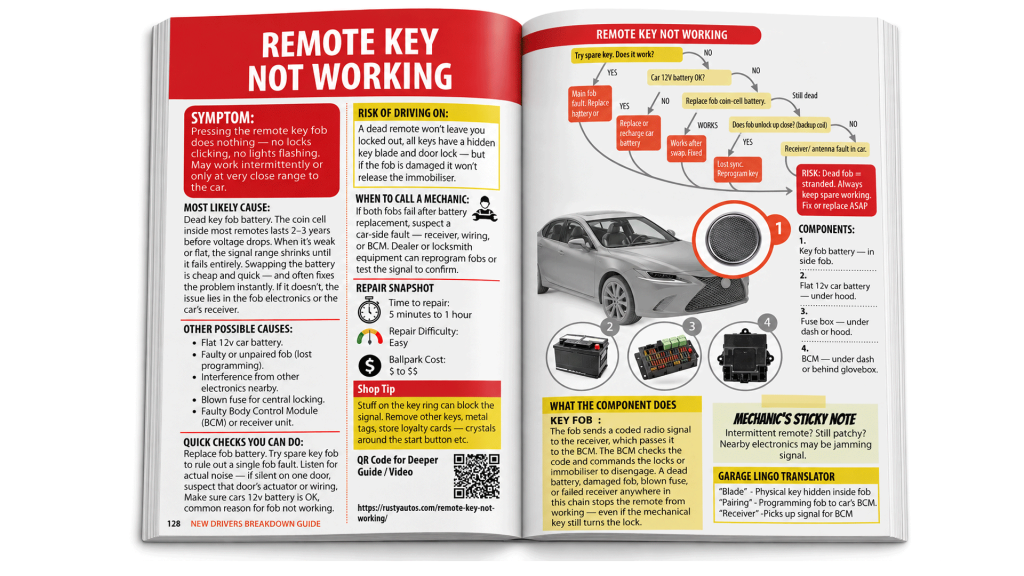
The New Driver’s Breakdown Guide gives you the car know-how nobody taught you.
- About the Author
- Latest Posts

Meet Northcap, a seasoned mechanic and roadside assistance expert with over 20 years of hands-on experience. At Rustyautos.com, Northcap shares exclusive insights into what really breaks down in cars, offering practical tips and real-world advice to keep drivers informed and their cars on the road.