You see the temperature gauge climbing.
Warning pops up.
Then it happens.
Engine overtemperature.
P0217.
This one is serious.
This is shut it down territory.
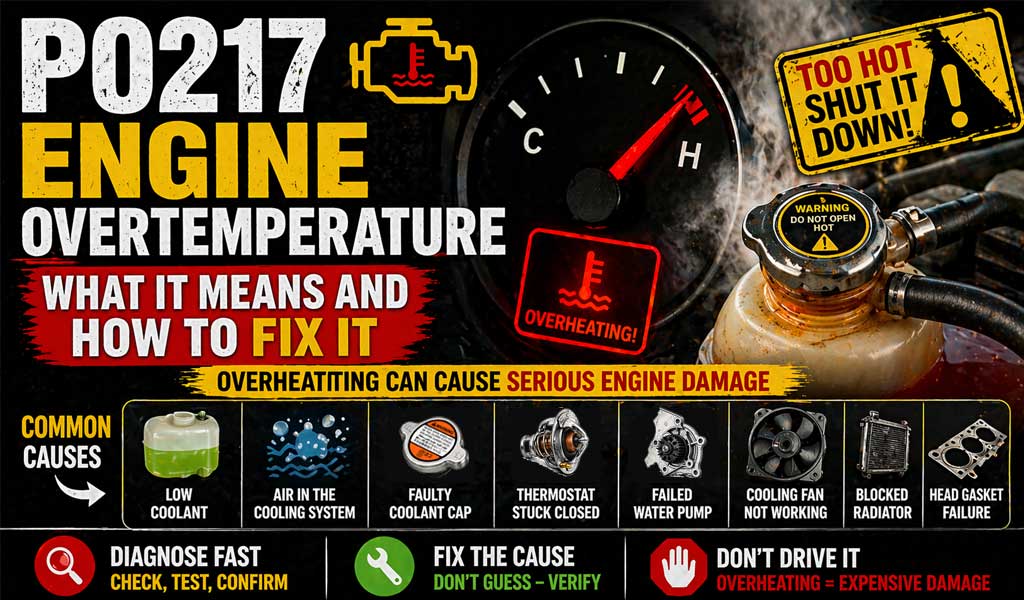
What this code means
P0217 means the engine has exceeded its safe operating temperature.
Not just warm.
Too hot.
Hot enough that the ECU steps in to protect the engine.
When this code sets, the car may:
- Limit power
- Go into limp mode
- Or shut itself down completely
It is trying to save the engine from damage.
What overheating actually does
Engines hate heat.
A little too hot is bad.
A lot too hot is expensive.
When temperatures climb:
- Oil thins out and loses protection
- Metal expands beyond tolerance
- Head gaskets start to fail
- Cylinder heads can warp
Keep driving, and you can cook the engine completely.
Common symptoms
This one usually doesn’t hide.
- Temperature gauge in the red
- Warning message on the dash
- Steam from under the hood
- Coolant smell
- Loss of power
- Engine may shut down
Sometimes you will also hear:
- Knocking or ticking from the engine
- Cooling fans running flat out
Most common causes
Low coolant level
Simple, but common.
- Leak in the system
- Poor maintenance
- Air trapped in system
No coolant means no heat transfer.
Temperature climbs fast.
Air trapped in the coolant system
Air in the cooling system stops coolant from circulating properly.
Instead of a solid flow of coolant, you get air pockets.
And air does not carry heat.
So what happens:
- Hot spots form inside the engine
- Temperature spikes quickly
- Heater may blow cold air intermittently
- Cooling system behaves unpredictably
Common causes:
- Coolant system not bled properly after repair
- Low coolant level allowing air to enter
- Leak that draws air into the system
Seen it a ton of times after:
- Radiator replacement
- Thermostat jobs
- Water pump work
In the trade, if a car overheats shortly after cooling system work, airlock is high on the list.
Fix is straightforward, but needs to be done right.
- Refill coolant correctly
- Bleed the system using bleed points or vacuum fill tool
- Run engine and recheck levels once cooled
Ignore it, and you can end up chasing an overheating problem that is not actually a faulty part.
Faulty coolant cap
Simple part. Big job.
The coolant cap is what allows the system to build pressure.
And pressure is what raises the boiling point of the coolant.
If the cap is weak or faulty:
- It cannot hold pressure
- Coolant boils at a lower temperature
- System can overheat even when everything else is fine
Typical signs:
- Coolant pushed into the overflow bottle
- Coolant loss with no obvious leaks
- Overheating under load or after a run
- Hoses feel soft when hot instead of firm
- Constant coolant system top-ups needed
It is often overlooked.
But it plays a big role.
In the trade, if you are chasing an overheating issue with no clear cause, the cap is always worth testing or swapping.
Quick, inexpensive, and sometimes the whole fix.
Thermostat stuck closed
Coolant cannot circulate.
- Engine heats up quickly
- Radiator stays cool
Failed water pump
No circulation.
No cooling.
Common signs:
- Overheats at all speeds
- Possible noise from pump
- Coolant not flowing
Belt-driven pumps can also slip if the belt is worn.
Cooling fan not working
More noticeable in traffic.
- Fine at speed
- Overheats at idle
Causes include:
- Fan motor failure
- Relay or fuse fault
- Control module issue
Blocked radiator
Internally or externally.
- Dirt, debris, or corrosion
- Reduced airflow or flow
Heat cannot escape.
Head gasket failure
This is the one you don’t want.
- Combustion gases enter cooling system
- Coolant loss without visible leak
- Overheating that keeps coming back
Usually comes with other symptoms.
How to diagnose it
Check coolant level first
Start simple.
- Check expansion tank
- Look for obvious leaks
Check for leaks
Look around:
- Radiator
- Hoses
- Water pump
- Heater core area
Pressure test if needed.
Watch the coolant flow
With engine warming up:
- Does the thermostat open
- Is coolant moving
No movement points to pump or thermostat.
Check cooling fan operation
Let the engine reach temperature.
- Fan should cut in
- If not, check power, relay, and wiring
Scan data
Look at:
- Engine temperature readings
- Fan command
- Any related fault codes
Confirms what the ECU is seeing.
How to fix it
Depends on the cause.
- Top up and repair leaks
- Replace thermostat
- Replace water pump
- Repair or replace cooling fan
- Flush or replace radiator
- Repair head gasket if failed
Some fixes are simple.
Some not.
Overheating is one of those faults that escalates quickly if ignored.
Can you drive with P0217
No.
This is not one you push home.
Driving an overheating engine can:
- Warp the cylinder head
- Blow the head gasket
- Seize the engine
If it overheats:
- Pull over
- Shut it down
- Let it cool
Do not keep driving.
Pro tip from the roadside
If your temperature gauge spikes, don’t wait for the warning light.
By the time P0217 sets, the engine is already too hot.
I’ve seen people try to “just get home”.
That’s how a small coolant leak turns into a full engine rebuild.
Heat is fast.
Damage is faster.
FAQs
What temperature triggers P0217?
It varies by vehicle, but typically when the engine exceeds safe operating limits set by the ECU.
Can low coolant alone cause this?
Yes. It is one of the most common causes of overheating.
Will the engine recover after overheating?
Sometimes. But repeated overheating usually causes permanent damage.
Why did it overheat in traffic but not on the highway?
That usually points to a cooling fan issue or poor airflow through the radiator.
YOUR CAR JUST SAID “UH-OH.”
Warning light? Won’t start? Weird noise?
Something smells expensive?
DON’T PANIC. KNOW WHAT TO DO NEXT.
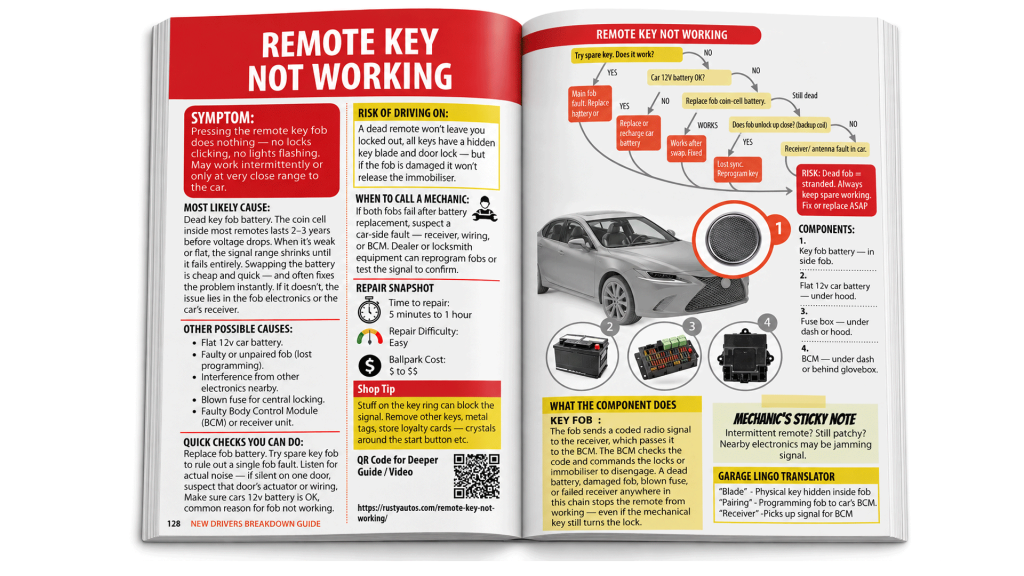
The New Driver’s Breakdown Guide gives you the car know-how nobody taught you.
- About the Author
- Latest Posts

Meet Northcap, a seasoned mechanic and roadside assistance expert with over 20 years of hands-on experience. At Rustyautos.com, Northcap shares exclusive insights into what really breaks down in cars, offering practical tips and real-world advice to keep drivers informed and their cars on the road.