You press the gas…
And nothing really happens.
Car feels flat. Sluggish. Sometimes it won’t rev properly at all.
That’s when P0122 shows up.
Low input from the throttle position sensor.
And without that signal, the engine computer is basically guessing what your right foot is doing.
Not ideal.
What the throttle position sensor does
The throttle position sensor (TPS) tells the ECU how far open the throttle is.
Simple job. Critical job.
It helps control:
- Fuel delivery
- Ignition timing
- Gear shifting (on autos)
- Throttle response
Press the pedal…
Throttle opens…
TPS sends a voltage signal back to the ECU.
Low throttle = low voltage
Wide open throttle = higher voltage
But with P0122, that voltage is too low… even when it shouldn’t be.
What P0122 means
The ECU is seeing a voltage signal from the TPS that’s below the expected range.
In plain English:
The car thinks your foot is barely on the gas… even when it’s flat to the board.
So it underfuels the engine.
That’s why it feels gutless.
Common symptoms
You’ll usually notice this one straight away:
- Poor acceleration
- Engine feels flat or unresponsive
- Hesitation when pressing the gas
- Engine may stall at idle
- Rough idle
- Check engine light on
- Automatic transmission shifting oddly or holding gears
In some cars, it’ll drop into limp mode.
Limits power to protect the engine.
Most common causes
Faulty throttle position sensor
The usual suspect.
TPS wears out over time, especially on high-mileage cars.
Inside is a track and wiper setup.
Think volume knob.
They wear… signal drops out… voltage goes low.
Wiring issues
Low voltage often means:
- Damaged wire
- Corrosion in connector
- Loose plug
- Broken ground
The wiring near the throttle body gets brittle from heat.
Small crack. Big headache.
Dirty or sticking throttle body
If the throttle plate is gummed up:
- It doesn’t move smoothly
- TPS readings don’t match expected position
ECU sees something that doesn’t make sense…
Throws the code.
Faulty accelerator pedal sensor (drive-by-wire systems)
On modern cars, there’s no cable.
Pedal has its own position sensor.
If that signal conflicts with the throttle body sensor:
ECU flags it.
Not always the TPS itself.
Low reference voltage from ECU
TPS runs on a 5V reference.
If that drops:
Sensor output drops with it.
Could be:
- Shared sensor circuit fault
- ECU issue (rare, but happens)
Quick checks you can do
1. Check the connector
- Unplug TPS
- Look for corrosion, dirt, bent pins
- Clean if needed
You’d be surprised how many are just poor connections.
2. Wiggle test
With engine running:
- Wiggle the wiring harness near the TPS
If idle changes or engine stumbles…
You’ve found your fault.
3. Check throttle body condition
- Remove intake hose
- Look inside
If it’s black and sticky…
Clean it.
Use proper throttle body cleaner.
4. Scan live data (if you’ve got a reader)
Watch TPS % while pressing the pedal.
You want:
- Smooth increase
- No dropouts
- No flat spots
If it jumps or stays low…
Sensor’s on the way out.
How to fix it
Depends what you find.
- Replace TPS if faulty
- Repair damaged wiring
- Clean throttle body
- Replace accelerator pedal sensor (if applicable)
On some vehicles, TPS is built into the throttle body.
So you’re replacing the whole unit.
Bit more spendy, but straightforward.
Relearn may be required
After repair, some cars need a throttle relearn.
This can include:
- Key on/off cycles
- Idle relearn procedure
- Scan tool reset
Skip this step…
And the car can still run poorly even after fixing the issue.
Can you keep driving?
Short answer: You can… if the throttle will respond, but I wouldn’t.
Here’s why:
- Poor throttle response can be dangerous in traffic
- Car may stall unexpectedly
- Limp mode can leave you stuck
If it’s barely drivable…
Park it.
The takeaway
P0122 is a low signal problem.
The ECU isn’t getting the throttle info it needs.
So it plays it safe… and kills performance.
Most of the time:
It’s the sensor, wiring, or a dirty throttle body.


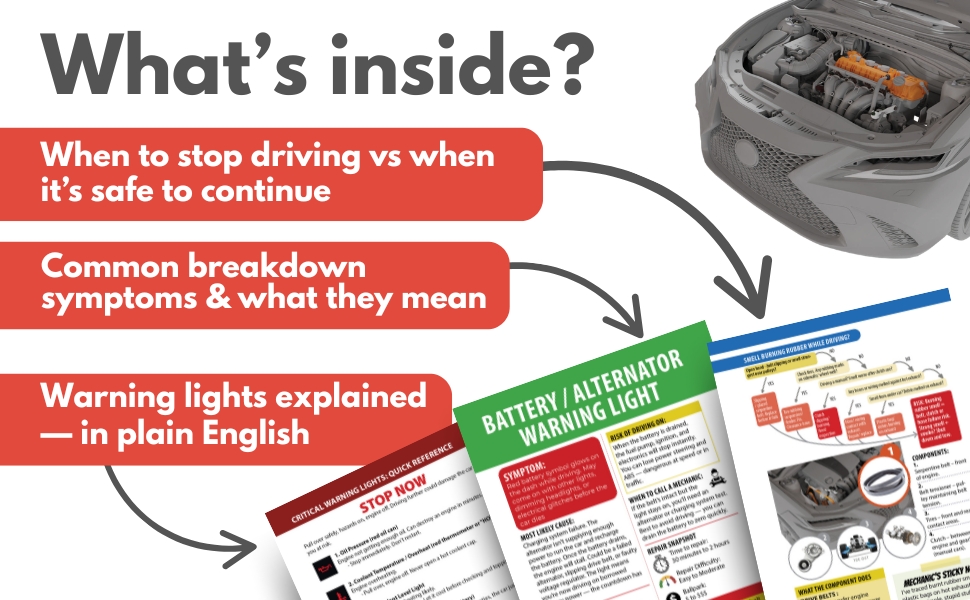
Visit our DIY Car Maintenance page and level up your car care skills — or keep the quick-reference version below in your glovebox.
Look inside on Amazon.com
Look inside on Amazon.com
- About the Author
- Latest Posts


Meet Northcap, a seasoned mechanic and roadside assistance expert with over 20 years of hands-on experience. At Rustyautos.com, Northcap shares exclusive insights into what really breaks down in cars, offering practical tips and real-world advice to keep drivers informed and their cars on the road.