Hit the button and nothing happens? Or one lonely door plays along while the rest ignore you? That’s not convenience tech — that’s convenience tech quitting.
Why It Happens
Central locking relies on little electric actuators and control modules to fire in sync. When they’re healthy, all doors click shut in a heartbeat. When they’re not, you get stubborn doors, random unlocking, or total silence. Weak actuators, dead fob batteries, blown fuses, or wiring faults are usually behind the mutiny.
Most Common Culprits
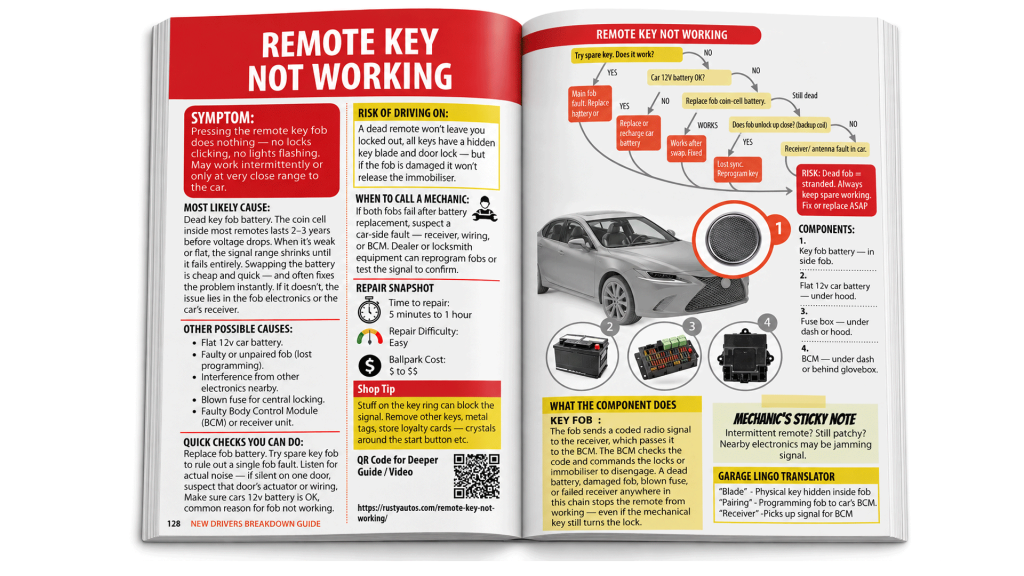
- Key fob battery flat — simple but common.
- Blown fuse or relay — kills the whole system.
- Door lock actuators — wear out, one by one.
- Broken wiring in door jambs — flexing breaks them over time.
- Control module fault — rare but expensive.
What You Can Check
- Try the spare key fob — if that works, swap the battery in your daily fob.
- Listen closely — actuator noise but no movement = failing motor.
- Test each door — if only one fails, it’s local. All doors dead = fuse/relay/module.
- Wiggle door harnesses gently — intermittent locks often trace to cracked wires.
What a Mechanic Will Do
- Scan body control module for faults.
- Test fuses, relays, and actuator circuits.
- Inspect door harnesses for broken wires.
- Replace actuators or module if confirmed bad.
Rough Damage to Your Wallet
- Key fob battery: $10–$20.
- Fuse/relay: $20–$50.
- Door actuator: $200–$400 each.
- Wiring repair: $150–$300.
- Body control module: $600–$1,200.
When to Park It
Not a breakdown risk, but don’t leave it. Doors that don’t lock make your car a rolling invitation. And if they won’t unlock, that’s a safety issue waiting to happen.
YOUR CAR JUST SAID “UH-OH.”
Warning light? Won’t start? Weird noise?
Something smells expensive?
DON’T PANIC. KNOW WHAT TO DO NEXT.
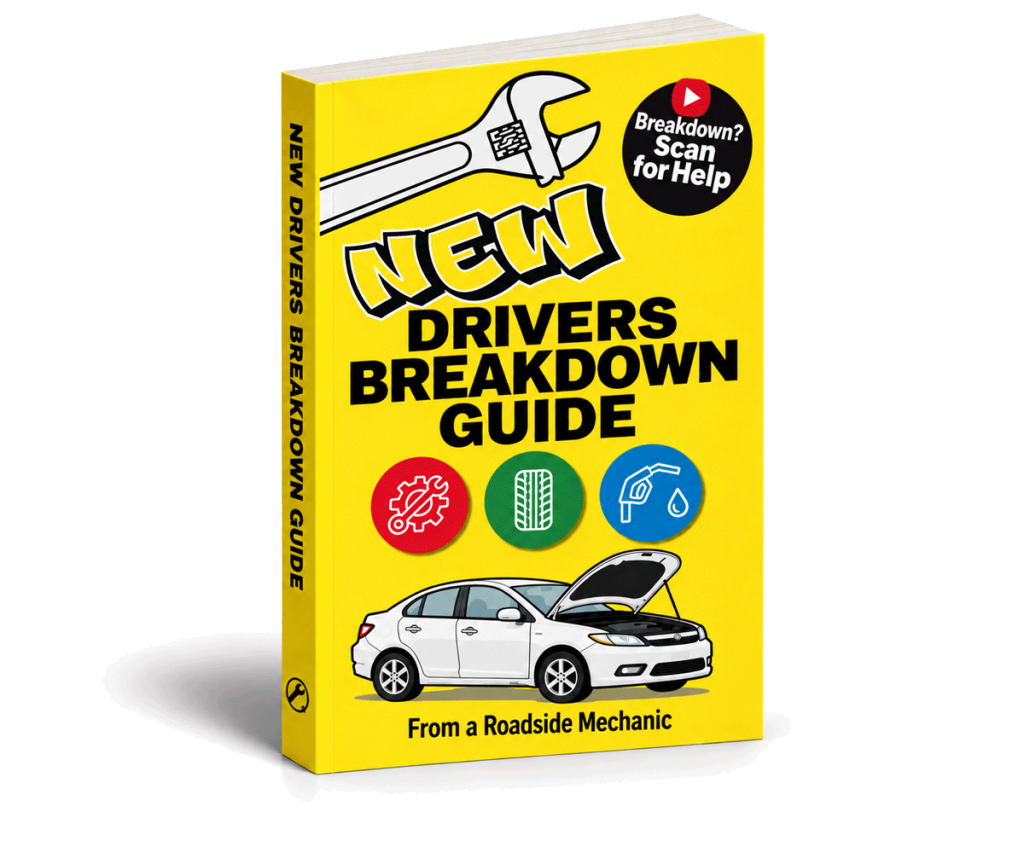
The New Driver’s Breakdown Guide gives you the car know-how nobody taught you.
- About the Author
- Latest Posts


Meet Northcap, a seasoned mechanic and roadside assistance expert with over 20 years of hands-on experience. At Rustyautos.com, Northcap shares exclusive insights into what really breaks down in cars, offering practical tips and real-world advice to keep drivers informed and their cars on the road.