If you drive a modern car, you’re relying on tech that’s more than 120 years in the making. Disc brakes feel like “normal” equipment today — but their journey from a sketch on a British engineer’s desk to the high-tech ceramic systems on supercars is anything but ordinary.
Below, I’ll walk you through the real story behind disc brakes: the early failures, the aviation breakthroughs, the racing moments that changed everything, and how the system on your car evolved into one of the most important safety features ever built.

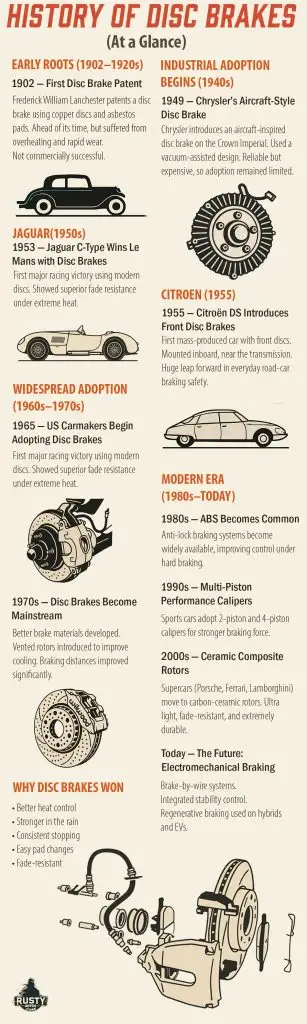
Early Days: The First Disc Brake (1902)
The first disc brake wasn’t designed in a race shop or an aircraft hangar — it came from the mind of Frederick William Lanchester, a British engineer and one of the pioneers of the early motorcar.
In 1902, he patented a disc brake setup using copper discs and asbestos pads. It worked in principle, but it ran into one major problem: heat. The materials available at the time couldn’t cope, causing fade, warping, and rapid wear. Useful idea, wrong materials, wrong era.
His design didn’t catch on — but the concept stayed alive.
Aviation Steps In (1930s–1940s)
Heavy early aircraft needed a brake system that could handle the brutal heat of landing. Drum brakes weren’t up to the job, so aviation engineers refined and improved the disc brake concept Lanchester had started.
Companies like Goodyear Aircraft pushed disc brakes forward with stronger materials and more effective actuation systems. This is where disc brakes finally proved themselves.
Ironically, the technology that struggled on cars found its first real success in the skies.
Back to Cars: Chrysler’s Big Leap (1949)
In 1949, Chrysler took a bold step and installed an aircraft-style disc brake system on the Crown Imperial. They directly adapted Goodyear’s aviation brake design and used a vacuum-assisted booster similar to what was used on aircraft.
It worked — and it worked well. The only downside? Cost. The system was effective but expensive to build, so adoption was slow.
Still, the door was finally open.
Jaguar at Le Mans (1953)
If Chrysler opened the door, Jaguar kicked it off the hinges.
In 1953, the Jaguar C-Type used disc brakes to win the 24 Hours of Le Mans. Under racing heat and pressure, the discs stayed consistent while drum-equipped competitors struggled with fade.
This single race did more for disc brake popularity than anything else in the previous 50 years. After Le Mans, the industry took notice — discs were the future.
Disc Brakes for the Masses: Citroën DS (1955)
Two years after Jaguar’s win, the 1955 Citroën DS became the first mass-produced car to use front disc brakes. Citroën mounted theirs inboard, right beside the transmission, to reduce unsprung weight.
This was a huge leap in everyday braking performance and safety, and it kick-started modern adoption.
Becoming the Standard (1960s–1970s)
By the mid-1960s, disc brakes began appearing on American models like the Ford Thunderbird and Chevrolet Corvette. Through the 1970s, improvements in pad compounds, caliper designs, and vented rotors helped disc brakes transition from premium equipment to regular equipment.
By the end of the decade, front disc brakes were standard on most mainstream cars.
Modern Disc Brakes: ABS, Multi-Pistons & Ceramics (1980s–Today)
From the 1980s onward, disc brakes have been refined more than any other brake system in history:
- ABS becomes common in the late 80s and early 90s
- Multi-piston calipers appear on performance cars
- Carbon-ceramic rotors arrive in the early 2000s
- Brake-by-wire shows up on hybrids and EVs
- Regenerative braking works alongside discs to slow electric vehicles
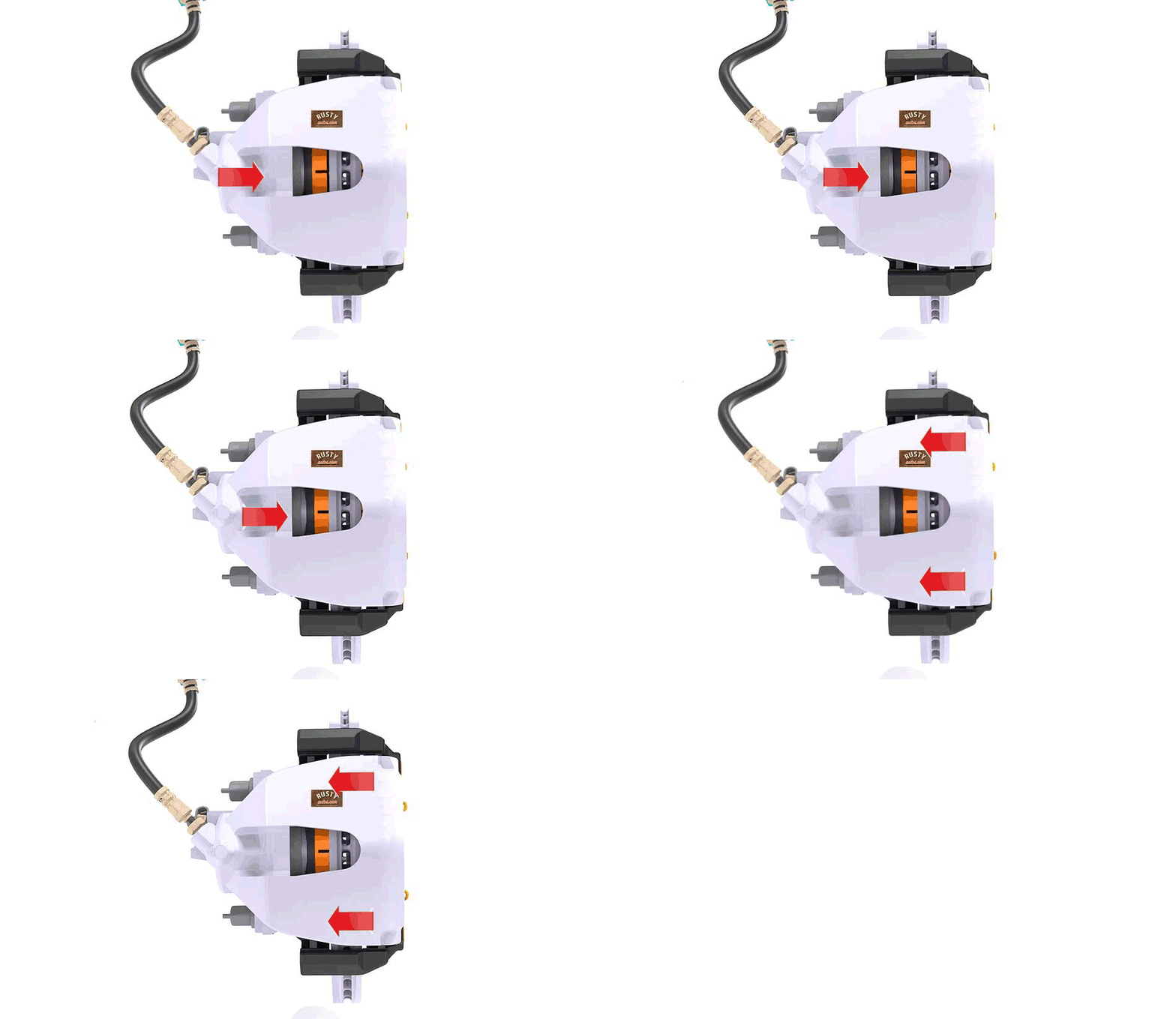
And today’s systems carry more stopping power, durability, and heat resistance than Lanchester ever could have imagined.
So Why Did Disc Brakes Win?
Disc brakes dominated for five reasons:
- They shed heat quickly
- They deliver strong, consistent stops
- They handle wet conditions better
- They’re easy to service
- They resist fade far better than drums
It’s rare to find a piece of automotive engineering that changed so little in concept — but improved so dramatically in performance.
Check out the DIY Brake Repair page for easy-to-follow brake repairs and troubleshooting tips.

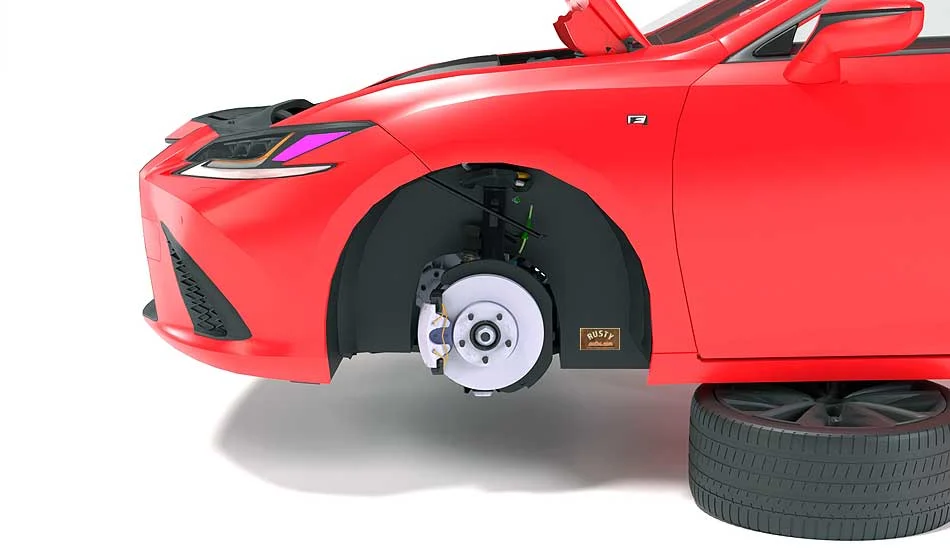

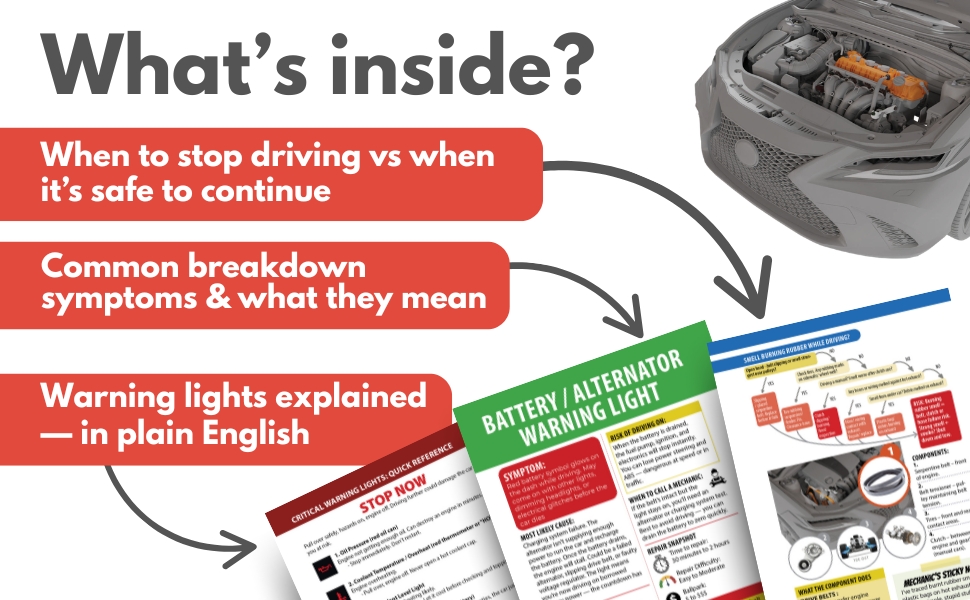
Visit our DIY Car Maintenance page and level up your car care skills — or keep the quick-reference version below in your glovebox.
Look inside on Amazon.com


Look inside on Amazon.com
- About the Author
- Latest Posts


Meet Northcap, a seasoned mechanic and roadside assistance expert with over 20 years of hands-on experience. At Rustyautos.com, Northcap shares exclusive insights into what really breaks down in cars, offering practical tips and real-world advice to keep drivers informed and their cars on the road.