You start the car… and straight away, you hear a sharp, high-pitched squeal.
That’s belt slip.
On roadside calls, I hear this all the time.
It’s usually not serious yet. But ignore it, and it can turn into a breakdown.

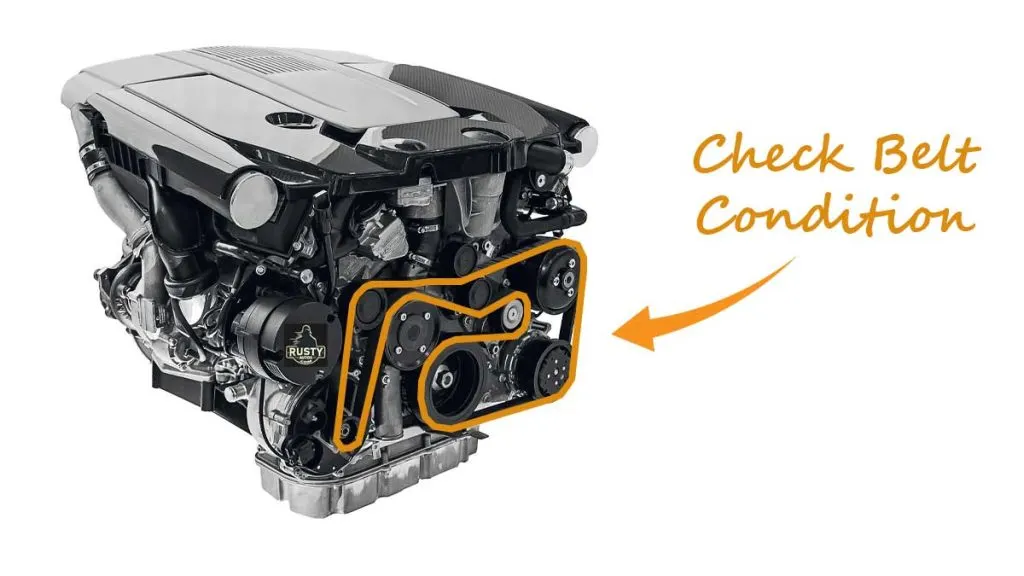
What Causes Belt Squeal
The belt is supposed to grip tightly to the pulleys.
When it loses grip, it slips.
That slip creates vibration.
And that vibration is the squeal you hear.
Simple.
When You Hear It Matters
The timing of the noise tells you a lot.
Cold start squeal
First thing in the morning. Gone after a few seconds.
That usually points to a worn or slightly loose belt.
Squeal when accelerating
You press the throttle, and the noise appears.
That tells you the belt is struggling under load.
Think weak tensioner or resistance from a component like the alternator.
Constant squealing
The noise stays.
Now you pay attention.
Something is worn. Or something is starting to fail.
Most Common Causes
Worn or glazed belt
This is the number one cause.
Over time, the rubber hardens and goes shiny.
Instead of gripping, it slides.
Look for cracks or a glossy finish.
Fix. Replace the belt.
Loose belt
Seen on older setups.
Loosey goosey, and it slips.
Fix. Adjust it correctly. Not too tight.
Weak tensioner
Very common on modern cars.
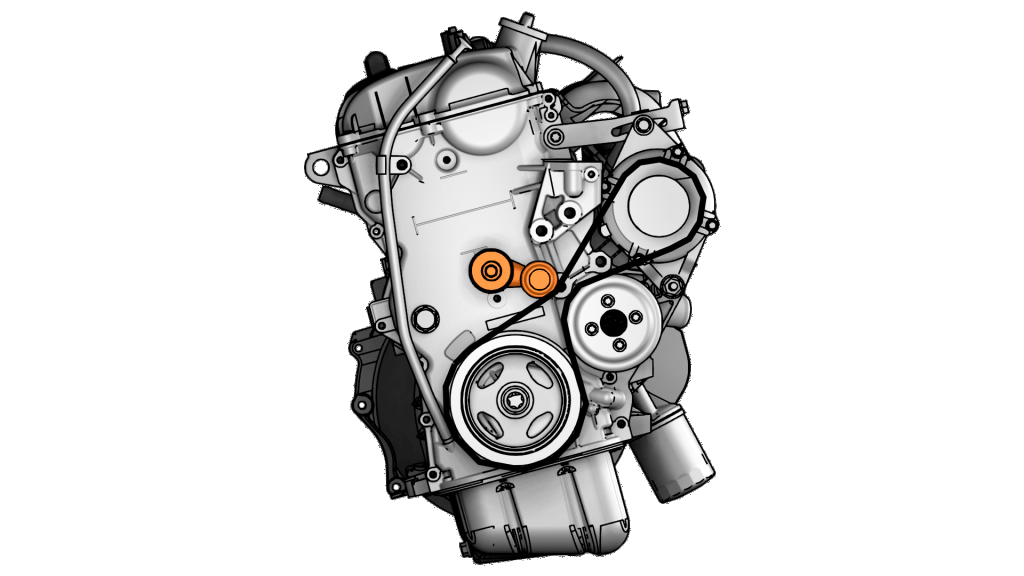
The spring weakens. The belt loses pressure.
Slip starts.
Fix. Replace the tensioner. Usually do the belt at the same time.
Contaminated belt
Oil or coolant on the belt causes instant slip.
Even a small leak can trigger it.
Fix the leak. Replace the belt.
Misaligned pulley
If a pulley isn’t running straight, the belt won’t track properly.
It starts to squeal… or worse, wears out fast.
Seized or dragging component
This one catches people out.
Alternator. AC compressor. Power steering pump or bad idler bearing.
If one of them is stiff, the belt struggles to turn it.
That creates slip and noise.
Quick Checks
Pop the bonnet and take a look.
Is the belt cracked or shiny?
Any fluid on it?
Is it sitting correctly on the pulleys?
Start the engine and listen.
If the noise changes with revs, you’re dealing with belt slip.
Can You Drive With It
Yes. But not for long.
That belt drives the alternator, water pump (some cars), AC and power steering.
If it fails:
You lose charging.
You risk overheating (some cars)
Steering can go heavy.
That’s a breakdown waiting to happen.
When It’s Urgent
The noise is getting worse.
You see visible damage.
Steering feels heavy.
Battery light comes on.
At that point, don’t ignore it. I’ve seen belts fail and take out crank sensors… now u are stranded.
How To Replace a Serpentine Belt
Find the belt routing diagram.
Release the tensioner with a wrench.
Remove the old belt.
Fit the new one correctly.
Release the tensioner slowly.
Double-check the routing before you start the engine.
Tool Tip
A long-handled serpentine belt tool makes life easier.
More leverage. Less scraped knuckles.
Real World Insight
Most of the time, it’s just a worn belt.
Quick fix.
But every so often, it’s a failing alternator or tensioner.
That’s when people replace the belt… and the noise comes straight back.
Quick FAQ
Why is it worse when wet?
Water reduces grip, so the belt slips more.
Does belt spray fix it?
Only temporarily. It masks the problem.
How long do belts last?
Typically 50k to 100k miles. Condition matters more than mileage.
Should I replace the tensioner too?
If it’s old, yes. Saves doing the job twice.
Can a new belt still squeal?
Yes. If the real issue isn’t the belt.

Visit our DIY Car Maintenance page and level up your car care skills — or keep the quick-reference version below in your glovebox.
Look inside on Amazon.com
Look inside on Amazon.com
- About the Author
- Latest Posts


Meet Northcap, a seasoned mechanic and roadside assistance expert with over 20 years of hands-on experience. At Rustyautos.com, Northcap shares exclusive insights into what really breaks down in cars, offering practical tips and real-world advice to keep drivers informed and their cars on the road.