You press the gas…
And the car hesitates.
Or worse… it jerks and surges like it’s second-guessing you.
That’s usually when this one shows up.
P0121.
Throttle position sensor range issue.
When this fault is active, the engine can’t properly read how much throttle you’re asking for. And when that signal is off, everything downstream gets messy.
What the throttle position sensor does
The throttle position sensor (TPS) tells the ECU how far the throttle is open.
- Light press
- Half throttle
- Foot to the floor
The ECU uses that signal to:
- Adjust fuel delivery
- Set ignition timing
- Control automatic gear shifts
Think of it like this.
Your foot gives the command.
The TPS reports it.
If that report is wrong, the engine reacts wrong.
What P0121 actually means
This isn’t just a failed sensor code.
P0121 means the TPS signal is outside expected limits or doesn’t line up with other data.
That can mean:
- Signal too high or too low
- Signal doesn’t match pedal input
- Signal jumps instead of moving smoothly
In short, the ECU doesn’t trust what it’s seeing.
Common symptoms of P0121
This one makes a car feel rough and unpredictable.
Typical signs:
- Hesitation when accelerating
- Jerky or surging throttle
- Sluggish response
- Poor performance
- Harsh or delayed gear changes (automatic cars)
- Limp mode
- Check engine light
Drivers often say the car feels “confused.”
That’s exactly what’s happening.
What causes a P0121 code
Faulty throttle position sensor
The sensor itself can wear out.
- Internal tracks wear down
- Signal drops out
- Dead spots develop
Pretty common on older vehicles.
Dirty or sticking throttle body
One of the most common causes.
Carbon builds up around the throttle plate.
- Throttle movement becomes uneven
- Sensor readings become inconsistent
- ECU flags it
Often an easy fix.
Wiring or connector issues
Classic problem.
- Broken or chafed wires
- Loose terminals
- Corrosion
- Oil contamination
A bad connection can mimic a failed sensor perfectly.
Electronic throttle body failure
On modern cars, the TPS is built into the throttle body.
So when it fails:
- You replace the entire unit
- Costs go up quickly
Accelerator pedal position sensor (APP)
Modern systems (drive by wire) use two sensors:
- One at the pedal
- One at the throttle
If they don’t agree, the ECU sees a mismatch and logs P0121.
Voltage or ground issues
Low system voltage can throw everything off.
- Weak battery
- Poor ground
- Charging system issues
Doesn’t take much to upset sensor readings.
Quick checks you can do
Before replacing anything, check the basics.
Simple stuff first.
- Check battery voltage and condition
- Inspect throttle body for carbon buildup
- Check wiring and connector condition
- Wiggle test the harness while running
- Press the throttle slowly and feel for smooth response
If you have a scan tool:
- Watch TPS percentage
- It should increase smoothly with no spikes
Any jumping or dropouts means trouble.
A quick win I see all the time
Dirty throttle body.
Car comes in with:
- Hesitation
- Rough idle
- P0121 stored
Quick clean with throttle cleaner.
Problem gone.
No parts needed.
Always worth trying first.
Can you drive with a P0121
You can, but it’s not ideal.
- Hesitation when pulling into traffic
- Unpredictable power delivery
- Limp mode can kick in
If it’s acting up, don’t ignore it.
How it’s properly diagnosed
In the workshop, we go further.
- Compare TPS and pedal sensor data
- Look for smooth signal sweep
- Load test wiring circuits
- Inspect throttle body operation
- Scope the signal if needed
It’s all about consistency.
Smooth in. Smooth out.
The takeaway
P0121 is a trust issue.
The ECU doesn’t trust the throttle signal.
From experience, check in this order:
- Clean the throttle body
- Check wiring and connections
- Test the signal
- Then replace parts if needed
Start simple. Save yourself money.
Quick FAQ
Will a bad TPS cause limp mode?
Yes, very common.
Can a dirty throttle body trigger this?
Absolutely, seen it plenty of times.
Is the TPS easy to replace?
Sometimes, but often it’s part of the throttle body.
Can this affect gear shifting?
Yes. The gearbox relies on throttle input to decide shift timing.

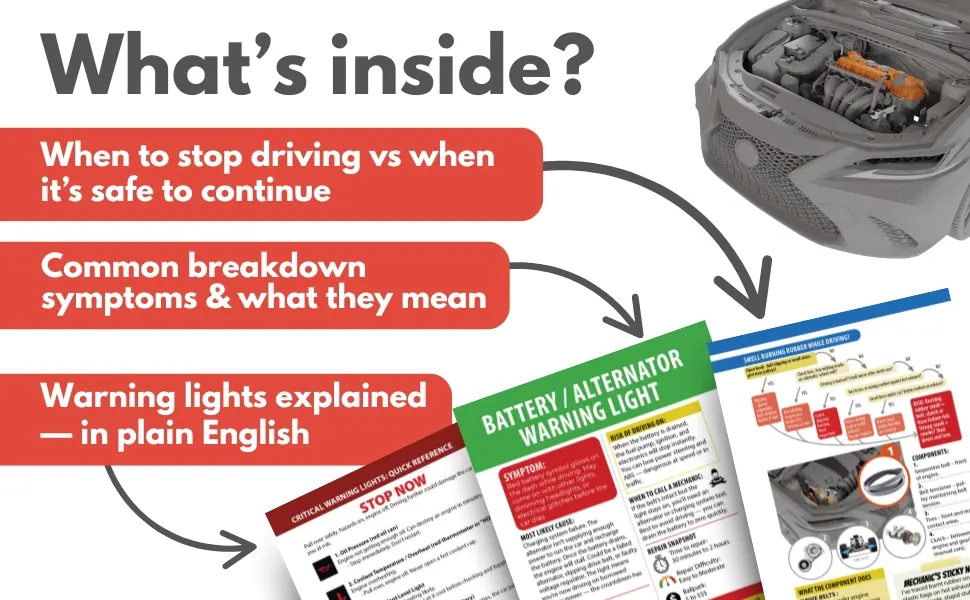
Visit our DIY Car Maintenance page and level up your car care skills — or keep the quick-reference version below in your glovebox.
Look inside on Amazon.com
Look inside on Amazon.com
- About the Author
- Latest Posts


Meet Northcap, a seasoned mechanic and roadside assistance expert with over 20 years of hands-on experience. At Rustyautos.com, Northcap shares exclusive insights into what really breaks down in cars, offering practical tips and real-world advice to keep drivers informed and their cars on the road.