Pulled up to a quiet corner of a retail park. Woman standing next to a Toyota with that look that could kill — says “this should’ve been a 10-minute stop”. She told me it had been running perfectly, parked up to pop into a shop, and when she came back out — nothing. Not a click, not a crank, just silence.
She’d already flagged down a kind stranger for a boost start. Didn’t work. That was helpful to know, but I’ve been down this road before.
Here’s the thing: most DIY booster cables are junk. They look beefy, but that thickness? All insulation. It’s the copper core that counts. If the cables can’t carry the amps, you’re not getting anywhere.
Anyways, I always run my own tests. Been told too many times, “It’s not the battery, we tried a jump.” Sure. But I trust meters.
Step One: Rule Out the Battery
Checked the battery — 12.55 volts. A little on the low side, but not enough to write it off. Still, no sound at all from the starter when the key was turned. That narrows things down: battery’s not dead, but something’s stopping the starter motor from doing its job.
Likely Suspects:
- Starter motor itself
- Clutch pedal switch (Manual transmission)
- Immobilizer system
- Ignition switch
On this model (transverse layout), the starter lives up front. Solenoid control wire was right there — bless Toyota. I unplugged the solenoid control wire, attached the power probe, and had the member (MBR) turn the key while pressing the clutch.
Boom — 12 volts at the solenoid. Red light lit up like Christmas. That’s my signal. Everything upstream’s working fine — this is a starter motor-related issue.
How to Free a Stuck Starter Motor (Without Breaking It)
I reconnected the solenoid wire, then popped the car into gear, parking brake off, and gave it a gentle rock back and forth — just in case the starter was jammed on the flywheel.
Why this works: Sometimes the starter pinion gear gets stuck in the ring gear. Rocking the car can break it free, but only on manual transmissions.
No luck here — still no crank.
Told the MBR we were likely looking at a tow. But I had one last party trick.
A Gentle Nudge With a Caveman Stick
Sometimes a sticky starter just needs a little encouragement:
- Use a long metal bar or pry rod
- Tap the starter body — not the solenoid
- Do it while someone turns the key to START
- Don’t go full caveman — sharp taps, not smacks
- If it cranks, replace that starter ASAP — it’s running on borrowed time
I grabbed my bar, and gave the starter body two taps. She turned the key… Boom…. Engine fired— we’re in business.
She was over the moon. I told her she’d be grand so long as she didn’t shut it off. (Pre stop-start model, but if she had it, it could be turned off on the dash.) Her husband, a retired mechanic, said he’d swap the starter later that evening.
Common Signs Your Starter’s on the Way Out
- Nothing happens when you turn the key
- A single click sound, then nothing
- One-time no-crank episodes (then it works again)
- Dash lights on, engine doesn’t respond
And Just as I’m Wrapping Up…
Another driver wandered over. You a roadside assist? I have a brake noise, he said. I took a look — left front caliper sticking. Telltale sign: heavy brake dust on just one wheel, and it’s hotter than the opposite wheel. He’s looking at a full brake job.
— never a dull moment for a roadside tech.

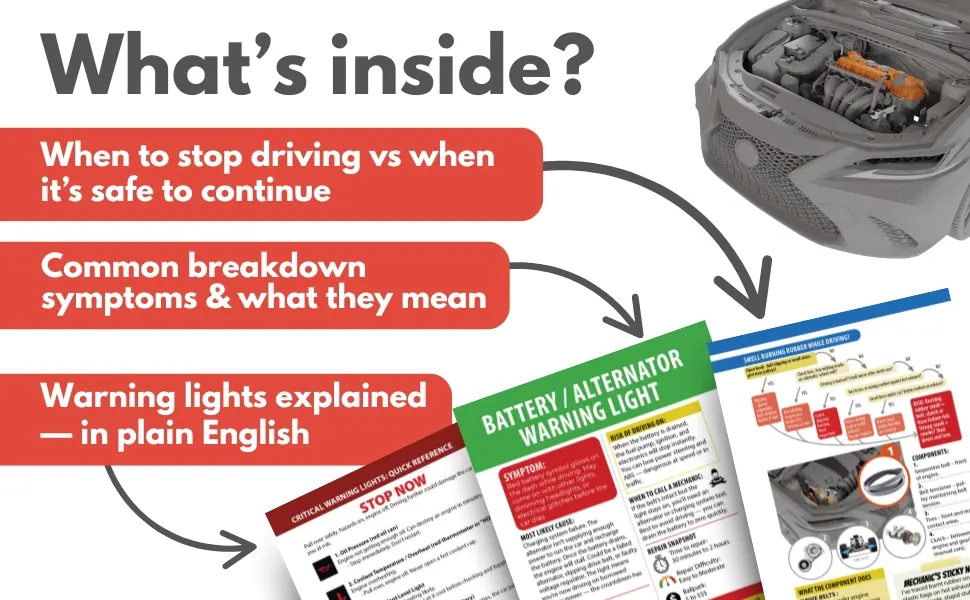
Visit our DIY Car Maintenance page and level up your car care skills — or keep the quick-reference version below in your glovebox.
Look inside on Amazon.com
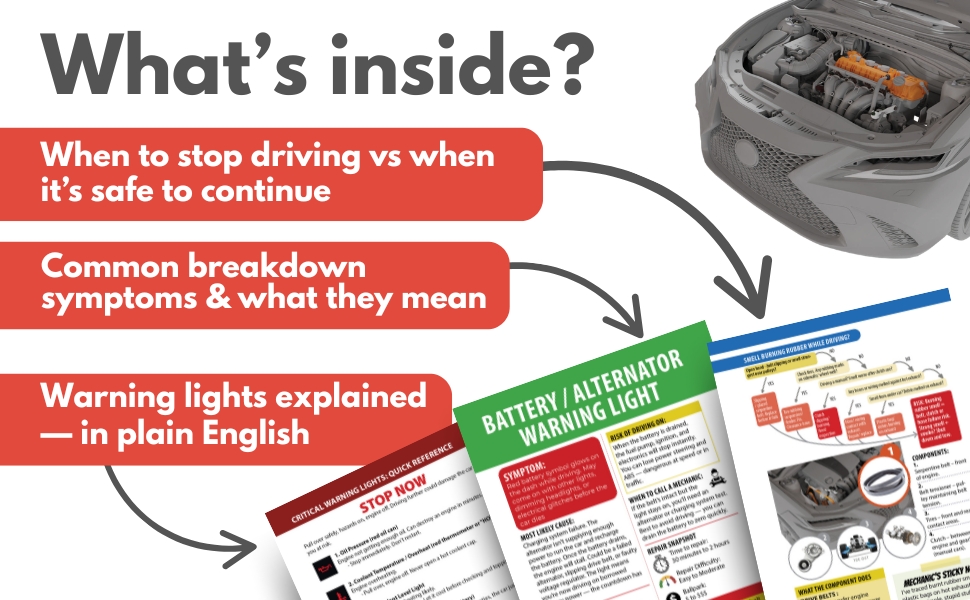
Look inside on Amazon.com
- About the Author
- Latest Posts


Meet Northcap, a seasoned mechanic and roadside assistance expert with over 20 years of hands-on experience. At Rustyautos.com, Northcap shares exclusive insights into what really breaks down in cars, offering practical tips and real-world advice to keep drivers informed and their cars on the road.