Welcome — this page expands the section in your book and includes a short video demo to walk you through everything step by step.
When you’re on your driveway with a few spare minutes, running through these checks once makes a huge difference. You’ll know where everything lives, what matters, and what to look for — so you’re not guessing on the roadside in the dark.
1. Open the Hood & Find the “Big Four”
Before you ever need them, get familiar with the four key under-hood items every driver should recognise:
- Oil dipstick
- Coolant tank
- Brake fluid reservoir
- Washer bottle
2. Learn Your Warning Light “Big Five”
Modern dashboards are busy, but these five symbols are the ones that truly matter:

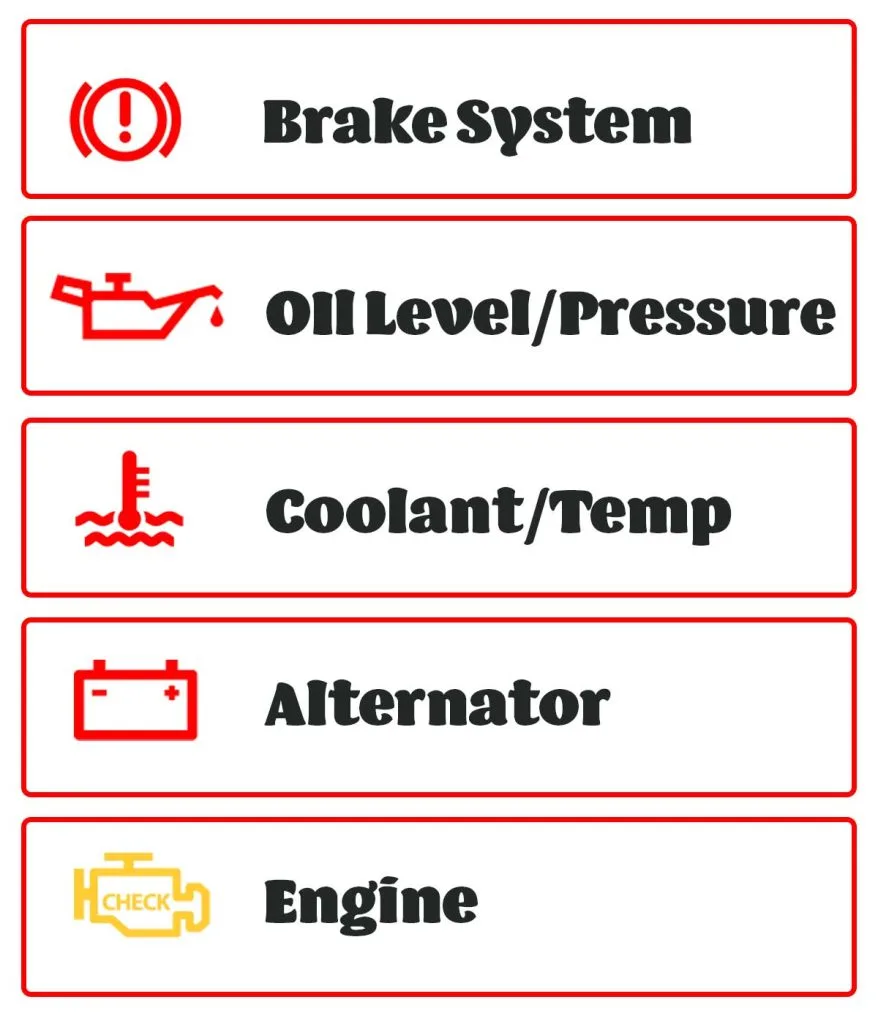
- Brake system — low fluid or uneven brake wear.
- Oil level/pressure — stop immediately.
- Coolant temperature/overheat — engine protection mode.
- Battery/charging system — alternator issues likely.
- Check Engine Light — performance/emissions issue.
If you only remember these five, you’re already ahead of most new drivers.
4. Find the Jack, Spare & Tow Eye
Every car hides these in slightly different places. Take a minute to find:
- The jack
- The spare wheel or tire repair kit
- The screw-in tow eye
Typical hiding spots: under the boot floor, tucked in a foam insert, or behind a side panel. Even if you never change a tire yourself, knowing where everything is saves a lot of questions when help arrives.
The correct wheel change process.
5. Locate the Battery or Remote Jump-Start Posts
Some cars keep the battery under the hood, some hide it under a seat, and many use remote jump-start posts (typically marked with a red plus symbol on a plastic cover) in the engine bay.
Why this matters:
Using the wrong point during a jump-start can damage electronics. If you’re unsure, don’t improvise — call for assistance.
6. Test Your Lights & Indicators
Take 30 seconds and confirm everything is working:
- Headlights
- Indicators
- Brake lights
You can do this with a friend, or by reversing toward a wall and watching the reflections. If your brake lights are out, drivers behind you are effectively blind — quick test, big safety gain.
10. Check Your Tire Condition & Pressures
This is the single biggest factor in safe handling for new drivers.
Look for:
- Tread depth (legal minimum is 1.6 mm, but aim for 3 mm)
- Even wear across the tyre
- Cracks or bulges
- Correct pressures (use the sticker on the door frame)
Checking tire pressures.
That’s It — You’re Set Up
A quick ten-minute run-through now makes you calmer and more confident later. This setup isn’t about being a mechanic — it’s simply about knowing your car well enough to stay safe and avoid easy mistakes.
Would You Know What To Do?
If your engine warning light came on tonight, would you know to keep driving, pull over, or call for recovery?
Most drivers wouldn’t.
That’s exactly why I wrote this guide.
- About the Author
- Latest Posts


Meet Northcap, a seasoned mechanic and roadside assistance expert with over 20 years of hands-on experience. At Rustyautos.com, Northcap shares exclusive insights into what really breaks down in cars, offering practical tips and real-world advice to keep drivers informed and their cars on the road.