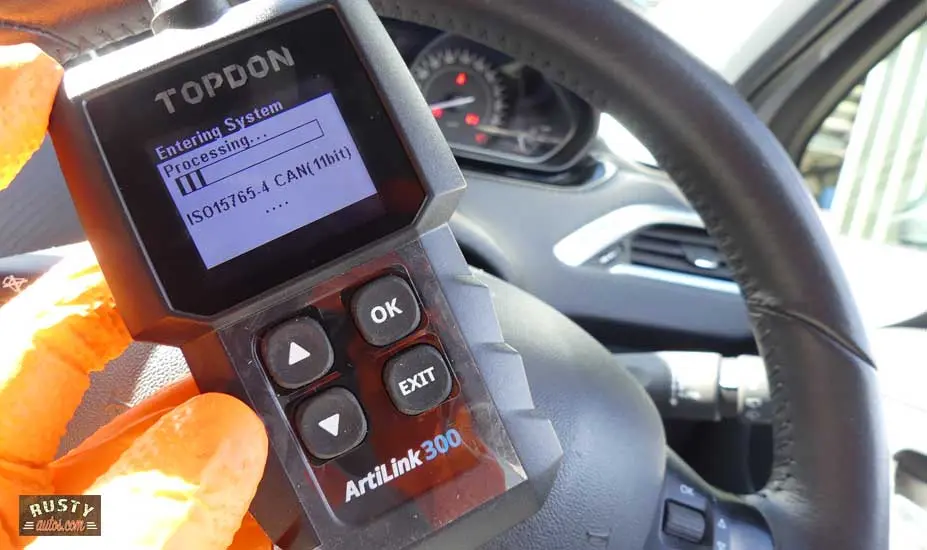
Every car built since 1996 (U.S. and most elsewhere) has a small diagnostic socket called the OBD-II port — short for On-Board Diagnostics, Version 2. Think of it as your car’s USB confession booth. Plug in a scanner, and it’ll spill the beans on what’s bothering it.
When a warning light pops up — the dreaded “Check Engine” — that’s your car saying, “I’ve stored a code about this.” The OBD-II port is where you read that message.
Where to Find It
Usually under the dashboard, just above the driver’s knees. Look for a trapezoid-shaped socket — about the size of your thumb. If you can’t see it, run your hand along the lower dash or above the pedals. It’s always within reach; it’s the law.
How to Use It (2-Minute Guide)
Plug in your scanner – It powers up from the car; no batteries needed.
Ignition ON (engine off) – Some tools wake automatically, others need a button press.
Select “Read Codes” – Jot down anything that starts with:
P – Powertrain (engine & transmission)
B – Body (airbags, windows, locks)
C – Chassis (ABS, steering, suspension)
U – Network (communication faults)
Decode it below – Turn P0300 from robot-speak into plain English like: “Engine’s misfiring randomly — probably a plug, coil, or injector.”
Want to Go Deeper?
Visual walkthrough. Next, research your car’s specific fault code.
Meet Northcap, a seasoned mechanic and roadside assistance expert with over 20 years of hands-on experience. At Rustyautos.com, Northcap shares exclusive insights into what really breaks down in cars, offering practical tips and real-world advice to keep drivers informed and their cars on the road.