Cold morning.
You turn the key…
And the engine either drags over like it’s half asleep…
Or it spins fine… but just won’t fire.
Two completely different problems.
Same symptom to the driver.
Very different causes underneath.
First Question — Is It Cranking Slow or Normal?
Simple stuff first.
Listen to the crank speed:
- Slow crank (lazy, dragging sound) → Think battery / oil / mechanical load
- Normal crank (spins strong) → Think fuel / sensors / ignition
This one decision saves a lot of guessing.
1. Weak Battery (Most Common Cold Start Failure)
On roadside calls, this is number one. Not even close.
Cold kills batteries.
Why?
Because:
- Chemical reaction slows down
- Voltage drops
- Cranking power falls off a cliff
A battery that was “fine yesterday” suddenly isn’t.
Classic signs:
- Slow crank
- Clicking or hesitation
- Starts after a jump
Trade tip:
If it just about starts when warm but struggles cold… battery’s on borrowed time.
2. Oil Too Thick (Wrong Grade or Old Oil)
This catches a lot of people out.
Cold oil thickens.
Now the engine has to fight:
- Internal friction
- Thick oil dragging through bearings
Result?
Slow crank
Hard start
Real-world example:
Seen engines filled with the wrong viscosity oil turn into absolute pigs on cold mornings.
What to check:
- Oil grade (too heavy?)
- Oil condition (dirty/sludgy?)
3. Coolant Temperature Sensor (Fueling Goes Wrong)
This one’s sneaky.
The engine relies on the coolant temp sensor to know how cold it is.
Cold engine = needs extra fuel.
If the sensor lies?
- Says engine is warm → not enough fuel → hard start
- Says engine is freezing → too much fuel → flooding
Symptoms:
- Normal crank speed
- Extended cranking
- Rough start, then clears
In the trade:
If it starts fine warm but struggles cold… this sensor is always on the list.
4. Fuel System Drain-Back or Weak Pump
Fuel pressure bleeds off overnight; that’s normal. The fuel system must rebuild pressure before the engine can start.
If it’s a fuel system pressure problem, starting will take longer than expected.
Common causes:
- Leaking injector
- Faulty check valve
- Weak fuel pump
What you’ll notice:
- Cranks normally
- Takes longer than usual to fire
- Sometimes better on second attempt
Quick trick:
Turn ignition on → off → on again (prime system twice)
If it starts quicker after that… you’re onto a fuel pressure issue.
5. Dirty Throttle Body (Gas Engines)
Carbon buildup restricts airflow at idle.
Cold engines already struggle to balance fuel and air.
Now add a dirty throttle…
Hard start
Hunting idle after start
Sometimes needs a touch of throttle to fire
6. Ignition Weakness (Spark Plugs / Coils)
Cold engines need a strong spark.
Fuel doesn’t vaporise as easily.
So ignition has to work harder.
Worn plugs or weak coils?
Cranks fine
Doesn’t fire easily
Misfires briefly after start
Simple rule:
If plugs are old — they’re guilty until proven innocent.
7. Diesel Only — Glow Plug Problems
Different game with diesels.
No spark.
They rely on heat from glow plugs.
If glow plugs fail:
- Cold fuel won’t ignite properly
- Engine struggles or won’t start
Signs:
- Long crank in cold weather
- Rough, smoky start
- Better when slightly warm
Trade reality:
One bad glow plug can cause issues…
But multiple failed ones = guaranteed cold start trouble.
8. Low Compression (Worn Engine)
Less common — but worth mentioning.
Cold engines already have:
- Lower sealing efficiency
- Thicker oil slowing movement
If compression is weak?
Hard to build enough heat to ignite fuel
Signs:
- Worse in cold
- Improves slightly when warm
- High mileage engine
What Mechanics Check First (Real-World Order)
On roadside calls, we don’t guess.
We go in this order:
- Battery / cranking speed
- Scan data (coolant temp reading, crank sensor reading)
- Fuel pressure / prime test
- Throttle body condition (gas engines)
- Glow plugs (diesel)
- Ignition components
- Only then — deeper issues
Simple stuff first. Always.
Can You Drive With This Problem?
Depends what’s causing it.
- Battery / oil issue → You’ll get stranded soon
- Fuel or sensor issue → May worsen quickly
- Glow plugs (diesel) → Usually manageable short-term
Quick DIY Checks
Before calling for help, try this:
- Turn key and listen — fast or slow crank?
- Try a jump start
- Cycle ignition twice (fuel prime test)
- Light throttle input (gas engines only)
- Check dashboard for warning lights
These alone can narrow it down massively.

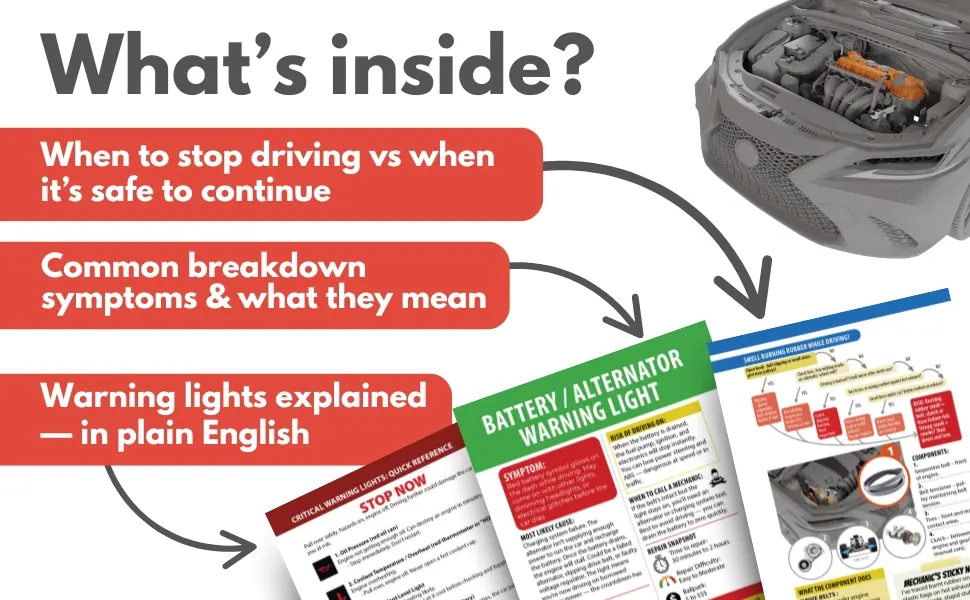
Visit our DIY Car Maintenance page and level up your car care skills — or keep the quick-reference version below in your glovebox.
Look inside on Amazon.com
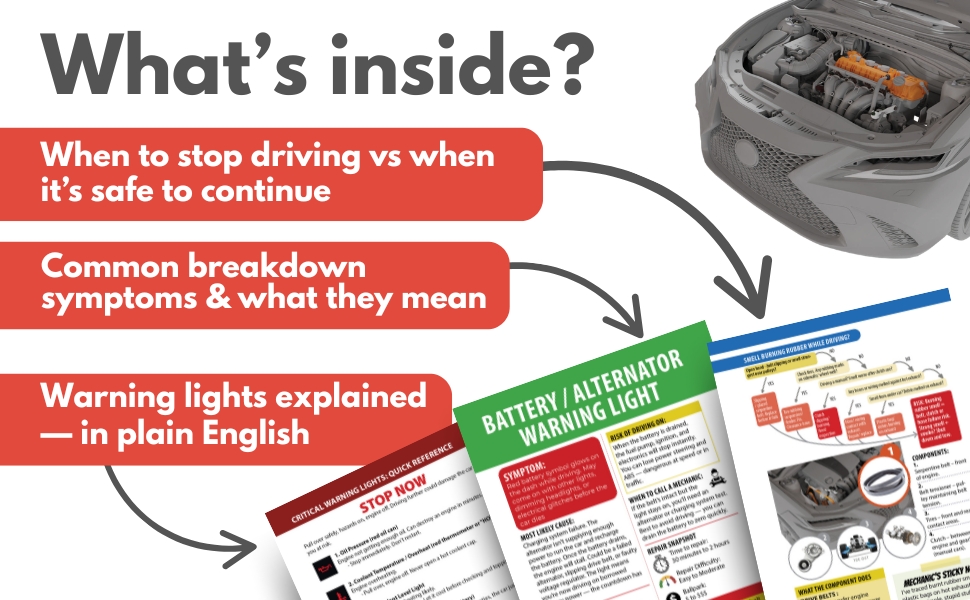
Look inside on Amazon.com
- About the Author
- Latest Posts


Meet Northcap, a seasoned mechanic and roadside assistance expert with over 20 years of hands-on experience. At Rustyautos.com, Northcap shares exclusive insights into what really breaks down in cars, offering practical tips and real-world advice to keep drivers informed and their cars on the road.