You start the car and instead of settling into a smooth idle… the engine starts revving up and down by itself.
Vroom… pause… vroom…pause.
The rev counter moves like it has a mind of its own.
Drivers call this engine surging or hunting idle, and after 20 years responding to roadside breakdowns, I see it a fair bit.
The good news?
Most of the time it’s not a serious failure.
But it does mean something in the air-fuel system isn’t behaving properly, and the engine computer is trying to correct it.
Let’s walk through the most common causes.
1. Dirty Throttle Body (Very Common)
On roadside calls, this is one of the first things I suspect.
The throttle body controls how much air enters the engine. Modern cars use an electronic throttle, and even a small amount of carbon buildup can upset the airflow.
Over time, the inside of the throttle body gets coated with black carbon deposits from crankcase vapours.
When this happens:
• throttle plate struggles to make adjustments, and airflow becomes inconsistent
• the ECU keeps adjusting the throttle
• the idle starts rising and falling
That’s your surging idle.
In many cases, cleaning the throttle body fixes the issue completely.
In the trade, this is one of those simple jobs that can transform how the engine runs.
2. Throttle Body Lost Its Calibration
Here’s something many drivers don’t know.
Modern throttle bodies self-learn their position.
Disconnect the battery — or sometimes replace it — and the system can lose that learned calibration.
Nothing’s actually broken.
The throttle body just needs to relearn its idle position.
A quick idle relearn procedure on a scan tool solves it.
3. Vacuum Leak
An engine is extremely sensitive to unmetered air.
If air enters the intake without being measured by the MAF sensor, the fuel mixture becomes incorrect.
The ECU then tries to compensate by adjusting fuel and throttle position.
The result?
Idle speed starts hunting up and down.
Common vacuum leak sources include:
• cracked vacuum hoses
• leaking intake manifold gasket
• faulty PCV valve
• brake booster vacuum leak
Even a loose or faulty oil cap can cause hunting on some models.
Most times, the leak is small and the car drives fine, but the idle becomes unstable.
4. Faulty Mass Air Flow (MAF) Sensor
The MAF sensor tells the ECU how much air is entering the engine.
If that reading becomes inaccurate, the computer delivers the wrong amount of fuel.
The ECU then constantly adjusts the mixture trying to stabilize the engine.
That constant correction can cause idle surging.
In the trade we try a quick test:
Disconnect the MAF sensor and see if the idle improves.
If it does, the sensor is likely the culprit.
Sometimes cleaning the sensor works.
Sometimes it needs replacing.
5. Sticking Idle Control System (Older Vehicles)
Older engines use an Idle Air Control Valve (IAC).
Its job is to regulate airflow at idle.
When these valves get dirty or sticky, they can open and close unpredictably, which causes the engine speed to rise and fall.
Modern cars usually control idle through the electronic throttle body instead, but the effect is the same.
Is Engine Surging Safe to Drive?
Usually, yes — for a short time.
If the car drives normally and only surges at idle, it’s typically not dangerous.
However, there are exceptions.
If the engine:
• stalls frequently
• surges aggressively
• triggers a check engine light
• hesitates while driving
then it’s best to have it checked sooner rather than later.
Idle problems can sometimes develop into stalling issues, which can leave you stranded.
Stalling in traffic is not fun.
Quick Checks You Can Try
Before heading to the mechanic, a few simple checks can sometimes reveal the problem.
Check for loose intake hoses
Make sure the large air intake hose between the air filter and throttle body isn’t loose or cracked.
Inspect vacuum lines
Look for disconnected or split rubber hoses around the intake.
Listen for hissing sounds
A vacuum leak often makes a faint hiss.
Clean the throttle body
This is one of the most common fixes.
Many mechanics use a simple throttle body cleaner spray and a soft cloth.
Just be careful with electronic throttles — forcing the plate open can damage them.
Other Possible Causes
Other things that can cause idle surging include:
• Sticking EVAP purge valve
• Faulty throttle position sensor
• EGR valve stuck slightly open
• Fuel pressure problems
• Engine coolant temperature sensor fault
The Bottom Line
Idle surging usually means the engine computer is struggling to stabilize airflow or fuel delivery.
The most common causes are:
1️⃣ Dirty throttle body
2️⃣ Lost throttle calibration
3️⃣ Vacuum leaks
4️⃣ Faulty MAF sensor
5️⃣ Idle control issues
The key thing to remember is this:
Most idle surging problems are airflow related, not engine failures.
Start with the simple stuff first.


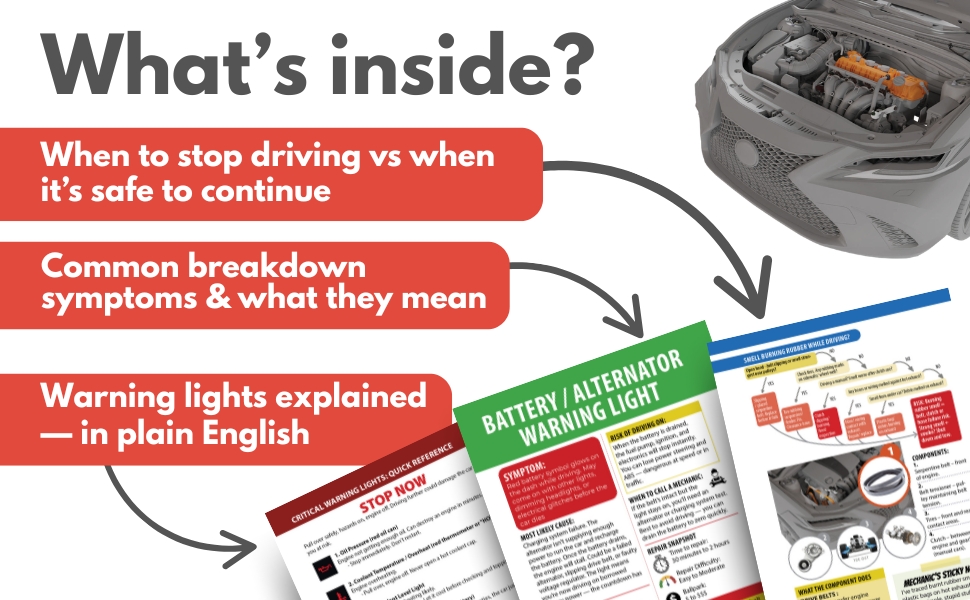
Visit our DIY Car Maintenance page and level up your car care skills — or keep the quick-reference version below in your glovebox.
Look inside on Amazon.com
Look inside on Amazon.com
- About the Author
- Latest Posts


Meet Northcap, a seasoned mechanic and roadside assistance expert with over 20 years of hands-on experience. At Rustyautos.com, Northcap shares exclusive insights into what really breaks down in cars, offering practical tips and real-world advice to keep drivers informed and their cars on the road.