An engine misfire is one of the most common problems drivers experience.
Sometimes it feels like a small hiccup.
Other times the car shakes so badly it feels like the engine might jump out from under the hood.
In my experience, drivers usually assume the worst when this happens.
The good news?
Most misfires come down to a handful of common faults.
The trick is figuring out which one you’re dealing with before throwing parts at the car.
Let’s break it down.
What Does an Engine Misfire Feel Like?
Drivers describe a misfire in different ways.
Common symptoms include:
- Engine shaking or vibrating
- Rough idle
- Loss of power when accelerating
- Jerking or hesitation
- Check Engine Light flashing
- Poor fuel economy
In simple terms, a misfire means one or more cylinders isn’t firing properly.
A gasoline engine needs three things to run correctly:
- Fuel
- Spark
- Compression
When one of those is missing, the cylinder misfires.
The 5 Most Common Causes of Engine Misfire
From the roadside calls I attend, these five faults account for the majority of misfires.
1. Worn Spark Plugs
This is the number one culprit.
Spark plugs ignite the air-fuel mixture inside each cylinder. Over time, they wear out, become fouled, or the gap widens, and the spark becomes weaker or non-existent
Eventually, the cylinder fails to ignite properly.
Common signs
- Rough idle
- Poor acceleration
- Misfire under load
- Engine runs better after replacing plugs
Many vehicles require spark plug replacement every 60k–100k miles, depending on the type.
If your plugs have never been replaced, it won’t hurt to replace them now.
2. Faulty Ignition Coil
Modern engines use coil-on-plug ignition systems.
Each cylinder has its own ignition coil that boosts battery voltage into the thousands needed to fire the spark plug.
When a coil fails, that cylinder loses spark.
Common signs
- Misfire on a specific cylinder
- Check Engine Light with codes like P0301, P0302, etc.
- Engine shaking at idle
A simple test many mechanics use is the coil swap test. Identify the misfiring cylinder with a code reader, clear the code, swap the coil with another cylinder, and run the engine again.
If misfire moves, the coil is faulty.
3. Fuel Injector Problems
If spark is present but the cylinder still misfires, fuel delivery becomes the next suspect.
Fuel injectors can become:
- clogged
- electrically faulty
- stuck open or closed
A clogged injector means the cylinder isn’t receiving enough fuel to burn properly.
Common signs
- Misfire under load
- Rough idle
- Poor fuel economy
- Fuel smell from exhaust
Sometimes, a professional injector cleaning will fix the problem.
Other times, the injector needs replacement.
4. Vacuum Leaks
Engines are extremely sensitive to air leaks.
If extra air enters the intake system through a cracked hose or leaking gasket, the air-fuel mixture becomes too lean.
Lean mixtures will easily cause misfires.
Common signs
- Rough idle
- High idle speed
- Hissing noise from engine bay
- Misfire that improves when accelerating
Common vacuum leak sources include:
- intake manifold gasket
- PCV hoses
- brake booster hose
These are often easy fixes once located.
5. Low Engine Compression
This is the one drivers hope it isn’t.
If a cylinder has low compression due to internal engine damage, it cannot burn the air-fuel mixture properly.
Possible causes include:
- burnt valves
- piston ring wear
- head gasket failure
- timing chain problems
Common signs
- Persistent misfire
- Loss of power
- Engine knocking
- Misfire that doesn’t respond to ignition or fuel repairs
Compression testing is required to confirm this.
Other Causes Worth Mentioning
While the five above cover most cases, misfires can also be caused by:
- Bad gas
- Faulty crankshaft position sensor
- Faulty camshaft position sensor
- Bad mass airflow sensor (MAF)
- EGR valve issues
- Dirty throttle body
- Timing chain problems
If the common fixes don’t solve the problem, deeper diagnosis is needed
Can You Drive With an Engine Misfire?
Short answer: not for long.
A severe misfire can damage the catalytic converter.
Unburned fuel enters the exhaust system and overheats the catalyst, which will turn a small repair into a very expensive one.
If the check engine light is flashing, stop driving and have the problem diagnosed.
Northcap’s Roadside Tip
One of the simplest diagnostic tools you can carry is a basic OBD2 scan tool.
Even cheap ones can read misfire codes like:
- P0300 – random misfire
- P0301-P0308 – specific cylinder misfire
Knowing which cylinder is affected saves a ton of guesswork.

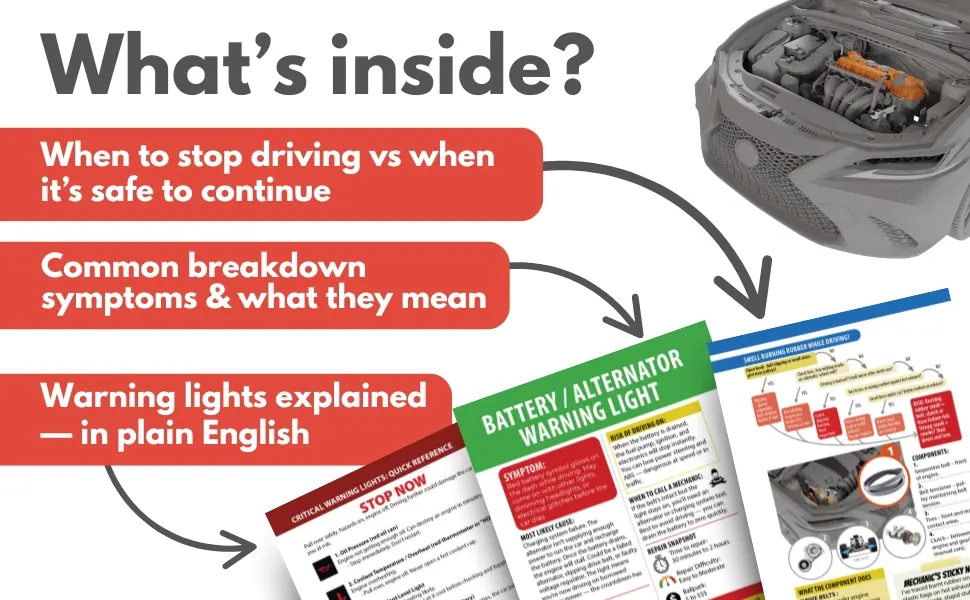
Visit our DIY Car Maintenance page and level up your car care skills — or keep the quick-reference version below in your glovebox.
Look inside on Amazon.com
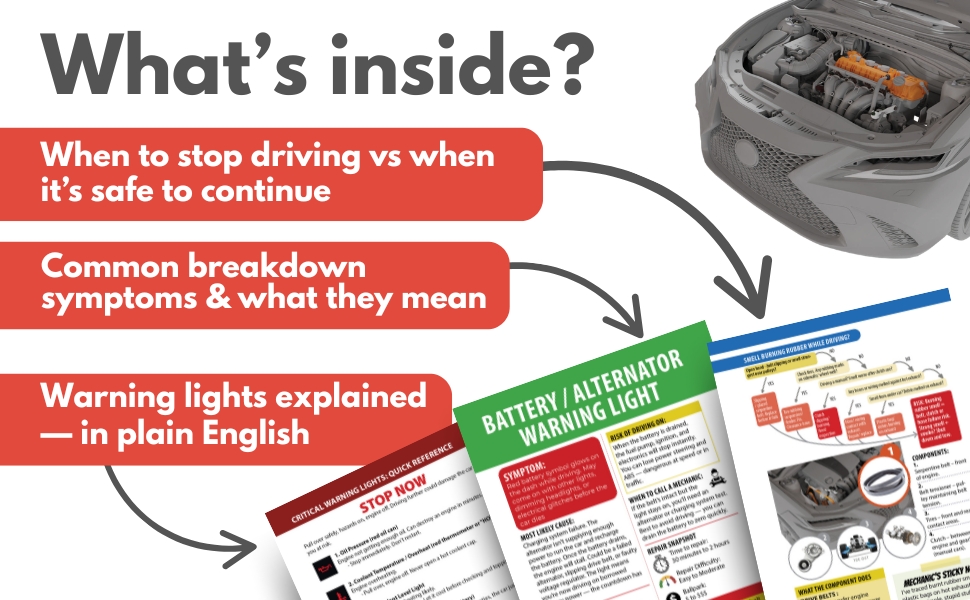
Look inside on Amazon.com
- About the Author
- Latest Posts


Meet Northcap, a seasoned mechanic and roadside assistance expert with over 20 years of hands-on experience. At Rustyautos.com, Northcap shares exclusive insights into what really breaks down in cars, offering practical tips and real-world advice to keep drivers informed and their cars on the road.