You turn the wheel…
And there it is.
Creak…
Groan…
Almost like something’s twisting under tension.
Not a knock.
Not a rattle.
A slow, strained noise.
That’s usually something binding.
What It Usually Is (Top Suspect)
Straight to it.
Worn or Seized Strut Top Mount Bearing
On most cars with MacPherson struts, the whole strut assembly rotates when you turn the steering.
At the top of that strut sits a bearing.
Its job?
Let the suspension turn smoothly with the steering input.
When it fails:
- It dries out or seizes
- The spring starts to wind up under tension
- Then releases suddenly
That’s your creak.
That twisting, loaded-up feeling.
In the trade, this is the first place we look.
How It Sounds and Feels
Classic signs:
- Creaking or groaning when turning at low speed
- Worse when stationary or parking
- Feels slightly “notchy” through the steering wheel
- Sometimes you can feel it release
It’s a binding noise.
Not a loose one.
That’s the key difference.
Other Likely Causes
It’s not always the top mount.
Here’s what else can give a very similar noise.
Broken or Cracked Coil Spring
Especially on older cars or ones driven on rough roads.
- A cracked spring can shift slightly under load
- It can rub or catch on itself or the seat
- Makes a creaking or twanging noise
Sometimes the break is subtle.
You won’t always spot it at a glance.
Dry or Worn Suspension Bushings
Control arm bushes, anti-roll bar bushes…
When they dry out or wear:
- They start to creak under load
- Especially when weight transfers during steering
Rubber isn’t meant to twist forever.
Eventually, it complains.
Steering Rack or Inner Tie Rod
Less common, but worth mentioning.
If the rack is starting to wear or bind:
- You may get a creaking or dragging sensation
- Usually paired with slightly heavier steering
Not top of the list.
But I’ve seen it.
Ball Joints Starting to Seize
Ball joints should move freely.
If they begin to dry out or corrode:
- Movement becomes stiff
- Can produce a creak as load is applied
More often a knock when worn.
But early stages can sound like this.
Quick Check You Can Do
Simple test.
Engine running.
Car stationary.
Turn the wheel slowly left to right.
Now listen closely:
- From inside the cabin
- Then with the window down
Better again, have someone else turn the wheel while you listen near the front wheel arch.
If you hear it clearly from the top of the suspension?
You’re likely on the strut mount.
A Trick From the Trade
Open the hood.
Look at the top of the strut towers.
Get someone to turn the steering.
Watch the top mount.
If it’s bad, you might see:
- Jerky movement instead of smooth rotation
- Slight jumping or sticking
That’s a giveaway.
Can You Drive With It?
Usually, yes.
This isn’t typically a breakdown issue.
But…
It won’t fix itself.
And it will get worse.
If ignored:
- Steering can become stiff
- Components wear faster
- Spring or mount can fail completely
So while it’s not urgent…
It’s not one to leave forever either.
What It Takes to Fix
Most common repair:
Strut Top Mount Replacement
- Remove strut assembly
- Compress the spring
- Replace mount and bearing
Important note:
Always best to replace in pairs.
If one side is gone, the other isn’t far behind.
If It’s a Spring
- Replace the coil spring
- Again, ideally both sides
If It’s Bushings or Joints
- Replace the worn component
- Recheck alignment if control arms are involved
Cost Reality
This one sits in the middle.
Not dirt cheap.
Not painful either.
- Parts are usually reasonable
- Labour involves suspension strip-down
The biggest factor is access.
Some cars are quick.
Others… not so much.
A Pattern I See
Cold mornings.
Low-speed parking.
Older cars.
That’s when this shows up most.
Customer says:
“It only does it when I’m turning slowly.”
Exactly.
Because that’s when the suspension is under maximum twist without forward movement to smooth things out.
Don’t Confuse It With This
Worth pointing out.
A creak is not the same as:
- Clunk = usually play or looseness
- Knock = worn joint or link
- Clicking = often CV joint
Creaking is tension.
Something twisting that shouldn’t be.
Final Thought
Creaking when turning is nearly always a warning.
Not a failure yet.
But on its way.
Most of the time?
Strut top mount.
Start there.
Fix it early…
And you avoid a bigger job later.

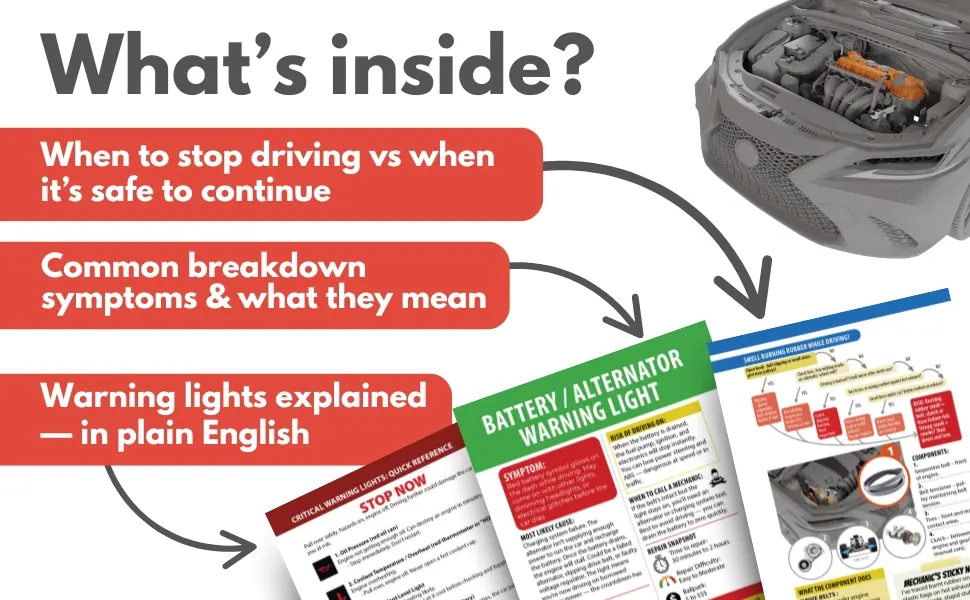
Visit our DIY Car Maintenance page and level up your car care skills — or keep the quick-reference version below in your glovebox.
Look inside on Amazon.com
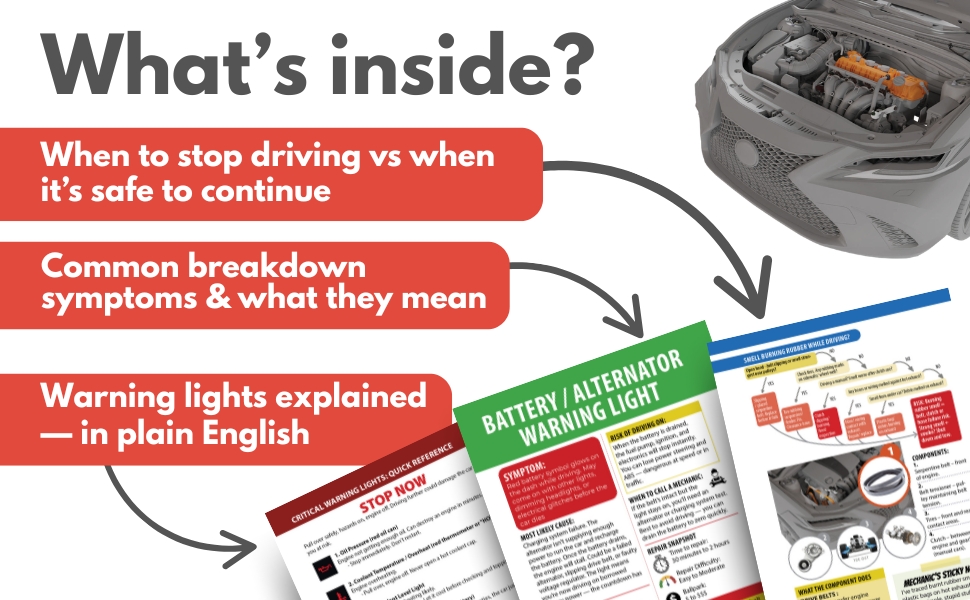
Look inside on Amazon.com
- About the Author
- Latest Posts


Meet Northcap, a seasoned mechanic and roadside assistance expert with over 20 years of hands-on experience. At Rustyautos.com, Northcap shares exclusive insights into what really breaks down in cars, offering practical tips and real-world advice to keep drivers informed and their cars on the road.