See that red “SRS” or little guy with a circle on his lap glowing? That’s your airbag light — and it means your car’s safety net might not deploy when you need it most.
Why It Happens
The airbag system (SRS) runs constant self-checks. If it finds a fault — bad sensor, weak connection, or module issue — it throws the light. Once it’s on, the system may be partially or totally disabled. Translation: in a crash, your airbags may not fire.
Most Common Causes
- Loose wiring under seats – moving the seat can tug on airbag connectors.
- Bad clock spring – the electrical connector inside the steering wheel wears out.
- Faulty crash sensor – corrosion or failure triggers the warning.
- Low battery voltage or recent jump-start – SRS hates unstable power.
- Defective airbag control module – rare, but expensive.
What You Can Check
- Did you just move the seat? Check connectors underneath — they often work loose.
- If the light came on after a flat battery or jump-start, a reset might will clear it.
- Beyond that, don’t DIY airbags — explosive devices aren’t weekend projects.
What a Mechanic Will Check
- Scan SRS system for stored fault codes.
- Inspect under-seat wiring and connectors.
- Test the clock spring in the steering column.
- Check crash sensors and module integrity.
Ballpark Repair Costs
- Reset or wiring fix: $100–$200.
- New clock spring: $250–$400.
- Airbag crash sensor: $150–$300 each.
- Airbag control module: $500–$1,200.
When to Call It Quits
An airbag light isn’t just a nuisance. It’s telling you your safety system is down. If you drive with it lit, you’re gambling that you’ll never need an airbag. Don’t risk it — get it scanned and fixed.

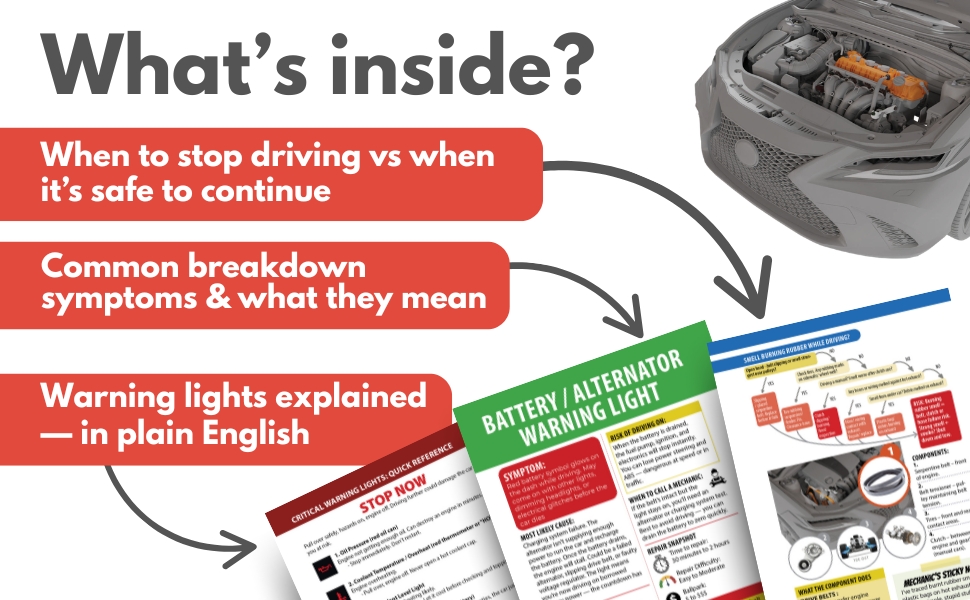
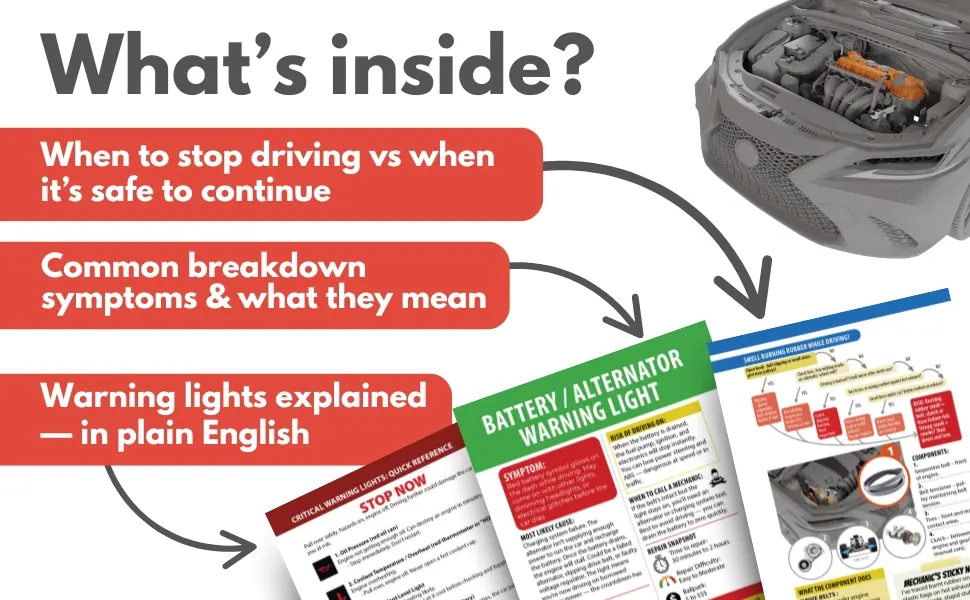
Visit our DIY Car Maintenance page and level up your car care skills — or keep the quick-reference version below in your glovebox.
Look inside on Amazon.com
Look inside on Amazon.com
- About the Author
- Latest Posts


Meet Northcap, a seasoned mechanic and roadside assistance expert with over 20 years of hands-on experience. At Rustyautos.com, Northcap shares exclusive insights into what really breaks down in cars, offering practical tips and real-world advice to keep drivers informed and their cars on the road.