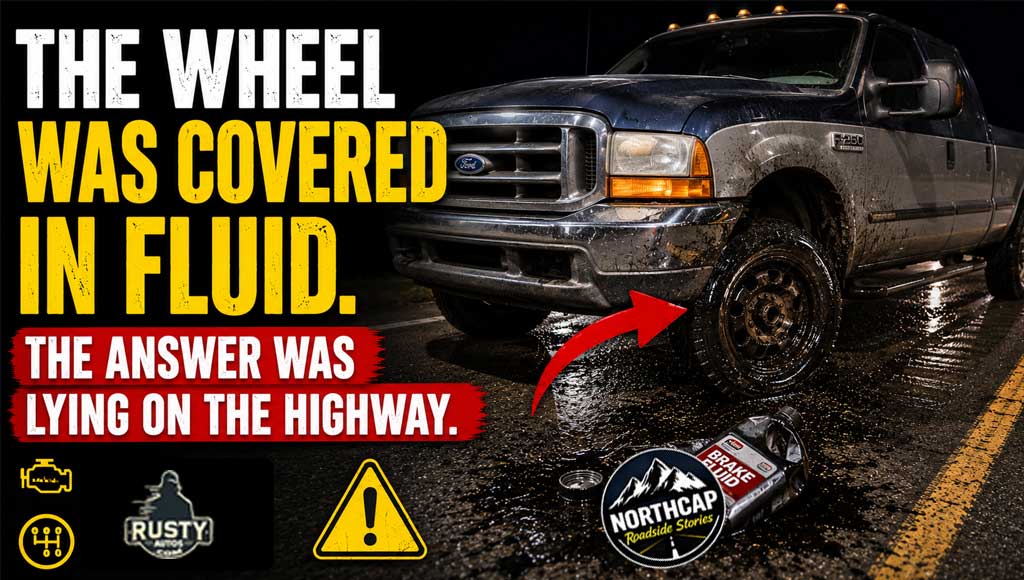
It was late.
One of those calls where the customers have been sitting on the shoulder for hours, exhausted, wondering if their truck is about to fall apart.
The dispatch notes got my attention immediately:
“Something fell off the vehicle. Customer concerned.”
That’s never a description you ignore.
When I arrived, I asked them to walk me through exactly what happened.
They’d been driving down the interstate when they heard a bang from underneath the truck.
Not a metallic grinding noise.
Not a suspension collapse.
Just a single, solid hit.
Naturally, they pulled over.
I started with the obvious questions.
“Did it lose power?”
“No.”
“Any steering problems?”
“No.”
“Any warning lights?”
“No.”
“Any strange noises after the bang?”
“No.”
So far, nothing points to a major mechanical failure.
Then they showed me the reason they were nervous.
The left-front wheel was soaked.
Not damp.
Soaked.
The entire wheel, suspension knuckle, and wheel well were covered in a thin oily fluid.
The wheel had thrown it everywhere.
At first glance it looked suspiciously like brake fluid.
And that’s where things got interesting.
I popped the hood and checked all the vital fluids.
Engine oil? Perfect.
Coolant? Full.
Brake fluid? Full.
No warning lights.
No leaks.
Nothing obvious.
Next, I crawled underneath.
The splash shield under the engine was dry.
No puddles.
No drips.
No signs of a fresh leak.
Yet somehow the entire left-front corner looked like somebody had sprayed it with oil.
That didn’t add up.
Then I noticed something else.
When I started the engine, there was a distinct:
Tap. Tap. Tap. Tap.
I asked if that was new.
The owners immediately said yes.
Apparently, it had been making the noise for several days.
Their mechanic had already suggested a failing dual-mass flywheel.
I agreed that it was a strong possibility.
A worn dual-mass flywheel can produce all kinds of knocking and rattling noises, especially at idle.
So now we had two separate clues:
- A mysterious oily wheel
- A known drivetrain noise
Human nature immediately wants to connect them.
Mine included.
For a few minutes, I wondered if a flywheel failure had somehow launched debris, damaged something, and caused the fluid contamination.
The problem?
The evidence didn’t support it.
The brake system was intact.
The clutch felt normal.
The pedal was firm.
The truck drove normally.
Nothing pointed to an active leak.
At that point I made the only sensible decision.
I arranged a tow.
Not because I knew what had happened.
But because I didn’t.
And when you’re standing beside an interstate at night, uncertainty is reason enough to get people somewhere safe.
After the tow was completed, I had a thought.
The fluid still bothered me.
Something wasn’t right.
So I drove back to the location where they said the bang had happened.
A few minutes later, I found it.
Lying on the roadway was a crushed container of brake fluid.
The cap – missing.
Fluid everywhere.
The container had clearly been run over.
Everything now made sense.
The truck had likely struck the bottle.
The impact produced the bang they heard and sprayed the contents onto the wheel.
The rotating tire then sprayed it all over the wheel well, suspension, and underside.
I believe the mystery is solved.
The Lesson
This call was a great reminder of something I see all the time on the roadside.
Sometimes there really are two problems.
The dual-mass flywheel noise was genuine.
But it had absolutely nothing to do with the fluid-covered wheel.
The owners knew they already had a mechanical issue.
Then they heard a bang.
Then they saw fluid.
Their brains did what all our brains do:
They connected the dots.
Except the dots weren’t connected.
Sometimes two plus two really does equal four.
YOUR CAR JUST SAID “UH-OH.”
Warning light? Won’t start? Weird noise?
Something smells expensive?
DON’T PANIC. KNOW WHAT TO DO NEXT.
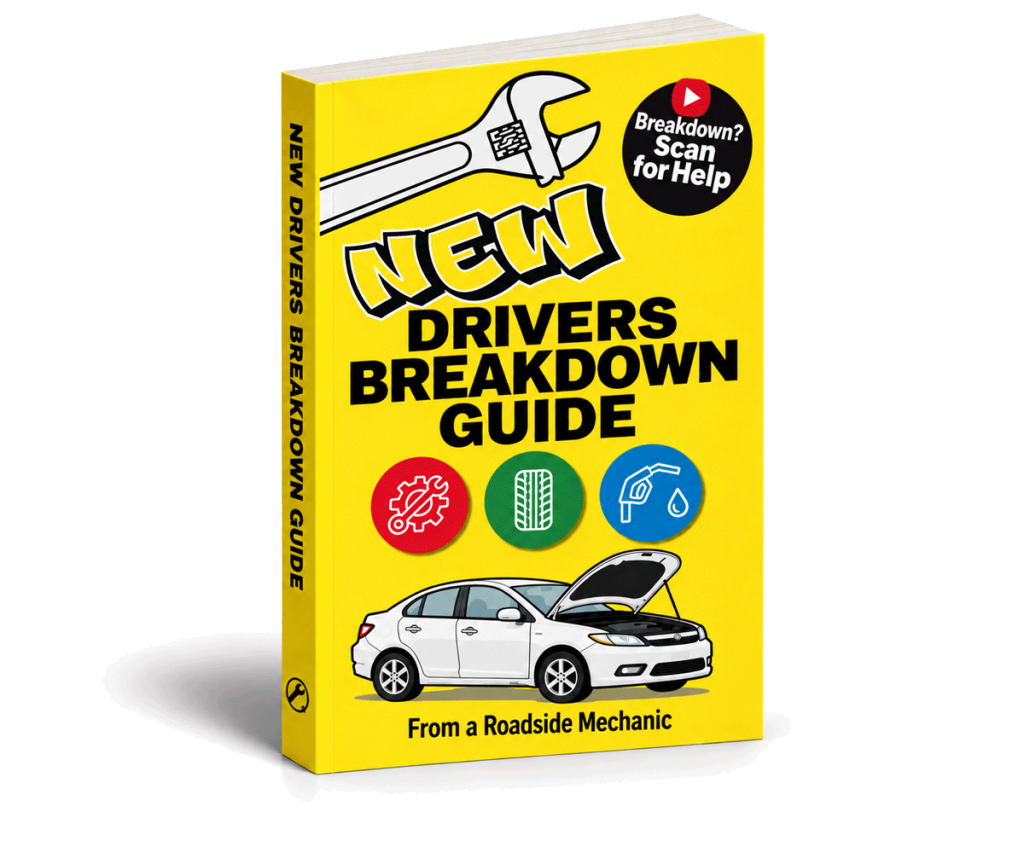
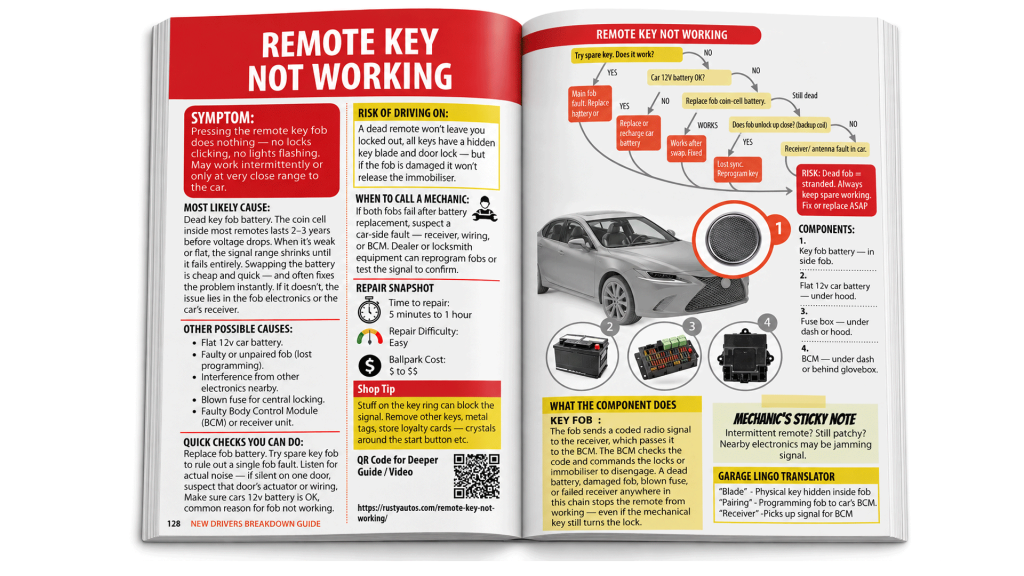
The New Driver’s Breakdown Guide gives you the car know-how nobody taught you.
- About the Author
- Latest Posts

Meet Northcap, a seasoned mechanic and roadside assistance expert with over 20 years of hands-on experience. At Rustyautos.com, Northcap shares exclusive insights into what really breaks down in cars, offering practical tips and real-world advice to keep drivers informed and their cars on the road.